Banner
Object-Based Processing: Numbers Confuse How We Perceive Spaces

Researchers recently studied the relationship between numerical information in our vision, and...

Males Are Genetically Wired To Beg Females For Food

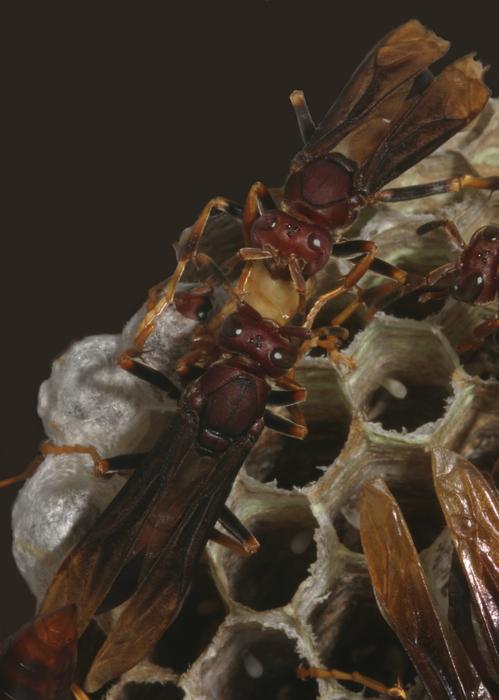
Bees have the reputation of being incredibly organized and spending their days making sure our...

The Scorched Cherry Twig And Other Christmas Miracles Get A Science Look

Bleeding hosts and stigmatizations are the best-known medieval miracles but less known ones, like ...

$0.50 Pantoprazole For Stomach Bleeding In ICU Patients Could Save Families Thousands Of Dollars

The inexpensive medication pantoprazole prevents potentially serious stomach bleeding in critically...

User picture.
News StaffRSS Feed of this column.

News Releases From All Over The World, Right To You... Read More »

Blogroll

Patients have on average a 71 percent lower chance of dying at the nation’s top-rated hospitals compared with the lowest-rated hospitals across 18 procedures and conditions analyzed in the tenth annual HealthGrades Hospital Quality in America Study, issued today by HealthGrades, the healthcare ratings company.

Attention-deficit/hyperactivity disorder (ADHD), a state of serious impairments in both learning ability and social functioning, is one of many labels for one of the most prevalent conditions in child psychiatry, and, undoubtedly, the most controversial, which partly persists into adulthood. ADHD is conservatively estimated to occur in 3,0–7,5% of school-age children (Goldman et al., 1998), but more permissive criteria yield estimates of up to 17% (Barbaresi et al., 2002). Up to 20% of boys in some school systems receive psychostimulants for the treatment of ADHD (LeFever et al., 1999).

You may not be fully dressed without a smile, but a look of horror will make a faster first impression. Vanderbilt University researchers have discovered that the brain becomes aware of fearful faces more quickly than those showing other emotions.

"There are reasons to believe that the brain has evolved mechanisms to detect things in the environment that signal threat. One of those signals is a look of fear," David Zald, associate professor of psychology and a co-author of the new study, said.

On November 13-15 astronomers will meet at the "Astrophysics 2020: Large Space Missions Beyond the Next Decade" conference at the Space Telescope Science Institute in Baltimore, Md. to discuss the space observatories and science investigations that could be realized in the 2020-2030 decade.

Though the Hubble Space Telescope was launched in 1990, NASA started planning two decades earlier by establishing, in 1970, committees to plan the engineering of the space telescope and to determine the scientific goals of the mission.

The year 2020 is 13 years away, but astronomers now need to start envisioning astrophysics that could be accomplished from space in the 2020 era and beyond. Lead times of at least a decade are required for the most ambitious of space observatories.

In process that is shrouded in mystery, rod-shaped bacteria reproduce by splitting themselves in two. By applying advanced mathematics to laboratory data, a team led by Johns Hopkins researchers has solved a small but important part of this reproductive puzzle.

The findings apply to highly common rod-shaped bacteria such as E. coli, found in the human digestive tract. When these single-celled microbes set out to multiply, a signal from an unknown source causes a little-understood structure called a Z-ring to tighten like a rubber band around each bacterium’s midsection. The Z-ring pinches the rod-like body into two microbial sausages that finally split apart.

Washington state climatologist Philip Mote, one of the lead authors of the recently released Fourth Assessment Report of the Intergovernmental Panel on Climate Change, will deliver a public lecture on global warming at the American Vacuum Society's (AVS) 54th International Symposium & Exhibition in Seattle. The lecture is free and open to the public (see details below).

“Climate change is real and it is a problem,” says Mote, a researcher with the University of Washington Climate Impacts Group.