Banner
You Didn't Feel Continental Mantle Earthquakes, But They Happened. A Lot

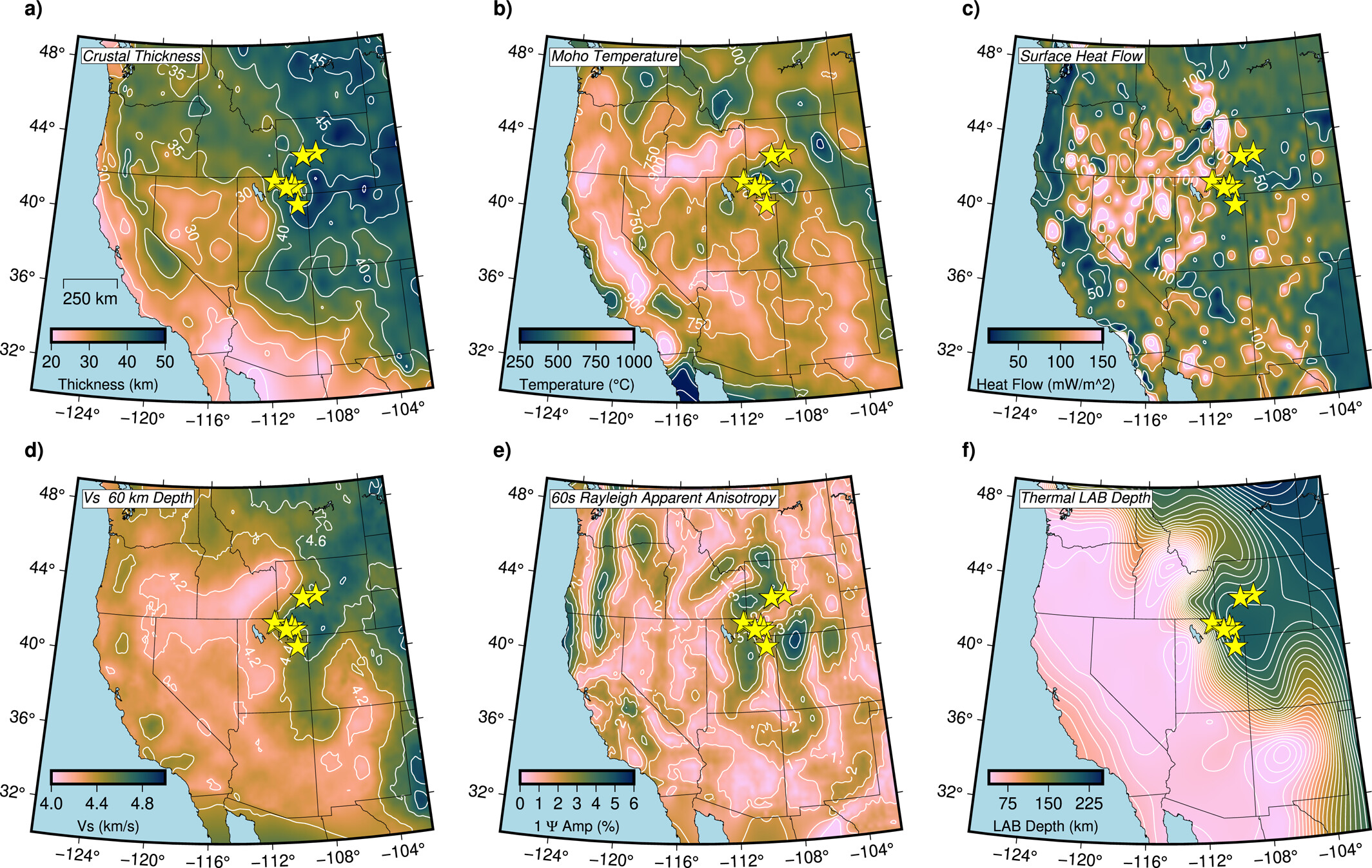
A 1979 seismic event was a different kind of earthquake, and it is has intrigued scientists ever...
How To Overcome Leadership Battles

In times of social rancor and strife, most will fight each other, but societies are saved by those...
Thousands Of Unpublished Studies Show Why Conservation Efforts Miss The Mark

Europe alone has so much unpublished, un-catalogued biological data that it is challenging to take...

Why Antarctic Sea Ice Stopped Growing In 2015

Though numerical models and popular films like An Inconvenient Truth projected Arctic ice...

User picture.
News StaffRSS Feed of this column.

News Releases From All Over The World, Right To You... Read More »

Blogroll

A new theory to explain the high-energy gamma-ray emissions from collapsing stars has been put forward by an international team of researchers. Their results will be published shortly in the Monthly Notices of the RAS.

Long duration gamma-ray bursts (GRBs), first discovered in the 1970s, are the most explosive events in the Universe. Finding out what happens during these cataclysmic events is a major challenge, partly because they usually occur at the edge of the visible Universe and partly because the bursts last only a matter of seconds.


When a massive star runs out of fuel, it no longer has the energy to support its mass. The core collapses and forms a black hole.

The mention of facial composites often conjures up images of a sinister criminal, skillfully depicted by a sketch artist using pencil and paper. In reality, the vast majority of law enforcement agencies use mechanized methods, usually computer software, when creating facial composite. By having a vast repertoire of eyes, ears, hair and so on at their disposal, witnesses have the ability to create an image that ideally encompasses all of the features of the perpetrator. So have these technological advances improved our ability to identify and apprehend criminals?

Since the spring of 2005, scientists working for the Institute of Systems Biology and Ecology (ISBE) from the Czech Academy of Sciences have been focusing on research aimed at designing a physically-based algorithm to scale spectral and spatial data on vegetation, which is relevant to the development of the Sentinel-2 mission.


Map of total chlorophyll content (Cab)generated from the hyperspectral airborne AISA Eagle sensor (pixel-size 0.4 m) acquired in 2004 over Norwegian spruce at the Bily Kriz research site in the Czech Republic.

Credits: Institute of Systems Biology and Ecology (ISBE)

Findings published in Science will accelerate the search for genes involved in human disease. The report provides a first genome-wide view of how the unique composition of genetic variation within each of us leads to unique patterns of gene activity.

By defining those genetic variants with a biological effect, the results will help prioritise regions of the genome that are investigated for association with disease.

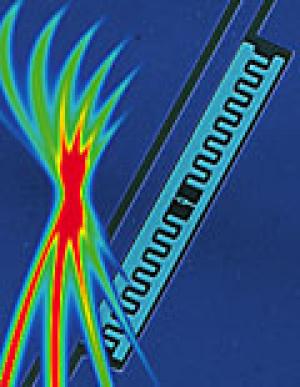
Using artificial atoms on a chip, Yale physicists have taken the next step toward quantum computing by demonstrating that the particle nature of microwave photons can now be detected, according to a report spotlighted in the February 1 issue of the journal Nature.

Quantum theories are often considered to apply best to processes that happen on the smallest scale of atoms and molecules. By making artificial atoms larger — to a size that is nearly visible — and using microwaves as the source of energy, the collaborative research from the laboratory of Professor Robert Schoelkopf and the theory group of Professor Steven Girvin in the departments of Applied Physics and Department of Physics at Yale created an electronic circuit that stores and measures individual microwave photons.

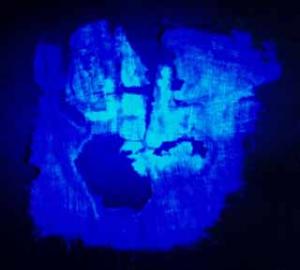
Archaeologists are now turning to forensic crime lab techniques to hunt for dyes, paint, and other decoration in prehistoric textiles.

Although ancient fabrics can offer clues about prehistoric cultures, often their colors are faded, patterns dissolved, and fibers crumbling. Forensic photography can be used as an inexpensive and non-destructive tool to analyze these artifacts more efficiently, according to new Ohio State University research.


An image of a Hopewell textile retrieved from Ohio Seip burial mounds in southern Ohio using ultraviolet reflectance. (From photos by Christel Baldia and Kathryn Jakes; reprinted from The Journal of Archaeological Science, Vol.