Banner
Could Niacin Be Added To Glioblastoma Treatment?

Glioblastoma, a deadly brain cancer, is treated with surgery to remove as much of the tumor as...

At 2 Months, Babies Can Categorize Objects

At two months of age, infants lack language and fine motor control but their minds may be understanding...

Opportunistic Salpingectomy Reduces Ovarian Cancer Risk By 78%

Opportunistic salpingectomy, proactively removing a person’s fallopian tubes when they are already...
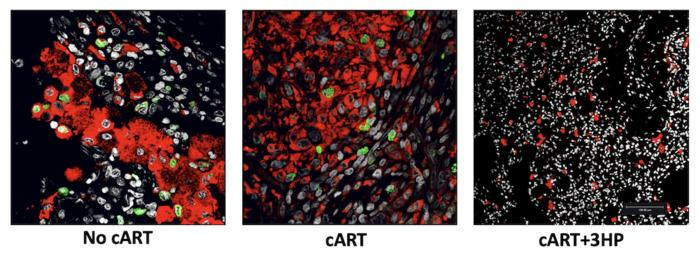
Environmental Activists Hate CRISPR - And They're Dooming People With HIV

Existing treatments control HIV but the immune system does not revert to normal. They is why people...

User picture.
News StaffRSS Feed of this column.

News Releases From All Over The World, Right To You... Read More »

Blogroll

An international team of scientists has discovered that the ubiquitous bacteria that causes most painful stomach ulcers has been present in the human digestive system since modern man migrated from Africa over 60,000 years ago. The research, published online (7 February) by the journal Nature, not only furthers our understanding of a disease causing bacteria but also offers a new way to study the migration and diversification of early humans.


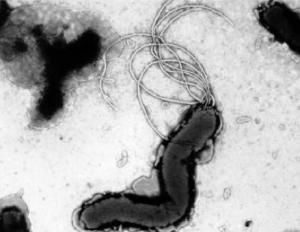
A cell of H.pylori, a bacterial pathogen of the human stomach. The curved shape of the cell, and its bundle of flagella which enable it to wriggle through mucus covering the cells lining the stomach, can be seen clearly. (Image Credit: Dr.

As the second leading cause of death in the world, cigarette smoking is a preventable behavior. Most countries require warnings about health risks on every package, but the effectiveness of these warnings depends upon the design and the "freshness" of the messages. In a multi-country study published in the March 2007 issue of the American Journal of Preventive Medicine, researchers found that more prominent text messages were more effective and graphic pictures even more so in affecting smokers' behaviors.

Researchers have constructed a protein out of amino acids not found in natural proteins, discovering that they can form a complex, stable structure that closely resembles a natural protein. Their findings could help scientists design drugs that look and act like real proteins but won't be degraded by enzymes or targeted by the immune system, as natural proteins are.


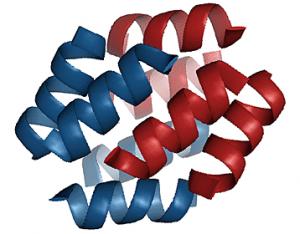
Structure of the Zwit-1F beta-peptide bundle as determined by x-ray crystallography. The bundle contains eight copies of the beta-peptide Zwit-1F with parallel and antiparallel helices in like and unlike colors, respectively. (Image Credit: Douglas S. Daniels)

In work that could lead to completely new devices, systems and applications in computing and telecommunications, MIT researchers are bringing the long-sought goal of "optics on a chip" one step closer to market.

In the January 2007 inaugural issue of the journal Nature Photonics, the team reports a novel way to integrate photonic circuitry on a silicon chip. Adding the power and speed of light waves to traditional electronics could achieve system performance inconceivable by electronic means alone.


Illustration of MIT's solution to polarization sensitivity, which until now prohibited most real-world applications of 'optics on a chip.' (Graphic courtesy of Tymon Barwicz, MIT)

Researchers from the University of Leicester and the British Geological Society (BGS) have proposed storing carbon dioxide in huge underground reservoirs as a way of reducing emissions- and have even identified sites in Western Europe that would be suitable.

Their research, published in the journal, Planet Earth, reveals that CO2 can be contained in cool geological aquifers or reservoirs, where it can remain harmlessly for many thousands of years.

PhD research student, Ameena Camps, is working with Professor Mike Lovell at the University's Department of Geology and with Chris Rochelle at BGS, investigating the storage of CO2.


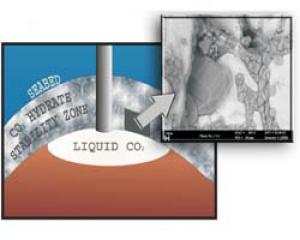
Schematic diagram representing the proposed storage as a liquid and hydrate, with an example

A new process for creating patterns of individual molecules on a surface combines control of self-assembled monolayers (SAMs) and a soft lithography technique known as microcontact printing. Scientists use the process, known as "microcontact insertion printing" to build surfaces that have molecules with specific functions inserted at known intervals on a surface. The new technique, with potential applications ranging from analysis of biochemical mixtures to molecular-scale electronic components, will be described as the cover story of the 5 February 2007 issue of the journal Applied Physics Letters by a team led by Penn State researchers Paul S. Weiss, distinguished professor of chemistry and physics; Mark Horn, associate professor of engineering science and mechanics; and Anne M.