




Until then, science and technology are seeking better ways to help more people. Engineers at MIT propose "satellite" livers that can be injected rather than a full transplant and surgery. So far, it is just in mice and therefore only exploratory (mice are not little people, which corporate journalists forget when writing about claims), but the work showed that their injected liver cells could remain viable in the body for at least two months, and they were able to generate many of the enzymes and other proteins that the liver produces.
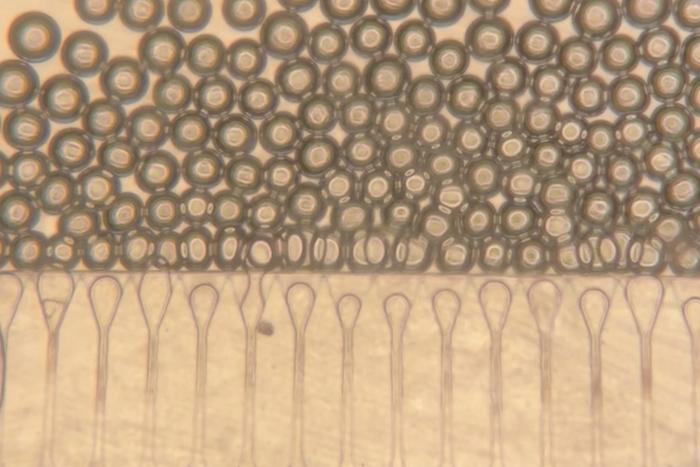
Credit: Bhatia Lab
Livers are one of the big five organ problems we face and about 10,000 people per year need them just in America. The 500 things they do, from controlling blood clots to removing bacteria, are done using cells called hepatocytes. The study injected hepatocytes along with hydrogel microspheres to keep them together and create connections with nearby blood vessels. They injected the cell mixture into the fat tissue in the belly, for most liver disoders the graft doesn't need to be near the liver, they just access to blood vessels.
Once the cells were localized in the perigonadal adipose tissue, they formed a stable, compact structure. Over time, blood vessels began to grow into the graft area, helping the injected hepatocytes to stay healthy. They stayed viable for the length of the study, which was eight weeks.
Stem cells are the goal because this would still need immunosuppressive drugs, but the researchers want to look into 'stealthy' hepatocytes that can evade the immune system.
Citation: 'Image-guided injectable niche for hepatocyte transplantation', Vardhman Kumar, Joa Yun, Susanna K. Elledge, Nicole Henning, Katarzyna A. Grzelak, Ashley D. Westerfield, Amy Stoddard, Favour A. Oladimeji, Virginia Spanoudaki, Kasturi Chakraborty, Savan K. Patel, Heather E. Fleming, Christopher S. Chen, Sangeeta N. Bhatia, Cell Biomaterials, SN - 3050-5623, https://www.cell.com/cell-biomaterials/fulltext/S3050-5623(26)00034-6?source=science20.com



Comments