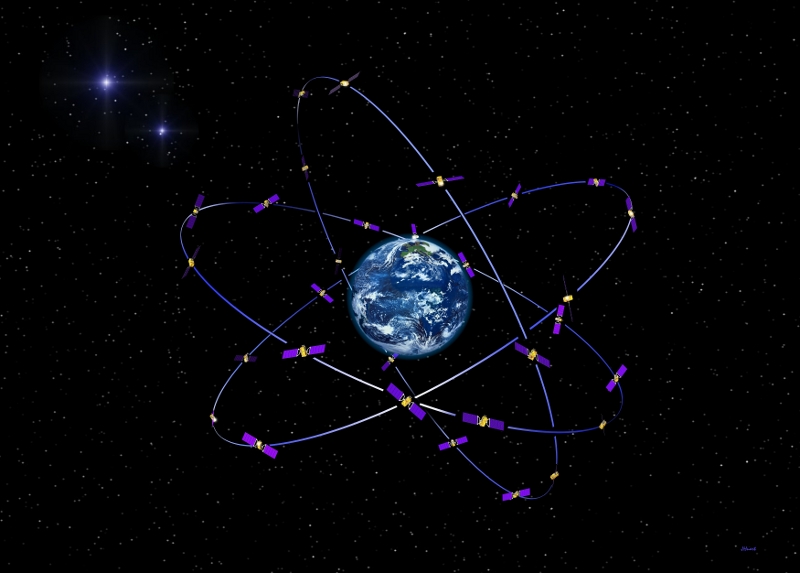
Geodesy is the science of determining the geometry, gravity field, and rotation of the Earth and their evolution in time. Traditionally, geodesy has been serving other sciences and has had many societal applications, including mapping.
With the advent of satellite, geodesy itself developed into a science, making unique contributions to the study of the Earth system, its inherit dynamics, and its response to climate change, as well as a tool underpinning a wide variety of other remote sensing techniques. Facilitated by Global Navigation Satellite Systems such as GPS, a wide and growing set of applications associated with positioning and navigation is opening up.
Geodesy provides the foundation on which all Earth observation systems are built. In this function, geodesy is essential for Earth observation just like the foundation and frame of a house are necessary to keep it stable over time.
But modern geodesy does more: with its three pillars of geokinematics, Earth gravity field, and Earth rotation, it also provides comprehensive observations of changes in the Earths shape, gravity field and rotation.
Introduction To Geodesy
Comments
Hello Ramin,
That is a very nice geodesy library you have put together.
Thank you for posting a link to it.
Please, note that several of the sources have changed url - maybe a student can go through the library and update it? :-)
Bente
That is a very nice geodesy library you have put together.
Thank you for posting a link to it.
Please, note that several of the sources have changed url - maybe a student can go through the library and update it? :-)
Bente
—
Bente Lilja Bye is the author of Lilja - A bouquet of stories about the Earth
Bente Lilja Bye | 05/20/10 | 16:05 PM


http://kiamehr.ir/online.htm