Fake Banner
Why Raw Dairy Farms In California Accelerated The H5N1 Bird Flu Pandemic

Californis is the largest dairy producer in the United States. It is also the most anti-science...
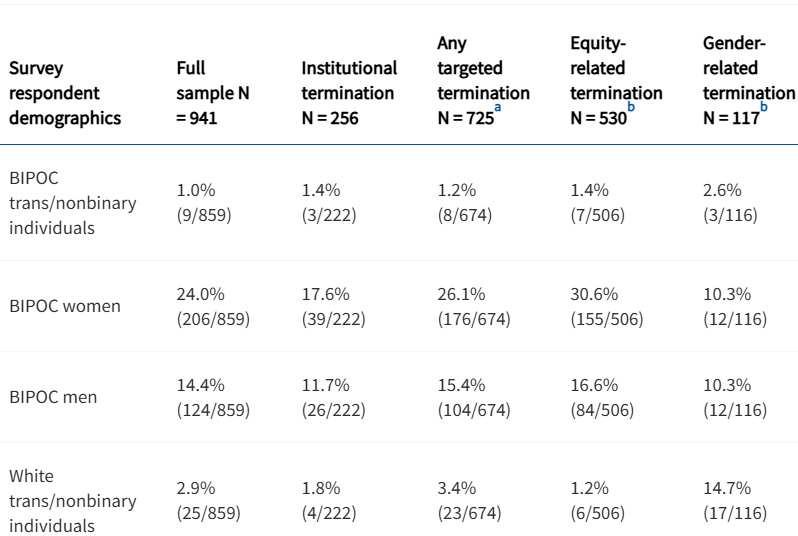
Affirmative Action In NIH Grants Revealed

The Supreme Court recently issued another ruling that seeks to end racial discrimination. most...

Environmentalists, What Are You Asking From Dedmoroz Lenin For Earth Day This Year?

Tomorrow is Earth Day. It is also Lenin's birthday. That's not coincidence. The leader of...
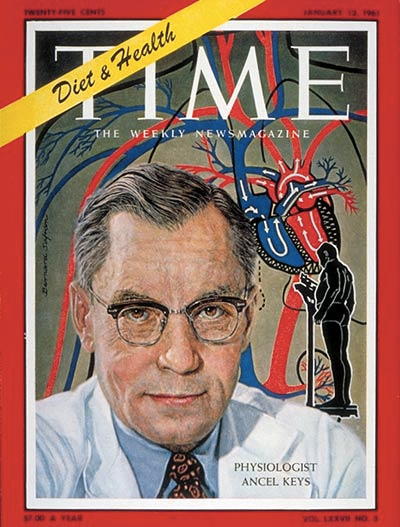
How Ancel Keys Went From MAHA Hero To MAHA Villain

If a lot of the food and health claims you read and hear today seem like things left over from...

User picture.
picture for Tommaso Dorigopicture for Heidi Hendersonpicture for Fred Phillipspicture for picture for Hontas Farmerpicture for Atreyee Bhattacharya
Hank CampbellRSS Feed of this column.

I founded Science 2.0® in 2006 and since then it has become the world's largest independent science communications site, with over 300,000,000 direct readers and reach approaching one billion. Read More »

Blogroll
It was hard to miss the arsenic microbe news last week.  Heck, I was in the woods of Pennsylvania with no cell phone access much less Internet and I knew about it. The NASA hype machine and mass media's need to sell eyeballs made sure of that.
Why scientists should blog is not a new topic to Science 2.0.   In a way, I think we pioneered science blogging(1) because, prior to us, the only science bloggers with any real audience mostly wrote about politics and religion and last year I chaired a panel on science outreach with two columnists here and Mike Eisen, co-founder of PLoS, and Eugenie Scott, founder of the National Center for Science Education and blogging was a key topic on how scientists should increase engagement.
It used to be that broader understanding of zoology meant intuitively that new species would be harder to find and so it followed that there would be fewer of them when found - that is the nature of rarity.

Now, because newer species are so rare, it is fashionable to label them nearly extinct even though they have just been discovered and so may not have been prolific any time in recent memory, or at all.  It can be a little numbing to the general audience. - when everything is rare, nothing is (see special snowflake).
Beginning in 1988, and until a Republican Congress approved mandates and subsidies for biofuels in 2005 (at which point every Democrat and environmental activist irrationality extolling ethanol must have realized there was something wrong), Al Gore insisted despite a lack of evidence that it was a viable solution to the fossil fuel issue.   He saw 'renewable' and didn't look any farther but he is older and wiser now.

What the non-agenda-based section of science (people in the actual energy industry that is, science bloggers fawned over the stuff) knew all along was this would be an expensive boondoggle and accomplish nothing.
The U.S. Food and Drug Administration has approved Advanced Cell Technology for the second human trial of human embryonic stem cells (hESC), in people with macular degeneration, a progressive form of blindness.

Advanced Cell Technology said it would start testing its stem cell-based treatment on 12 patients with Stargardt’s Macular Dystrophy, which usually impacts children between 10 to 20 years of age, resulting in blindness due to degeneration in the retinal pigment epithelium (RPE). 
A study by Wageningen University says radiation from wi-fi networks may be harmful to trees.   

The researchers note that trees in urban areas in recent years have shown an increasing number of cracks, bumps, discolorations and various forms of tissue necrosis but no cause has been identified, so they sought to examine if it was more than biological factors like pests or disease.