




The Military laboratories are constantly seeking new poisons with special attention to the world's animal and plant, biological toxins.Examples: Snakes as the cobra, the fish Arothron hispidus Arothron meleagris or, like frogs Phyllobates aurotaenia, or TARIC Toros, shellfish such as Mytilis californianus, or Conus magus.
The Strychnine is an alkaloid found in small quantities in the seeds of Strychnos nux vomica, a tree indigenous to India, was synthesized in the mid-nineteenth century and produced in large quantities. The Strychnine due to its excitatory properties of the central nervous system, was hired as a drug of abuse, especially among the upper classes of London and Paris.
At the beginning of the century was created the first pill for the suicide of secret agents captured by the enemy and contained potassium cyanide, a poison synthesized in 1850. The potassium cyanide kills after a few minutes and atrocious asphyxiation.
In August 1978 the dissident Georgi Markov Ivan was likely assassinated by Bulgarian secret services in London with a tiny dart "fired" by a fake and poisoned umbrella (palitossina ). The Palitossina was extracted by a microscopic red algae that populate the coast occasionally called by the natives of Hawaii Limu or Hana.
In December 1961 caused the rapid death of some sub Americans. The red alga was classified in the genre of Palithoa and therefore, its toxin called palitossina.

Diagram of the firing mechanism of the umbrella used to assassinate Bulgarian dissident Georgi Markov.
Another toxin has been investigated by the secret services that produced naturally by a protozoan belonging to the marine dinoflagellates, the saxitoxin which determined to the person who it had ingested an instantaneous death. The production of this substance is also highly complex: it takes 100 kilograms of rare crustaceans that live in the icy waters of Alaska to produce just one gram of saxitoxin.
More recently in 1959, Stefan Bandera, Ukrainian nationalist exiled, was killed by the KGB with hydrocyanic acid sprayed in his face.
In October 23, 2002 a group of Chechen terrorists burst into a Moscow theater and took hostage about 800 people. The command calls for the withdrawal of Russian troops from the Caucasus.
The journalist Anna Politkovskaya of Novaya Gazeta, in this difficult situation, is mediating between the government and terrorists. But at dawn on October 26th Brigade's Alpha special forces enters in the theater and used a lethal nerve gas which then becomes not only for terrorists, but also for many hostages. The powerful sleeping gas / disabling used to neutralize the terrorists, it is unknown, securely cause serious symptoms in the hostages who have inhaled: fainting, dizziness, vomiting.
The Russian government refused to inform doctors what type of gas had been used, but on the gas' effects and examinations of victims, it appears to have been an FSB-made aerosol version of 3-methylfentanyl, an artificial, powerful opium-like substance.
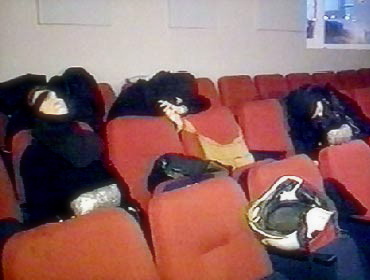
Deputy Interior Minister Vladimir Vasilev refers, during a press conference, that during the attack to theater siege in Moscow, 67 hostages were killed, nine died in hospital, 34 Chechen guerrillas were killed.
The October 8, 2006 Anna Politkovskaya, was killed with four shots in her home. Anna Politkovskaya was known for his investigations into human rights violations committed by the Russian authorities during the war in Chechnya, the last article she was working on was subtitled "The use of torture in counter-terrorism program in the North Caucasus."
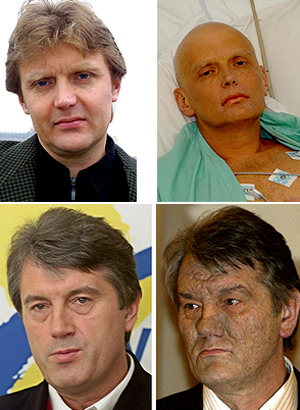
In December 2004 the Ukrainian presidential candidate Yushchenko develops the dermatological facial syndrome (chloracne) http://bit.ly/d9SxHr, the classical skin changes caused by TCDD or dioxin. Subsequently, occurs the killing, through polonium 210, of former KGB agent and Russian dissident Alexander Litvinenko.
Plus est hominem extinguere veneno, quam occidere gladio
".. Is worse to kill a man with the poison, which by the sword" so reciting an ancient Roman law of the emperor Antoninus Pius. (AD 86 -AD161)
Abstract
Prof. Camillo O. Di Cicco
Member of American Association for the History of Medicine
".. Is worse to kill a man with the poison, which by the sword" so reciting an ancient Roman law of the emperor Antoninus Pius. (AD 86 -AD161)
Abstract
Prof. Camillo O. Di Cicco
Member of American Association for the History of Medicine




Comments