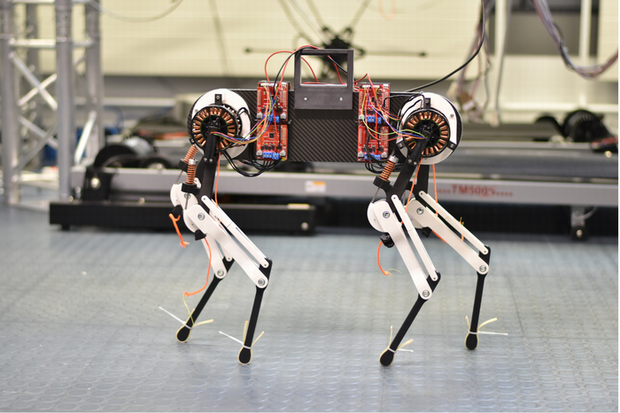





Nature is out to kill everything so a newborn animal must learn to walk on its legs as fast as possible to avoid predators. Learning the precise coordination of leg muscles and tendons takes some time and initially baby animals rely heavily on hard-wired spinal cord reflexes. More advanced and precise muscle control lead to the nervous system becoming well adapted to the young animal’s leg muscles and tendons.

No more uncontrolled stumbling – the young animal can now keep up with the adults.

We often think of babies as blank canvases with little ability to learn during the first few weeks of life. But babies actually start processing language and speech incredibly early. Even while in the womb, they learn to discern voices, along with some speech sounds. At birth, they already prefer speech sounds over other types of non-language sounds.

But exactly how the baby brain learns to process complex language sounds is still a bit of a mystery. In our recent study, published in Nature Human Behaviour, we uncovered details of this mindbogglingly speedy learning process – starting in the first few hours of birth.

In today's Washington Examiner, I detail how the Biden administration did an end-run around their own scientists - and what that will do to the price of food.  

How ridiculous is the new level imposed on a popular weedkiller for America's most important crop? It is equivalent to government saying you should not be exposed to the sun for more than one second every 10 years or you will get skin cancer. 

We have entered into a new age of space exploration, in which the commercialization of space travel has opened up the possibility that within a generation, space tourism will become a normal part of human existence. Yet, space travel does not come without a price.

One thing that must annoy psychiatrists is that everyone will try to claim expertise in their field if they want to make a political point - in the case of a recent paper it is literally humanities scholars who want more mask and vaccine mandates.

To achieve that, and despite having nothing we might consider qualifications, they used profiling to suggest a clinical diagnosis. They did it by creating their own custom analysis to claim that while other studies showed there were lots of reasons people might not like to wear a mask, opponents casually claiming they were selfish or even narcissistic are clinically correct.

Let's unpack that. 

Lately I’ve been thinking and writing about environmental governance. Here’s a summary. It has to do with the consequences of not thinking systemically; combining top-down and bottom-up policies; technology forcing; fairness and the SDGs; and prospects of violence.

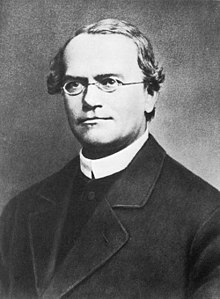
Newly-discovered historical information adds weight to the belief that given what was known in the mid-19th century, Gregor Mendel, the Austrian (Moravian, now part of the Czech Republic) Monk was even further ahead of his time.  So advanced his work was criticized by some as 'too good to be true' despite surviving every challenge.

Resentful scientists may have later tried to claim he must have used more than science but today he is seen as so ahead of his time his work is uncontroversial. Yet at the time the science community ignored him, perhaps because he was a religious leader and not a career scientist, and perhaps because he had no desire to self-promote, or perhaps because it was too advanced for the existing science community to accept.
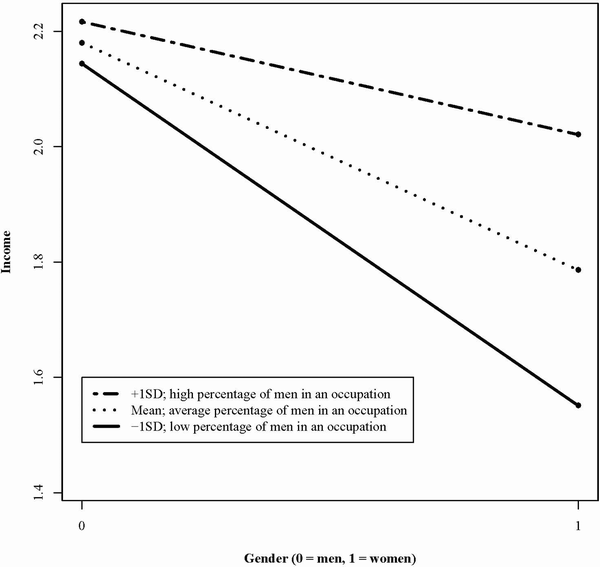
The wage gap between genders has always had some cultural traction but there were also always odd pockets where it was worse - including what you wouldn't have expected. Environmental groups had far more women but the wage gap between what they paid men and women was alarming compared to engineering, where there were fewer women as a total percentage but no meaningful pay disparity.


