Researchers have discovered how to store diverse forms of artificial short-term memories - in isolated brain tissue.
Memories are often grouped into two categories: declarative memory, the short and long-term storage of facts like names, places and events; and implicit memory, the type of memory used to learn a skill like playing the piano. In the study, researchers sought to better understand the mechanisms underlying short-term declarative memories such as remembering a phone number or email address someone has just shared.
Last Saturday night Gian Francesco Giudice and I
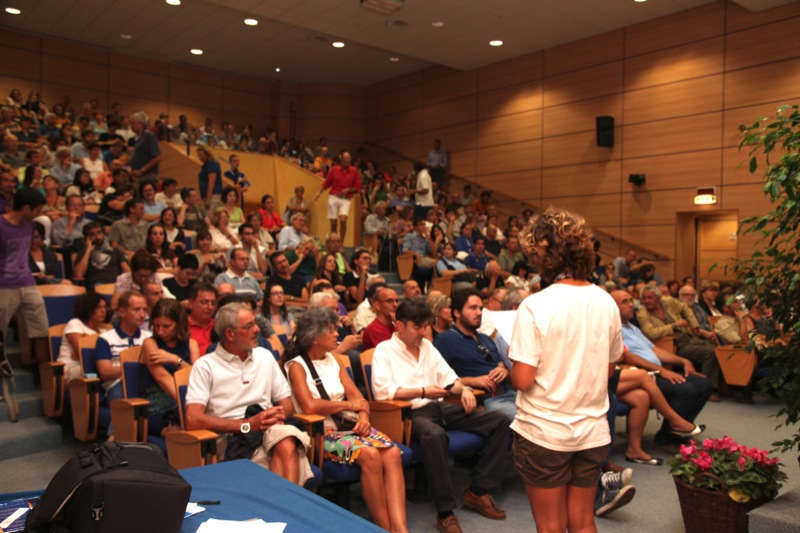
discussed the discovery of the Higgs boson and its aftermath in front of a wide audience gathered in the Aula Magna of Mantova University.
The event was #173 in the wide program of the town's
literature festival, a week of seminars, interviews, performances by authors of books, journalists, and intellectuals in a broader sense.
Last week,
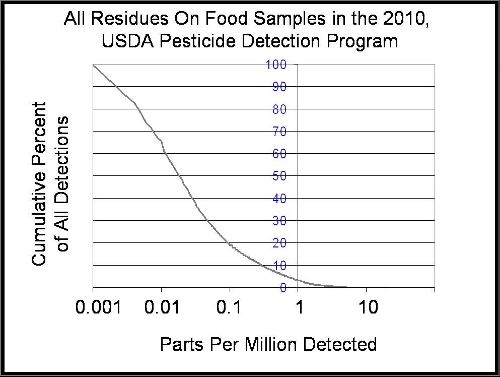
a meta-analysis from a highly credible academic source (Stanford University, its medical school and nearby institutions), raised serious questions about the often-touted nutritional advantage of organic food. They digested the contents of 237 peer reviewed articles comparing organic and conventional foods and diets. They concluded that "the published literature lacks strong evidence that organic foods are significantly more nutritious than conventional foods."
Fifty years ago, marine biologist Rachel Carson ignited the modern environmental movement with the publication of Silent Spring. It was an ecological alarm call – an attack on what she believed was the overuse of pesticides and the potential harm they might cause to humans and wildlife – and a call for a progressive, science-focused view of modern agriculture and food.
Her deeper, ecological message is often overlooked by her most ardent supporters. It should be front and center as Californians prepare to go the polls in November to decide the fate of Proposition 37 – which could introduce mandatory labeling of genetically modified (GM) foods into the United States for the first time.
We are in a new space revolution, and in the past two years, several people have used the Kickstarter crowd-funding platform to try to get into space. Not all succeeded. Let's look at the current standings. They are, in order of kickstarter: Team Prometheus, Project Calliope, Sampling Space, KickSat, ArduSat, and most recently SkyCube.
It would be idiotic to claim that quantum mechanics just follows from getting stoned and blurting “everything is possible”. One of the difficulties with understanding the derivation of quantum mechanics (QM) from tautological modal realism [1] is that vital steps are omitted from the discussion (see for example many comments here). An important early step is grasping the indeterminism contained in tautological modal realism (TMR). Before discussing indeterminism, let us briefly see where indeterminism is in the bigger picture. The derivation of QM looks as follows [numbers like (3) refer to numbered paragraphs in [1] ].
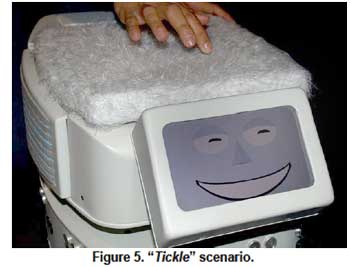
“Under what conditions can we engage in a meaningful, expressive interaction with an electronic device?” Say, for example, by ‘tickling’ a robot?
This question is examined in a recent article by Patrizia Marti, assistant professor and senior lecturer at the Department of Communication Science, University of Siena, Siena, Italy, which features in the International Journal of Design.
Sometimes you put things in the platform of a political party because it's a lot of drama to exclude them even if you don't really believe. So we get hilarity like last week, with Republican candidate Mitt Romney disavowing some of his own platform (he doesn't believe it all personally, he said) and then this week the Democrats had the same problem; the official platform of the Democratic National Convention decided Jerusalem was no longer the capitol of Israel and they removed any mention of God.
If you've been in science media for any length of time, there are two arguments you will hear invoked to support almost any questionable position; that Einstein did his best work while he was a patent clerk and that Galileo was oppressed by the Catholic Church.
One of those is wrong; Galileo was not actually oppressed by a Church, he was really oppressed by fellow scientists(1) , the Pope was actually quite supportive of Galileo but fellow scientists were looking for ways to torpedo him. Yet colloquially, Galileo is held up as this sort of 'religion against science' example in a way that shows many people believe it was some sort of unscientific Dark Age prior to his arrival. Not true at all.
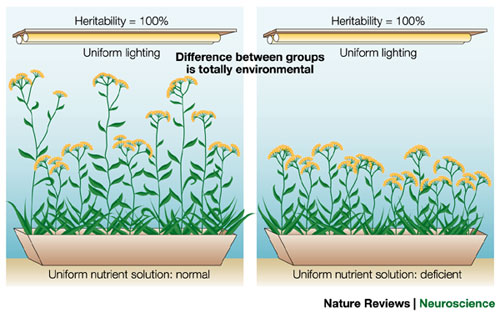
"Heritability" is a term used in many articles and through much of the scientific literature and invariably promotes the idea that it relates specifically to inherited traits. As a result, it is often assumed that the heritability of a particular trait relates to how much influence genetics has on the trait manifesting in an individual.
However, that isn't what it means.
Heritability attempts to address the relationship between nature (genetics) and nurture (environment), so that as each changes, the variation between individuals within a population can be estimated based on these influences. In this context, "environment" simply represents everything external to the genome that could effect expression.