Fake Banner
Healthcare In Space - The First Medical Evacuation From The ISS

For the first time in 25 years of continuous crewed operations, an astronaut has been medically...

I Earned It, You're Privileged - The Paradox In How We View Achievement

The concept of “hard work v privilege”, and what either one says about someone’s social status...

Not Just The Holidays: The Hormonal Shift Of Perimenopause Could Be Causing Weight Gain

You’re in your mid-40s, eating healthy and exercising regularly. It’s the same routine that...

Anxiety For Christmas: How To Cope

Christmas can be hard. For some people, it increases loneliness, grief, hopelessness and family...

User picture.
The ConversationRSS Feed of this column.

The Conversation is an independent source of news and views, funded by the academic and research community and delivered direct to the public. The Conversation launched in Australia in March 2011.... Read More »

Blogroll

Credit: Flickr/Steve Jurvetson, CC BY

By Kelly E Matthews, The University of Queensland

Research suggests science graduates are struggling with essential quantitative skills and science degree programs are to blame.

Quantitative skills are the bread and butter of science. More than calculating right answers, quantitative skills are defined by applying mathematical and statistical reasoning to scientific and everyday problems.


Norway to the rescue? Credit: Travis Lupick, CC BY-NC-SA

By Steffen Böhm, University of Essex and Katharine Rockett, University of Essex


Just don't forget to listen scientists too. Credit: EPA

By Toby Miller, Cardiff University

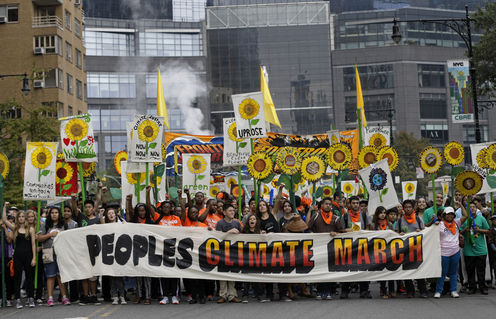
Who should political leaders follow when it comes to climate change: environmental scientists, powerful corporations, or a million marchers? Sometimes the three groups disagree, sometimes they concur; but even then, their claims to authority are based on different and frequently conflicting ideas. The recent United Nations climate summit highlighted the confusion over how best to make progress.


It may already be too late to stop Antarctic ice sliding into the ocean. Credit: EPA

By Eelco Rohling, University of Southampton

Ice sheets respond slowly to changes in climate, because they are so massive that they themselves dominate the climate conditions over and around them. But once they start flowing faster towards the shore and melting into the ocean the process takes centuries to reverse. Ice sheets are nature’s freight trains: tough to start moving, even harder to stop.


Phil Mickelson tees off at Gleneagles. Credit: EPA

By Tony Westbury, Edinburgh Napier University

Medinah Country Club, Chicago, Ryder Cup 2012. There were six short feet between Martin Kaymer and the 18th hole. This was the moment. No other player, no spectator, none of the many millions watching on television would have dared breathe. The seconds stretched as the German composed himself for his final shot.


Volcano season. Some think it's the time of the year. Credit: EPA

By Robin Wylie, University College London