Fake Banner
Healthcare In Space - The First Medical Evacuation From The ISS

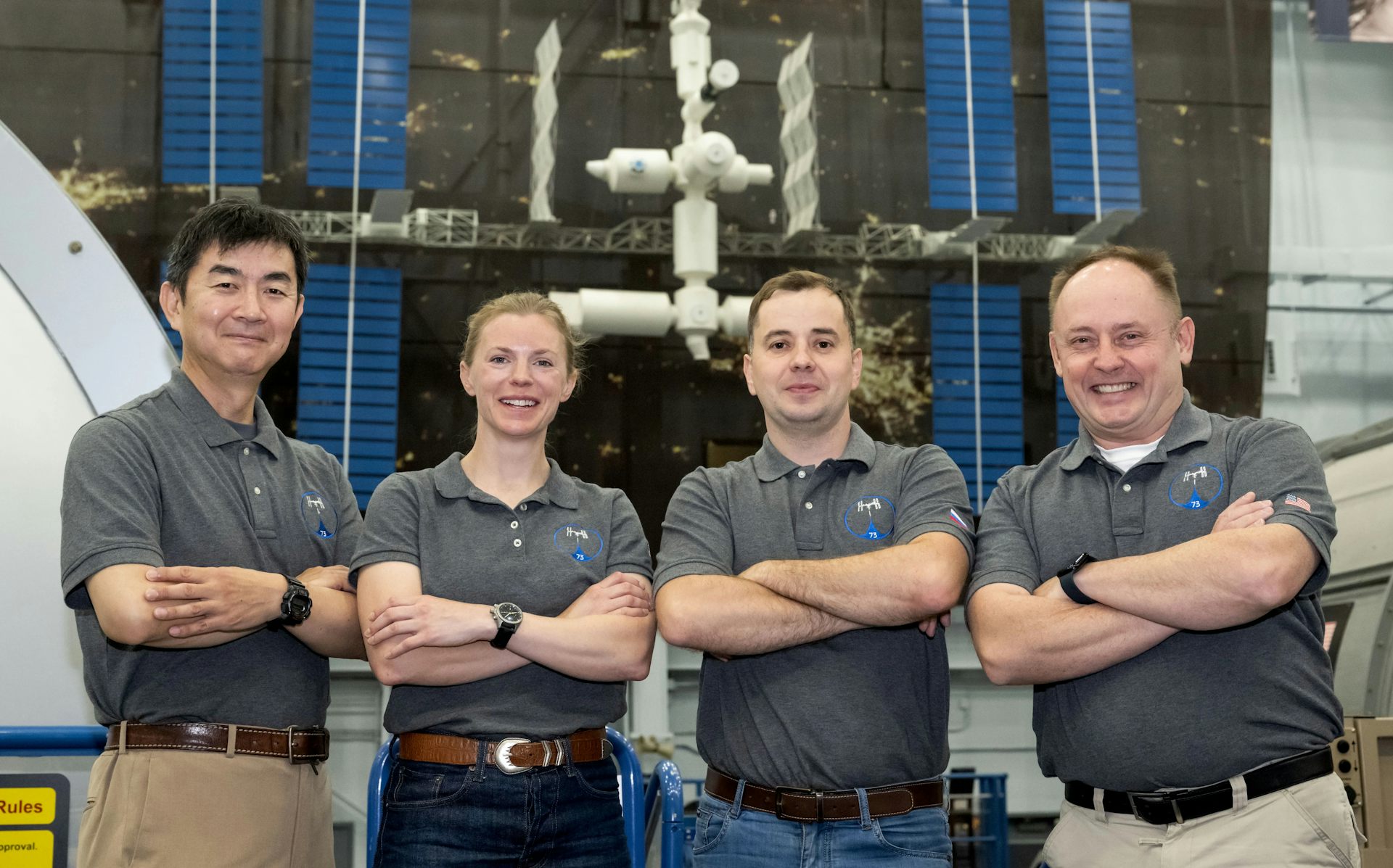
For the first time in 25 years of continuous crewed operations, an astronaut has been medically...

I Earned It, You're Privileged - The Paradox In How We View Achievement

The concept of “hard work v privilege”, and what either one says about someone’s social status...

Not Just The Holidays: The Hormonal Shift Of Perimenopause Could Be Causing Weight Gain

You’re in your mid-40s, eating healthy and exercising regularly. It’s the same routine that...

Anxiety For Christmas: How To Cope

Christmas can be hard. For some people, it increases loneliness, grief, hopelessness and family...

User picture.
The ConversationRSS Feed of this column.

The Conversation is an independent source of news and views, funded by the academic and research community and delivered direct to the public. The Conversation launched in Australia in March 2011.... Read More »

Blogroll

Whatever happened to energy crops? A decade ago, the UK authorities confidently expected farmers to devote swaths of land to growing the likes of short-rotation willow and poplar and perennial grasses. These were to help feed one of the UK’s promising new renewable power sources – biomass energy, which burns plant materials to produce heat and power.

There are two features of life on the African continent that are fundamentally deadly to socioeconomic development. These are lack of cleanliness and punctuality.

There is plenty of discussion on macro and micro economics and the big theories of economic development, but it seems the African worldview is a primary problem. It is opportune to discuss more fundamental inhibitors to economic development and growth. In my view this entails a fundamental change in how things get done.

Many of society’s energy challenges require gigawatts of power, but many more are small – and some are entirely microscopic. To drive a new generation of tiny micromachines that could deliver drugs or clean traces of pollution, physicists are increasingly looking to biology for inspiration.

In work published in the journal Science Advances, my co-authors and I present a simulation of a sort of tiny “windfarm” powered by the natural self-organization of bacteria. It’s a small step towards harnessing the energy potential of microorganisms.

Last week, a small group of people held a protest outside Channel Nine in Sydney. They were objecting to the network’s treatment of Adam Whittington, the Australian man whose company “recovered” Sally Faulkner’s children on the streets of Beirut.

It’s clear there is a high level of concern within the community. Some concerns relate to Nine’s treatment of Whittington and his colleagues, who remain imprisoned in Lebanon. Others include Nine’s apparent involvement in arrangements for what might constitute the criminal act of child abduction, the payment of A$115,000 by Nine to Whittington’s company, and the crew’s close involvement on the scene and afterwards in Beirut.

If the food industry is not in crisis, it certainly contains an increasing level of complexity and associated risks. A recent analysis suggested 50% of US food production is wasted, with global estimates above 30%.

Retailers want perfect produce, leading to wastage occurring throughout the food supply chain. They also seek low prices, leading to industrialization of processes.

Glioblastomas are often resistant to the one type of drug that breaks the blood-brain barrier. HealthHub You find yourself sitting in your doctor’s surgery. It’s only been a few days since your initial visit to check on these pounding headaches you’ve been waking up with, along with some dizziness, nausea and vomiting, and a general drowsy and disconnected feeling.