Fake Banner
Blood Pressure Medication Adherence May Not Be Cost, It May Be Annoyance At Defensive Medicine

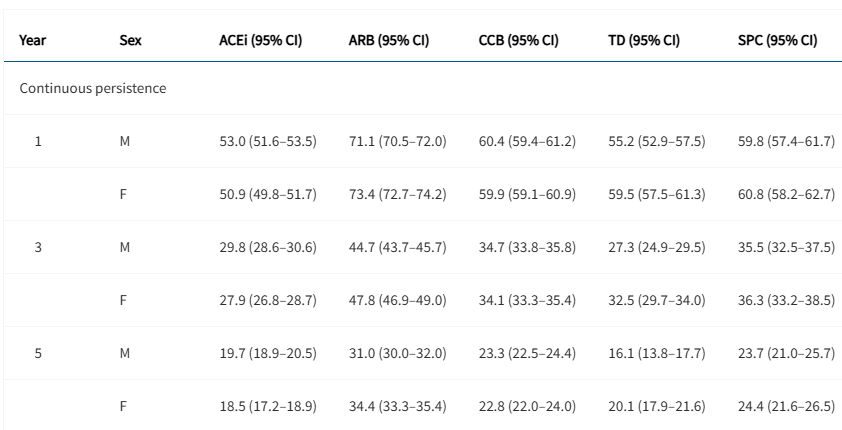
High blood pressure is an important risk factor for developing cardiovascular disease and premature...

On January 5th, Don't Get Divorced Because Of Hallmark Movies

The Monday after New Year's is colloquially called Divorce Day, but it's more than marriages ending...

Does Stress Make Holidate Sex More Likely?

Desire to have a short-term companion for the holidays - a "holidate" - is common enough that it...

To Boomers, An AI Relationship Is Not Cheating

A recent survey by found that over 28 percent of adults claim they have an intimate, even romantic...

User picture.
picture for Fred Phillipspicture for Tommaso Dorigopicture for picture for Patrick Lockerbypicture for Hontas Farmerpicture for Ilias Tyrovolas
Hank CampbellRSS Feed of this column.

I founded Science 2.0® in 2006 and since then it has become the world's largest independent science communications site, with over 300,000,000 direct readers and reach approaching one billion. Read More »

Blogroll
The Wall Street Journal took the Marc Hauser controversy (barely noticed here, because it's evolutionary psychology, which is sort of apodictically evident as bad science so we didn't react to it) and used his suspect data on monkey cognition to slap progressives.

We like to make fun of pseudoscience, mostly because it is hypocritical.   It simultaneously says real science is insular and close-minded and BIG and therefore resistant to awesome new ideas, like there being ghosts in my attic(1), but wants science legitimacy so uses faux-science techniques and then maps the data to the topology they want to achieve, like 'this must be a ghost.'

Always wanted to fight actual hordes of locusts and see what that whole Sodom place was all about?
It only takes a look at the Science 2.0 entry on Wikipedia to know their system is flawed (1) - anyone can create an entry but in order to edit it, like what Science 2.0 is, you have to document for some stranger on Wikipedia that you know what you are talking about, even if you're one of few people who knows what the topic is about.
Dr. Phil Plait of Bad Astronomy fame has been a Science 2.0 favorite since the moment we came online and for almost a decade prior to that.  He combines wit and no-nonsense skepticism with the kind of creative reflex that makes fundamental science concepts understandable by virtually everyone who doesn't hate getting a little smarter.
It's been a strange summer for online content and Simon Owens at The Next Web asks an obvious question - should bloggers have control over ads or not?

It's a non-issue here, of course - every writer on Science 2.0 can simply choose not to carry ads on their work and no ads are shown and no money is paid in that case.   Otherwise, the bulk of the revenue is paid out to writers based on traffic.