

 A Great Year For Experiment Design
While 2025 will arguably not be remembered as a very positive year for humankind, for many reasons...
 Living At The Polar Circle
Since 2022, when I got invited for a keynote talk at a Deep Learning school, I have been visiting...
 Conferences Good And Bad, In A Profit-Driven Society
Nowadays researchers and scholars of all ages and specialization find themselves struggling with...
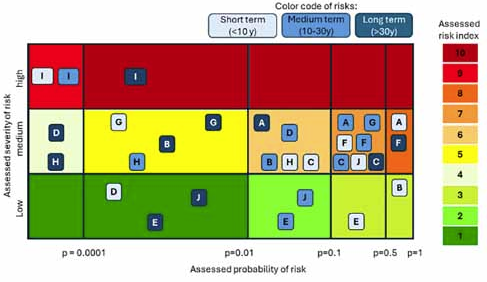 USERN: 10 Years Of Non-Profit Action Supporting Science Education And Research
The 10th congress of the USERN organization was held on November 8-10 in Campinas, Brazil. Some...
       |
Tommaso Dorigo Tommaso Dorigo is an experimental particle physicist, who works for the INFN at the University of Padova, and collaborates with the CMS and the SWGO experiments. He is the president of the Read More » |
Blogroll |


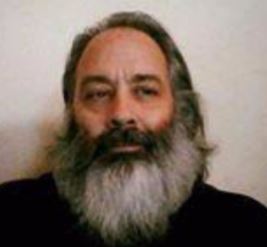 Dr. Alex Durig (see picture) is a professional freelance writer, with a PhD in social psychology from Indiana University (1992). He has authored seven books in his specialization of perception and logic. He claims to have experienced great frustration resolving his experience of perception and logic when it comes to physics, but he says he no longer feels crazy, ever since Anomaly! was published. So I am offering this space to him to hear what he has to say about that...





