Fake Banner
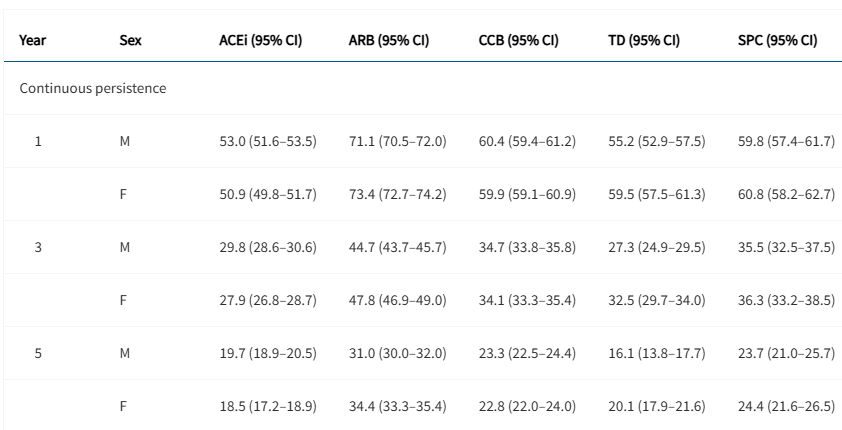
Blood Pressure Medication Adherence May Not Be Cost, It May Be Annoyance At Defensive Medicine

High blood pressure is an important risk factor for developing cardiovascular disease and premature...

On January 5th, Don't Get Divorced Because Of Hallmark Movies

The Monday after New Year's is colloquially called Divorce Day, but it's more than marriages ending...

Does Stress Make Holidate Sex More Likely?

Desire to have a short-term companion for the holidays - a "holidate" - is common enough that it...

To Boomers, An AI Relationship Is Not Cheating

A recent survey by found that over 28 percent of adults claim they have an intimate, even romantic...

User picture.
picture for Fred Phillipspicture for Hontas Farmerpicture for Tommaso Dorigopicture for picture for Patrick Lockerbypicture for Ilias Tyrovolas
Hank CampbellRSS Feed of this column.

I founded Science 2.0® in 2006 and since then it has become the world's largest independent science communications site, with over 300,000,000 direct readers and reach approaching one billion. Read More »

Blogroll
In The Federalist Today, I have a piece titled Five Things Neil deGrasse Tyson’s “Cosmos” Gets Wrong

Robin Thicke may have sung "Blurred Lines" and appeared in a teenage fantasy video with a lot of naked women, but when a photo was revealed of him in a suggestive situation with another woman, he found that the line was actually not all that blurry to his wife.(1)

What changed? She had been fine with his canoodling before. He has no idea and men meeting women across the nation are just as confused about where their blurred lines are. 

Science is not only compatible with spirituality; it is a profound source of spirituality - Carl Sagan

I missed the big Carl Sagan thing when it happened. I was in high school when Cosmos came out, we lived in the country and if you wanted to watch a different television network, you had to go up into the attic and turn a giant antenna with a pipe wrench. Sports and girls and D&D were more of a priority than television.

Yet even though I didn't watch it when it came out, shortly afterward I could still tell you who said "billions and billions" with that special emphasis.  That and riffs on "Who Shot J.R.?" were big that year.
Statisticians have a rule of thumb for calibrating claims made in humanities and science papers alike. Andrew Gelman, for example, talks about statistical significance filter - "If an estimate is statistically significant, it’s probably an overestimate."

A good thing to remember when you read weak observational studies, psychology surveys and, in modern times, a shocking number of epidemiology papers.

For health, you can use a different rule of thumb: Does Joe Mercola sell it?

If he does, it is probably suspect.

When I have done workshops for aspiring science journalists/writers, I have three pieces of advice. The first is: Don't defend science. It doesn't need defending.

But it's easier said then done. If you spend some time in science media culture, you will invariably find a person saying something pithy like "Science: It works, bitches" but then raging about some attack on science and defending it with shrill verbage and name-calling and conspiracy theories.

If science works, you don't need to defend it with claims that Big Oil is funding climate denial or that homeopaths and Big Organic fund vaccine and GMO denial.
Here's an intellectual puzzle; which is more real, the viability of wind power as anything more than a sustainable gimmick or Wind Turbine Syndrome?