


Students of the evolution of social behavior got a big boost with the publication of the newly sequenced honeybee genome in October 2006. The honeybee (Apis mellifera) belongs to the rarified cadre of insects that pool resources, divide tasks, and communicate with each other in highly structured colonies. Understanding how this advanced state of organization evolved from a solitary lifestyle has been an enduring question in biology.


A honeybee gene originally used in egg production has become an important behavioral modulator and a timekeeper of social life.

For a lucky subset of vertebrates, losing an appendage is no big deal. As many an inquisitive child knows, salamanders can regenerate lost limbs or tails; and as lab investigators know, zebrafish can regrow lost fins. Of course, humans and other "higher" vertebrates must make do with repairing rather than regenerating damaged tissues. Though whole body generation (WBR) does occur, it’s typically restricted to a subset of morphologically less complex invertebrates, such as sponges, flatworms, and jellyfish.

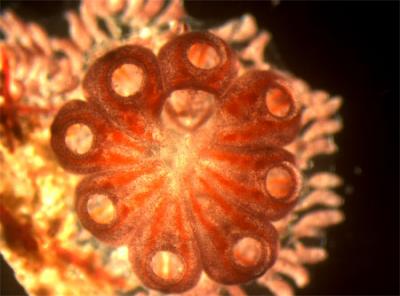
In a new study, Yuval Rinkevich et al. discovered an unusual mode of WBR in our closest invertebrate relative, the sea squirt Botrylloides leachi.

Superconductivity -- the conduction of electricity with zero resistance -- sometimes can, it seems, become stalled by a form of electronic "gridlock."

A possible explanation why is offered by new research at Cornell University.

Why do some individuals sacrifice their own self-interest to help others? The evolution and maintenance of cooperative behavior is a classic puzzle in evolutionary biology. In some animal societies, cooperation occurs in close-knit family groups and kin selection explains apparently selfless behavior.

Not so for the lance-tailed manakin. Males of this little tropical bird cooperate in spectacular courtship displays with unrelated partners, and the benefits of lending a helping wing may only come years down the line. Instead of fighting over females, pairs of male lance-tailed manakins team up to court prospective mates.


Adult male lance-tailed manakin on a branch.

Using a modified ink-jet printer, a McGill University researcher is producing three-dimensional bioceramic “bones” that could one day change the way reconstructive surgery is performed.

McGill professor Jake Barralet, Canada Research Chair in Osteoinductive Biomaterials, Charles Doillon of Université Laval and Uwe Gbureck of the Department for Functional Materials in Medicine and Dentistry at the University of Würzburg, Bavaria, have taken advantage of the ink-jet printer’s ability to print layer upon layer to produce three-dimensional porous materials using the same building blocks as real bone.

There seems to be a trend occuring in society that is trying to unify the science humanity has cultured and cradled  in order to explain objectively the existence of observable phenomena with the relligion that humanity spawned to give explanation to those very same observable phenomena.  Only it was religion who first throned itself dictator of the minds of women and men alike before the birth of science after the Middle Ages.  It is in this very naturally seeming way that the religious explanations of these phenomena proffered by some ancient and contemplative imaginations to give meaning to the otherwise incomprehensible enigmas that surrounded early man, had a few hundred years headstart on the claim to truth.  The only reason religion still exists today, I beleive is because of tha

I have been studying electromagnetism lately, as in the practical application of Maxwell's equations to realistic physical systems. I find it an amazing fact, that even if we assume that point charges send out their electric fields instantaneously as in deliberately ignoring the postulates of special relativity, we none the less can find the wave equation inside of Maxwell's equations, which of course equates the speed of propagation of electromagnetic waves to c, the speed of light. I must mention now that before you read further, that I would appreciate any feed back on the soundness of my logic in what you are about to read. I must preempt you now with a message, that these are the products of my musings and are prone to contain mistakes.


For 100 million rodents a year: what are we getting?

According to two recent studies (Carbone 2004, Balcombe, 2005), the United States now leads the world in the consumption of yet one more thing: Rodents. Specifically, for our purposes, mice--the usage of which now tallies near 80 million per annum in the US. In fact, our usage has been soaring while consumption by the other big mouse user, the EU, has actually been shrinking, partly because of new EU regulations, and partly because of growing doubts about at least some of the mus's worthiness as a test animal for toxicity and carcinogenicity.

Computer simulated reality will soon be on par with the amount of social dedication traditoinally given to physical reality. Synthetic realities are fathomable only as a continuation of the complexity in the universe. If we were to take the postulate that consciousness arises from complexity to its fullest implications, the next step in the chain of reasoning would be to deduce that we are forming higher levels of complexity in nature by our own interactions with each other. Therefore these complexities formed by the entire collective efforts of individual humans, must be producing consciousness. The question is where is that consciousness? Can it be physically located as being in some exact position in space?


Based on the comments to me first post I realized that many of you may be unfamilar with podcasting. First of all, you don't need an iPod™ or even an mp3 player. Podcasts are basically audio or video recordings that are placed on the internet so that others can listen to them later. Most podcasters try to put out their shows on a regular basis and their listeners can subscribe via RSS feeds, so that they get each episode when it is available. So podcasting is based on the same RSS feed system that makes monitoring multiple blogs easy. In fact, if you are using a RSS aggregator to read this blog, you can also use it to get most podcasts.
