

Banner
    Game Theory And The Evolution Of Fairness
    By Garth Sundem | July 31st 2010 06:51 AM | 10 comments | Print | E-mail | Track Comments
    About Garth

    Garth Sundem is a Science, Math and general Geek Culture writer, TED speaker, and author of books including Brain Trust: 93 Top Scientists Dish the...

    View Garth's Profile
    In a classic experiment known as the Ultimatum Game, person A is given 10 coins to split between himself and person B. If person B accepts the distribution, they both keep the coins; if not, no one gets paid.

    According to Game Theory, the optimal solution is for person A to give himself nine coins and person B one coin——both will end the game richer than when they started. However, played in the wild, the most common distribution is 6-to-4, a ratio seen as fair by both parties.

    But why? What's the origin of the human idea of fairness?

    To answer that, let's take a look at a spin on the Ultimatum Game called the Dictator Game. In Dictator, player A decides how to split the 10 coins and they're split accordingly. Just like that. Player B has no say. In this game, person A is much more likely to split the coins 9-to-1.

    The difference between Ultimatum and Dictator is, of course, person B's ability to punish person A. Let's take a closer look:

    In Ultimatum, person B scoffs at a one-coin offer, sacrificing personal gain in order to punish person A's greed. Game theorists call this move an altruistic punishment. While person B loses a coin in this maneuver, he can expect his corrective behavior to result in more coins for him and all the other B's of the world down the line.

    Over time, player A has come to expect punishment for unfair behavior and has learned to limit his greed. So to some extent, humans have become social maximizers instead of personal maximizers.

    Unfortunately for the mass singing of kumbaya and the potential dawning of a modern Aquarian age, this implies that human fairness is borne of player A's fear of reprisal and player B's angling for future payoff, and not of any innate higher moral order.

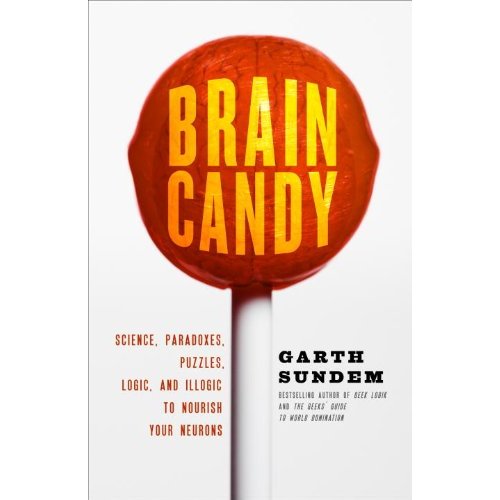
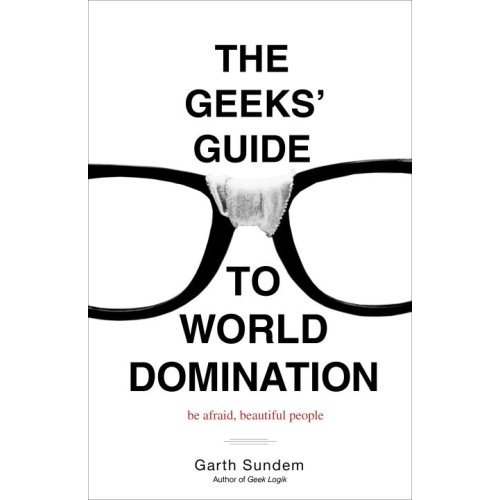
    More importantly what kind of geek are you? If input="math geek", goto your nearest bookstore and purchase a copy of Geek Logik: 50 Foolproof Equations for Everyday Life. If you're a full featured, renaissance geek of all trades looking for a good time at others' expense, consider a copy of The Geeks' Guide to World Domination: Be Afraid Beautiful People. And if you're a geek of the mind, consider preordering a copy of my new book, Brain Candy: Science, Paradoxes, Puzzles, Logic and Illogic to Nourish Your Neurons (shipping August 3rd).

     

    Comments

    Gerhard Adam
    Unfortunately for the mass singing of kumbaya and the potential dawning of a modern Aquarian age, this implies that human fairness is borne of player A's fear of reprisal and player B's angling for future payoff, and not of any innate higher moral order.
    That's certainly true, after all, what would be the origins of some "innate higher moral order"?  However the concepts of "reprisal" and "future payoff" don't need to sound quite as sinister as they are often made out to be.

    Simply fearing that someone won't help when needed is usually sufficient "reprisal".  Similarly, helping someone with the expectation that they will return the favor is sufficient as a "future payoff".   Of course, this presupposes that there is a mutual dependency between the players, whereas game theory has also indicated completely different behaviors if one player needs nothing from the other, or if the "payoff" is too far into the future.
    "...this implies that human fairness is borne of player A's fear of reprisal and player B's angling for future payoff, and not of any innate higher moral order."
    Not so Garth.
    We don't need to look for some innate higher moral order to explain fairness, nor do we need to go for the easy option of fear.
    Fairness flows from the cooperation that is the essence of life itself.

    Fred Phillips
    Hard to see your point here.
    According to Game Theory, the optimal solution is for person A to give himself nine coins and person B one coin.... However, played in the wild, the most common distribution is 6-to-4
    It's one thing for an equation to be right for the wrong reasons - for example, a power law may correctly describe a certain phenomenon even if there may be several alternative explanations for the genesis of the power law. But here you have said that the game theory optimum is wrong, and then proceeded to an explanation of human behavior as reasoned from the wrong equation, that is, as reasoned from no theory at all. All as lead-in to mentioning a book on ”foolproof equations.“ What gives?

    If I'm not mistaken, Axelrod has recently devised and solved more elaborate games that do allow punishment, i.e., penalties for betrayal in the game theoretical plays of the prisoner's dilemma. I'd be interested to hear your take on these.
    Garth Sundem
    You're right--describing game theory's optimal distribution of 9-to-1 as "wrong" is unfair. It's optimal. That's that. A more accurate descriptor than "wrong" is "unrealistic", i.e. it doesn't work for humans in the world. The interest lies in why humans don't suggest or accept this optimal split.

    And you're right, too, that Axelrod has explored why this is so. I assume you're referencing his Prisoner's Dilemma tournaments in which he ran multiple rounds of the PD game and challenged contestants to accumulate low overall jail sentences. In this tournament, he found the best strategy was something he called Tit for Tat. In Tit for Tat, a player cooperates the first round and then mimics his opponent's behavior in every round thereafter--either cooperating (keeping his mouth shut) or defecting (ratting out his partner in crime) depending on what his partner did the previous round. Eventually, this strategy tended to create a string of short sentences, as it created trust (through predictability), and both players sunk into the cooperation of keeping their mouths shut. It also created corrective punishment for defection--in the next round the hurt player defects, too.

    But I think the moral of the story at large remains the same: trust is borne of expected gain and expected loss. These games, and especially Axelrod's tournaments, seem to show that we play fair as a species because the payout's better that way. (There's a ton of cool research here with altruistic punishment--are people willing to punish someone's bad behavior at cost to themself? Are people who fail to punish others, themselves punished?)

    Garth Sundem, TED speaker, Wipeout loser and author of Brain Trust

    Gerhard Adam
    In this tournament, he found the best strategy was something he called Tit for Tat. In Tit for Tat, a player cooperates the first round and then mimics his opponent's behavior in every round thereafter...
    A more robust strategy is Pavlov, or win-stay; lose-shift because it also creates the possibility of exploitation.  This is probably a bit more interesting in this discussion, because it would seem that an obvious concern is to avoid being exploited.
    Gerhard Adam
    ... it doesn't work for humans in the world. The interest lies in why humans don't suggest or accept this optimal split.
    Actually that's not correct.  Why should this be considered an optimal split?

    I think a missing ingredient here is what the individual starts with (i.e. nothing), therefore there is nothing to lose.  Essentially there is no circumstance under which they end up worse off that they were originally, therefore there is a negotiating position that allows them to bargain harder.  In these cases, it may be more important to "send a message" than it is to accept a less than equitable split.  
    According to Game Theory, the optimal solution is for person A to give himself nine coins and person B one coin——both will end the game richer than when they started.
    I think this premise is flawed because it presumes that "greed" is the driving force.  This suggests that any terms are acceptable provided that some gain is made regardless of how poor. 
    I think a missing ingredient here is what the individual starts with (i.e. nothing), therefore there is nothing to lose.

    Apart from opportunity cost, you mean?

    Fred Phillips
    Garth, I agree with you about the moral of the story, and I agree with your main point, at least at the level of rhetorical argument. I was nitpicking about theoretical rigor and about the juxtaposition with "foolproof equations."

    Axelrod's experiments leading to tit for tat were published in 1984 - in his book Evolution of Cooperation, though presumably he published them in journals earlier. His elaborations involving "social norms" came later:

    "An evolutionary approach to norms." American Political Science Review 80(4), 1986, 1095-1011.

    I suppose his work from this era is summarized in his later book The complexity of cooperation: agent-based models of competition and collaboration, though I haven't read it.

    Also check the wrinkle described this week at http://www.economist.com/node/16690659.

    Fascinating stuff, Garth - thanks.
    Garth Sundem
    Wow, I love the Economist twist you recommended! (Summarized: "Those who rated themselves at the bottom of the [social] ladder gave away 44% more of their credits than those who put their crosses at the top, even when the effects of age, sex, ethnicity and religiousness had been accounted for.") I wonder why? Maybe mediated by I've-been-there empathy? Or maybe the you-scratch-my-back expectation is more tangible? Hmmm, definitely food for thought. As for the "foolproof equations", they're anything but! Geek Logik as a book of intentionally humorous equations, meant to entertain while poking fun at the idea that we're all automatons being driven through daily life by a string of computed variables (though I think there might be some truth in it!).

    Cheers!

    Garth Sundem, TED speaker, Wipeout loser and author of Brain Trust

    Garth Sundem
    Oops, I should have read to the finish: "Dr Piff himself suggests that the increased compassion which seems to exist among the poor increases generosity and helpfulness, and promotes a level of trust and co-operation that can prove essential for survival during hard times."

    Garth Sundem, TED speaker, Wipeout loser and author of Brain Trust

