

Fake Banner
    Cognitive Decline Caused By Decreased Oxygen During Cardiac Surgery
    By Erin Richards | February 9th 2009 01:14 PM | 1 comment | Print | E-mail | Track Comments
    About Erin

    I am a current graduate student at USC Annenberg School for Communication and Journalism. I write for Neon Tommy, a digital news website, as a science...

    View Erin's Profile
    Physicians have known for years that there exists a link between cardiac surgery and a subsequent decline in cognitive function of patients.  According to recent research, “previous studies have reported an 11% to 75% incidence of postoperative cognitive decline among cardiac surgery patients” (Slater et. al). However, until recently, the cause for this link was largely unknown.  Coronary Artery Bypass Grafting (CABG) surgery, continues to produce clinical results demonstrating cognitive decline in some patients despite improved surgery practices.


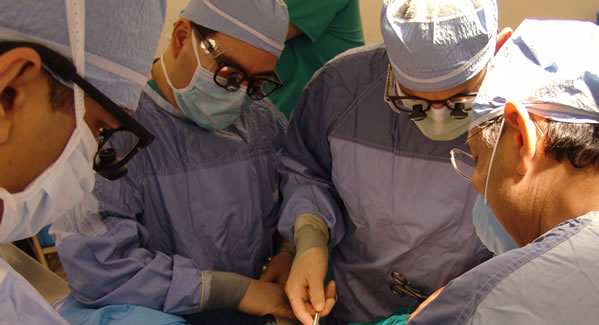
    Doctors performing a Coronary Artery Bypass Graft (GABG) on a patient. Patients undergoing this procedure are at risk to developing cognitive decline if their oxygen saturation drops too long or too sharply below the baseline level (50% saturation.) Photo credit: University of Texas Medical School at Houston, Cardiothoracic and Vascular Surgery

    Research done by Dr. James Slater and colleagues have shed light upon this causality in their paper published in the January 2009 issue of the Annals of Thoracic Surgery. Their research findings show that decreased oxygen levels to parts of the brain during cardiac surgeries are responsible for the cognitive decline seen in patients following their operations.  

    Slater and his team studied 240 patients who underwent cardiac surgery, and monitored by the INVOS (In-Vivo Optical Spectroscopy) Cerebral/Somatic Oximeter which is an FDA approved patient monitor that measures changes in oxygen levels beneath its sensor. This was positioned to measure regional oxygen saturation levels in the brain. The sample size was then split into two groups: one group served as the control, with no interference of oxygen, and the other group as the intervention group which received increased oxygen when oxygen dropped below 50% saturation.  

    Results showed that in the intervention group observed a lower rate of cognitive decline. Additionally, patients evaluated at three months postoperative showed that prolonged oxygen desaturation was significantly higher in the patients who demonstrated cognitive decline versus the no-decline. Thus, decreased saturation during cardiac surgery significantly increased risks of observable cognitive decline following surgery.

    This research study also examined the relationship between decreased oxygen saturation during surgery and length of patient hospital stay after their surgery. They found that “cerebral oxygen desaturation was also significantly associated with prolonged length of stay” (Slater et. al). This relationship couched with the negative outcomes realized by cognitive decline could help justify added costs of the INVOS Cerebral/Somatic Oximeter used during surgery.

    Certain patients may exhibit decreased oxygen as a result of lessened blood flow, including patients who are smokers, patients who have congenital heart defects. Common surgical practices may also lead to reduced oxygenation including ventilation, dosage of anesthesia, clamping of the arteries and surgical
    bypass.  Decreased oxygen can cause some serious consequences besides the postoperative cognitive decline. Patients who experience prolonged periods of decreased oxygen can also experience major organ failure, stroke, respiratory failure, and coma.

    Slater’s research has illuminated a previously unknown causality, that decreased oxygen levels in the brain for prolonged periods of time can cause subsequent cognitive decline. This not only uncovers a part of human physiology, but causes us to look at the body as a whole instead of the sum of its parts.


    Comments

    Hi Erin,

    Many people are surprised to learn that invasive treatment with cardiac bypass fails to reduce mortality or heart attacks, when compared to conservative medical treatment with drugs in patients with stble heart disease. In addition, as your above article points out, cognitive decline is one of the adverse side effects.

    Conventional drugs used for medical treatment of heart disease include: Beta Blockers such as Inderal, calcium channel blockers include Cardizem, Procardia, and Norvasc. Nitrates such as Isordil, Sorbitrate, Cardilate, Dilatrate, and Peritrate. Nitroglycerine skin patches include Minitran, Nitro-Dur and Transderm-Nitro. Diuretics and ACE inhibitors are used.

    Why does medical therapy work?

    Medical therapy reduces the oxygen demand of the heart muscle and allows time for the heart to develop microscopic collateral vessels which provides blood flow around the blocked arteries.

    To read more:
    http://jeffreydach.com/2009/01/13/cardiac-bypass-angiplasty-and-stenting...

    Cardiac Bypass, Angioplasty and Stenting by Jeffrey Dach MD

    Jeffrey Dach MD
    4700 Sheridan Suite T
    Hollywood Florida 33021
    954-983-1443

    Add a comment

    The content of this field is kept private and will not be shown publicly.
    • Allowed HTML tags: <sup> <sub> <a> <em> <strong> <center> <cite><TH><ul> <ol> <li> <dl> <dt> <dd> <img> <br> <p> <blockquote> <strike> <object> <param> <embed> <del> <pre> <b> <i> <table> <tbody> <div> <tr> <td> <h1> <h2> <h3> <h4> <h5> <h6> <hr> <iframe><u><font>
    • Web page addresses and e-mail addresses turn into links automatically.
    CAPTCHA
    If you register, you will never be bothered to prove you are human again. And you get a real editor toolbar to use instead of this HTML thing that wards off spam bots.
