Banner
Why Antarctic Sea Ice Stopped Growing In 2015

Though numerical models and popular films like An Inconvenient Truth projected Arctic ice...

Wealth Correlated To Loneliness

You may have read that Asian cultures respect the elderly more than Europe but Asian senior citizens...

Ousiometrics Analysis Says All Human Language Is Biased

A new tool drawing on billions of uses of more than 20,000 words and diverse real-world texts claims...

Wavelengths Of Light Are Why CO2 Cools The Upper Atmosphere But Warms Earth

There are concerns about projected warming on the Earth’s surface and in the lower atmosphere...

User picture.
News StaffRSS Feed of this column.

News Releases From All Over The World, Right To You... Read More »

Blogroll

In ancient times, attributing effects to the moon made some sense. If it could change tides, which everyone except Galileo recognized it did, why not cause effects in people? 

The UN Intergovernmental Panel on Climate Change (IPCC) is a group of climate change experts representatively selected from regions around the world that periodically releases Assessment Reports in order to inform policymakers and the public about the latest evidence for climate change. The publication of each report is a key event in the debate about climate change, but their reception and coverage in the media has varied widely.

A new paper has for the first time analyzed how Twitter, TV and newspapers reported the IPCC's climate evidence. Understanding how media coverage varies is important because people's knowledge and opinions on climate change are influenced by how the media reports on the issue.

Natural wetlands usually emit methane and sequester carbon dioxide. Anthropogenic interventions, in particular the conversion of wetlands for agriculture, result in a significant increase in CO2 emissions, which overcompensate potential decreases in methane emission. A large international research team now calculated that the conversion of arctic and boreal wetlands into agricultural land would result in an additional cumulative radiative forcing of about 0,1 MilliJoule (mJ) per square meter for the next 100 years.

Urine is commonly believed to be sterile until it reaches the urethra but that has led to numerous misconceptions about what can and should or should not be done with it. Drinking urine is a bad idea, for example, because even though it is sterile it contains urea and other substances that can still be toxic.
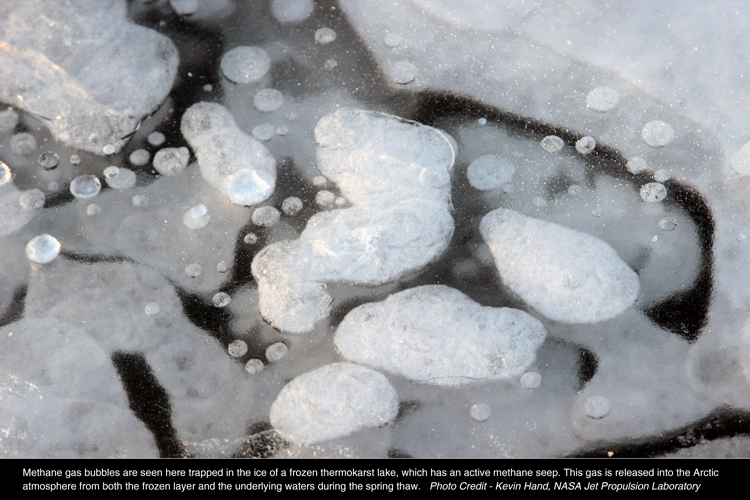
A new study finds that in scenarios of increasing global temperatures, methane-generating microbes, found in thawing lake sediments may ramp up production.

Though methane stays in the atmosphere for far less time than CO2, it is 25X more potent during that period. Concerns about methane have risen because of concerns about possible leaks due to increased natural gas, which produces far less CO2 than coal, and that methane may be released as climate changes.

A new study has identified a familial association in spontaneous coronary artery dissection, a type of heart attack that most commonly affects younger women, suggesting a genetic predisposition to the condition, researchers say.