Banner
Pilot Study: Fibromyalgia Fatigue Improved By TENS Therapy

Fibromyalgia is the term for a poorly-understood condition where people experience pain and fatigue...

High Meat Consumption Linked To Lower Dementia Risk

Older people who eat large amounts of meat have a lower risk of dementia and cognitive decline...

Long Before The Inca Colonized Peru, Natives Had A Thriving Trade Network

A new DNA analysis reveals that long before the Incan Empire took over Peru, animals were...

Mesolithic People Had Meals With More Tradition Than You Thought

The common imagery of prehistoric people is either rooting through dirt for grubs and picking berries...

User picture.
News StaffRSS Feed of this column.

News Releases From All Over The World, Right To You... Read More »

Blogroll

One of your earliest science memories in school is learning that, during photosynthesis, plants take in carbon dioxide sunshine and produce oxygen. Later we all learned that in lakes and oceans a similar process happens due to cyanobacteria. 

What has remained unknown is exactly how that happens.

Oxygen formation in photosynthesis occurs in a reaction sequence that is completed within one thousandth of a second, so it's not surprising that it has been so difficult to prove experimentally how precisely a catalyst consisting of four manganese ions and one calcium ion (Mn4Ca cluster) performs this reaction sequence in photosystem II.

Imagine getting this text message when you are at the pub tonight: "Looking forward to seeing you at 2 AM - General Hospital".

Creepy, but it may work. 

Young adults who screened positive for a history of hazardous or binge drinking reduced their binge drinking by more than 50 percent after receiving mobile phone text messages following a visit to the emergency department, according to a new paper. 

While almost everyone agrees that the American health system was not perfect - high quality, but some could not afford it - the solution may not have been more government spending, since government was not spending money all that wisely well before 2009. 

Take one data point:  Medicare breast cancer screening. You are not for breast cancer, right? No one is. Yet while breast cancer screening costs for Medicare patients skyrocketed between 2001 and 2009, there was no earlier detection of breast cancer.

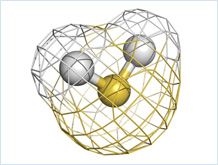
By identifying the molecular structure of a vital biological chemical, researchers may have solved a long-standing debate. 

The controversy is about a form of enzyme called a heme (or haem, as in haemoglobin) at the center of which is an iron atom (Fe) called a 'ferryl' which becomes oxidized when a reacting heme is in an intermediate state called Compound I.

The question is whether this oxidation involves just an oxygen atom (O), or a hydroxyl group (OH). The difference being one hydrogen ion, or in other words, a proton.

There is a subset of academia that contends it lacks diversity. They have a point. While at the undergraduate levels there are lots of handicapped people, minorities, women and even Republicans, by the time grad school is finished there are fewer of all of those and at the tenure levels, not much diversity at all.

Even in medicine, where lots of women in the private sector juggle prosperous careers and families. In its academic counterpart, there aren't many women at all, and that may be costing academia valuable research talent.

COLUMBUS, Ohio – Scientists have identified a protein that is essential to the survival of E. coli bacteria, and consider the protein a potential new target for antibiotics.

In the study, the researchers confirmed that this protein, called MurJ, flips a fatty molecule from one side of a bacterial cell membrane to the other. If that molecule isn't flipped, the cell cannot construct a critical layer that keeps pressurized contents of the cell contained. If those contents aren't contained, the cell bursts.