Banner
How To Overcome Leadership Battles

In times of social rancor and strife, most will fight each other, but societies are saved by those...
Thousands Of Unpublished Studies Show Why Conservation Efforts Miss The Mark

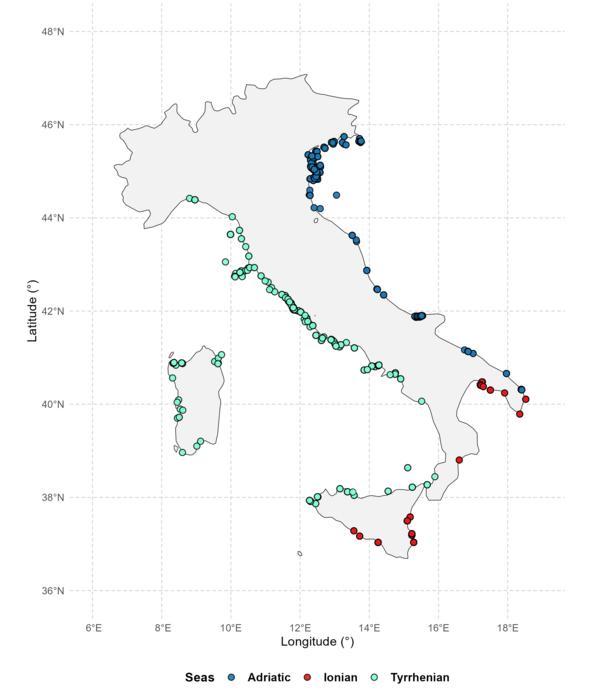
Europe alone has so much unpublished, un-catalogued biological data that it is challenging to take...

Why Antarctic Sea Ice Stopped Growing In 2015

Though numerical models and popular films like An Inconvenient Truth projected Arctic ice...

Wealth Correlated To Loneliness

You may have read that Asian cultures respect the elderly more than Europe but Asian senior citizens...

User picture.
News StaffRSS Feed of this column.

News Releases From All Over The World, Right To You... Read More »

Blogroll
The 37th International Conference on High Energy Physics (ICHEP) began last Thursday in Valencia, Spain with three days of parallel sessions, now moves on to plenary sessions until Wednesday, summing up the current state of the art in the field. The plenary sessions will be webcast.

Mindfulness meditation is all the rage in meditation circles but does it work? Most research claiming benefits have focused on lengthy, weeks-long training programs using people who already like meditation. A new paper in Psychoneuroendocrinology is about a small study and the authors found that brief mindfulness meditation practice – 25 minutes for three consecutive days – alleviates psychological stress. 

Probiotics are a popular fad but there is little evidence they are anything more than a well-marketed placebo. Like homeopathy, at least that means the only harm will be in your wallet.

If you call yourself a paleo diet aficionado, you probably eat a lot of bugs. As many as you can. Because finding enough food was the kind of struggle only dinosaurs can sympathize with - an ant diet is a struggle.

All across the world, there is one thing babies share in common; their size, if they are born to healthy, well-educated, well-nourished mothers.

The dose makes the poison, it is often said, and it is true. Lots of medicines and chemicals are harmless or beneficial in reasonable quantities but dangerous in high quantities. What about CO2 in plants? Plants need it for food but they also recognize too much is a bad thing. 

Biologists have been studying a long-standing mystery concerning the way plants reduce the numbers of their breathing pores in response to rising carbon dioxide levels in the atmosphere.

The authors report the discovery of a new genetic pathway in plants, made up of four genes from three different gene families that control the density of breathing pores—or "stomata"—in plant leaves in response to elevated CO2 levels.