Recent meta-analyses of the efficacy of second-generation antidepressants for youth have concluded that they possess anadvantage over placebo in terms of clinician-rated depressive symptoms, but no meta-analysis has included measures of quality of life, global mental health, self-esteem, or autonomy. Prior meta-analyses also did not include self-reports of depressive symptoms.
A recent article published in Psychotherapy and Psychosomatics reviewed the literature to understand the effects of antidepressant drugs on well-being in children and adolescents.
Fish is good for you and has been growing in popularity.
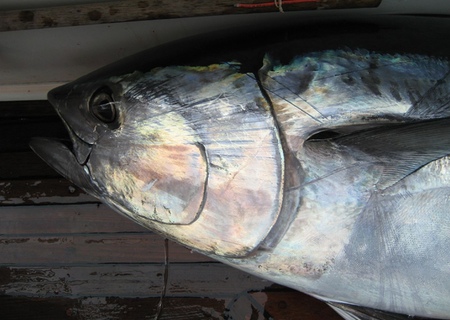
Atlantic Bluefin Tuna is a much sought after delicacy, though the International Union for Conservation of Nature (IUCN) lists it as endangered. So far, farming of this species in the Mediterranean area involves capturing medium-sized specimens and fattening these in farms, which still depletes the wild stocks - but a sustainable solution may be available.
Skeletal remains uncovered near the site of a Roman villa in Dorset are likely the five skeletons of the owners and occupants of the villa – the first time in Britain that the graves of villa owners have been found in such close proximity to the villa itself.
The five skeletons were two adult males, two adult females and an elderly female – with researchers postulating that they could be the remains of three generations of the same family, who all owned the villa. The bones are thought to date from the mid-4th Century (around 350 AD).
A new study addresses the relationship between personality and heart attacks.
Distressed (type D) personality (TDP), characterized by high negative affectivity and social inhibition, along with depression, anxiety and other negative affects (such as demoralization, hopelessness, pessimism and rumination) have been implicated as potential risk factors for coronary artery disease. While some evidence suggests that the
negative affectivity
dimension of
Distressed (type D) personality
overlaps at least partially with depression, other studies underline how ‘TDP refers to a chronic, more covert form of distress that is distinct from depression'.
Researchers at the Center for Research and Advanced Studies (Cinvestav) in Mexico have developed a cDNA microarray chip that allows detection of the RNA strand of the dengue fever virus.
The genetic information pinpoints the exact serotype of malaria that an infected person or mosquito is carrying and allows analysis of the complementary strand of DNA (cDNA) obtained from the dengue fever virus being carried by the infected patient. The cDNA is covalently linked to a slide (substrate) that can be a glass or paper.
A new study analyzed the long-term effects of psychotherapy on borderline personality disorder. Authors report the effect of Dialectical Behavior Therapy (DBT) versus treatment-as-usual (TAU) on inpatient service use, and a follow-up 6 months after the end of treatment.
Data on psychiatric hospitalization were collected by interviewing patients at two monthly intervals using the Client Service Receipt Inventory, which was then triangulated with data from electronic patient records. In the year prior to treatment, 24 patients had been hospitalized with the number of inpatient days ranging from 0 to 365 (mean 20.5, SD 63.1).


 How To Overcome Leadership Battles
 Thousands Of Unpublished Studies Show Why Conservation Efforts Miss The Mark
 Why Antarctic Sea Ice Stopped Growing In 2015
 Wealth Correlated To Loneliness