Banner
Pilot Study: Fibromyalgia Fatigue Improved By TENS Therapy

Fibromyalgia is the term for a poorly-understood condition where people experience pain and fatigue...

High Meat Consumption Linked To Lower Dementia Risk

Older people who eat large amounts of meat have a lower risk of dementia and cognitive decline...

Long Before The Inca Colonized Peru, Natives Had A Thriving Trade Network

A new DNA analysis reveals that long before the Incan Empire took over Peru, animals were...

Mesolithic People Had Meals With More Tradition Than You Thought

The common imagery of prehistoric people is either rooting through dirt for grubs and picking berries...

User picture.
News StaffRSS Feed of this column.

News Releases From All Over The World, Right To You... Read More »

Blogroll
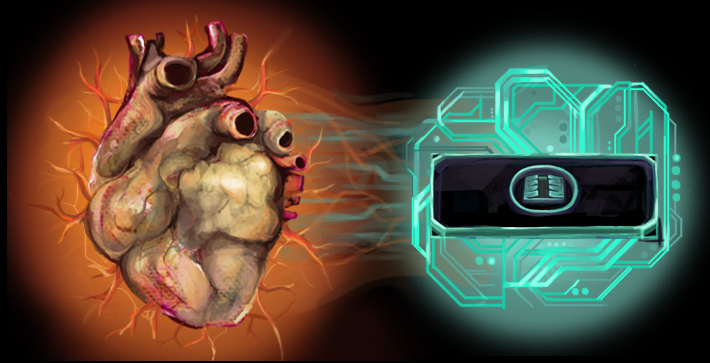
What did USC biomedical engineering assistant professor Megan McCain think when she first saw a real human heart, with all of those thin valves that have to open and close every second of our lives?

“Wow, there’s a lot of plaques of fat. I need to stop eating French fries.”

Nine years later, the “cardiac tissue engineer,” is trying to re-create the human heart on a chip.
People may associate the concept of the chastity belt with medieval Europe but other parts of the animal kingdom used them long before that.

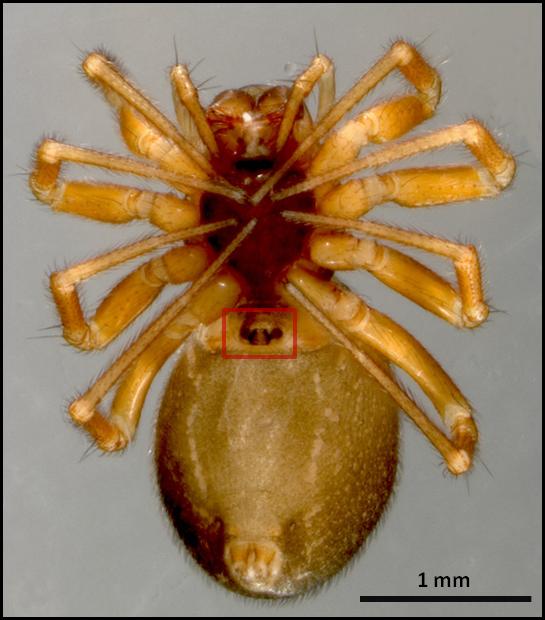
Male dwarf spiders, for instance, have evolved a mechanical safeguard to ensure their paternity - mating plugs to block off the genital tract of the female they have just mated with. The larger and older the plug, the better the chances are that other males will not make deposits in a female's sperm storage organ, too. 

Yes, dwarf spider males (Oedothorax retusus) insert mating plugs into the two copulatory ducts of the females they have mated with.
Last month, the National Climate Assessment report did what the UN Intergovernmental Panel on Climate Change has repeatedly asked science bodies and journalists not to do, no matter how well they mean and how much they want to defend science: it claimed that that the impact of climate change is already being felt in the form of isolated weather events, such as drought, wildfires and heat waves.

And that mistake is being used to make policy.

A recent study from the Center for Mind and Brain at the University of California, Davis makes a bold conjecture; that our ability to make choices — and sometimes mistakes — might arise from random fluctuations in the brain's background electrical noise.

The brain has a normal level of 'background noise', says Jesse Bengson, a postdoctoral researcher at the center and first author on the paper.
As electrical activity patterns fluctuate across the brain, decisions can be predicted based on the pattern of brain activity immediately before a decision was made.

Space looks empty but unseen to the naked eye, a wind of charged particles pummels us from the Sun, carrying a magnetic field with it. Sometimes this solar wind can break through the Earth’s magnetic field, but one of the questions about how this actually occurs is difficult to answer.

When two areas with plasma (electrically charged gas) and magnetic fields with different orientations collide, the magnetic fields can be “clipped off” and “reconnected” so that the topology of the magnetic field is changed. This magnetic reconnection can give energy to eruptions on the solar surface, it can change the energy from the solar wind so that it then creates aurora, and it is one of the obstacles to storing energy through processes in fusion reactors.

A bovine TB control strategy under consideration risks spreading the disease rather than supressing it, according to researchers who predict that culling badgers which test positive for TB could increase the movement of remaining badgers, potentially infecting more cattle with the disease.