Banner
Pilot Study: Fibromyalgia Fatigue Improved By TENS Therapy

Fibromyalgia is the term for a poorly-understood condition where people experience pain and fatigue...

High Meat Consumption Linked To Lower Dementia Risk

Older people who eat large amounts of meat have a lower risk of dementia and cognitive decline...

Long Before The Inca Colonized Peru, Natives Had A Thriving Trade Network

A new DNA analysis reveals that long before the Incan Empire took over Peru, animals were...

Mesolithic People Had Meals With More Tradition Than You Thought

The common imagery of prehistoric people is either rooting through dirt for grubs and picking berries...

User picture.
News StaffRSS Feed of this column.

News Releases From All Over The World, Right To You... Read More »

Blogroll

Understanding how clouds affect climate is been a difficult proposition, even for a difficult to understand field like climate science.

What controls the makeup of the low clouds that cool the atmosphere or the high ones that trap heat underneath? How does human activity change patterns of cloud formation?

New research in Science suggests we may be nudging cloud formation in the direction of added area and height - and there may be even be a new type. It seems that, in pre-industrial times, there was less cloud cover over areas of pristine ocean than is found there today. 

"Hello, World!" came the message from the International Space Station as NASA successfully beamed high-definition video via laser from space to ground on Thursday, June 5. The 175-megabit video transmission was the first of its kind for the Optical Payload for Lasercomm Science (OPALS) with the goal of improving the way we receive data from orbit and beyond. In fact, this emerging technology of optical communications--or lasercomm--is likened to an upgrade from dial-up to DSL.

"It's incredible to see this magnificent beam of light arriving from our tiny payload on the space station," said Matt Abrahamson, OPALS mission manager at NASA's Jet Propulsion Laboratory (JPL) in Pasadena, California.

Researchers have developed biomaterials for bone regeneration from beer brewing waste.
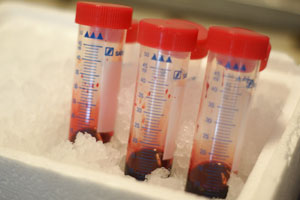
Every day thousands of people around the world have their lives saved or improved thanks to someone giving blood but it has limitations. It's shelf life can be limited, blood types need to match and the public needs to be willing to do it. That's without the safety concerns of donated blood. All of these things add to the cost.

The system works - over 85 million units of donated blood are given to people worldwide for use in hospitals - but there are worries about its use in routine operations, and the number of potential and active blood donors decreasing worldwide. 

Like with many things, a lot of variables go into evolution. Some is luck, some is necessity, some is circumstance. Over time, for example, a region of blacksmiths will grow bigger arms. It isn't an epigenetic or Lamarckian evolution event but it will happen over generations because holding a hammer becomes important in that circumstance.

Almost anything can claim an evolutionary basis, if you try hard enough. In the run up to the last American presidential election, there were even claims that people were born liberal or conservative. Yes, social psychologists and the political pundits who take them seriously believed the American left and right were evolving differently than the rest of the world.

It's not surprising that in a trial, mothers participating in the Women, Infants, and Children (WIC) who received subsidized vouchers for fruits and vegetables at area farmers markets used them - and chose fruits or vegetables more often then they would at supermarkets. 

But prices at local supermarkets are lower, notes a new University of Illinois study, so the question becomes how much should taxpayers spend in hopes that families will eat more vegetables, if they don't buy them at supermarkets. Should we mandate their behavior by giving them vouchers for farmer's markets rather than grocery stores?