Banner
Pilot Study: Fibromyalgia Fatigue Improved By TENS Therapy

Fibromyalgia is the term for a poorly-understood condition where people experience pain and fatigue...

High Meat Consumption Linked To Lower Dementia Risk

Older people who eat large amounts of meat have a lower risk of dementia and cognitive decline...

Long Before The Inca Colonized Peru, Natives Had A Thriving Trade Network

A new DNA analysis reveals that long before the Incan Empire took over Peru, animals were...

Mesolithic People Had Meals With More Tradition Than You Thought

The common imagery of prehistoric people is either rooting through dirt for grubs and picking berries...

User picture.
News StaffRSS Feed of this column.

News Releases From All Over The World, Right To You... Read More »

Blogroll
An analysis of the scientific production of more than 80 countries from 1996 to 2006 found that there are three major ‘clusters’ of countries, defined by the thematic areas they investigate and that their governments invest in most.

Using this data, researchers from the University of Granada and the Spanish National Research Council (CSIC), belonging to the SCImago research group have designed the most comprehensive 'world map of research' to date. Using statistical techniques and multivariate analysis, they included over 15 million documents and scientific articles.

Can rats show regret and, if so, how would we know?

Neuroscientists at the University of Minnesota say they do and it's intriguing because regret is a cognitive behavior thought to be uniquely and fundamentally human.    

"Regret is the recognition that you made a mistake, that if you had done something else, you would have been better off," said A. David Redish, Ph.D., a professor of neuroscience in the University of Minnesota. "The difficult part of this study was separating regret from disappointment, which is when things aren't as good as you would have hoped. The key to distinguishing between the two was letting the rats choose what to do."

Citrus is the world's most widely cultivated fruit crop. In the U.S. alone, the citrus crop was valued at over $3.1 billion in 2013. Originally domesticated in Southeast Asia thousands of years ago before spreading throughout Asia, Europe, and the Americas via trade, citrus is now under attack from citrus greening, an insidious emerging infectious disease that is destroying entire orchards. To help defend citrus against this disease and other threats, researchers worldwide are mobilizing to apply genomic tools and approaches to understand how citrus varieties arose and how they respond to disease and other stresses.

Antidepressant drugs are common in the developed world and are among the most prescribed medications in North America. Though antidepressants are effective for some, there is a lot of variability in how individuals respond to antidepressant treatment.  

A recent study found that levels of a small molecule found only in primates are lower in the brains of depressed individuals, a discovery that may hold a key to improving treatment options for those who suffer from depression.

Once the public loses confidence in the ability of journalists to be trusted guides for the public, it is hard to regain it. Scientists don't trust journalists because they get a lot of science wrong. The public doesn't trust journalists because they don't ask the awkward questions of people whose work they admire.

And then there is the framing they engage in.
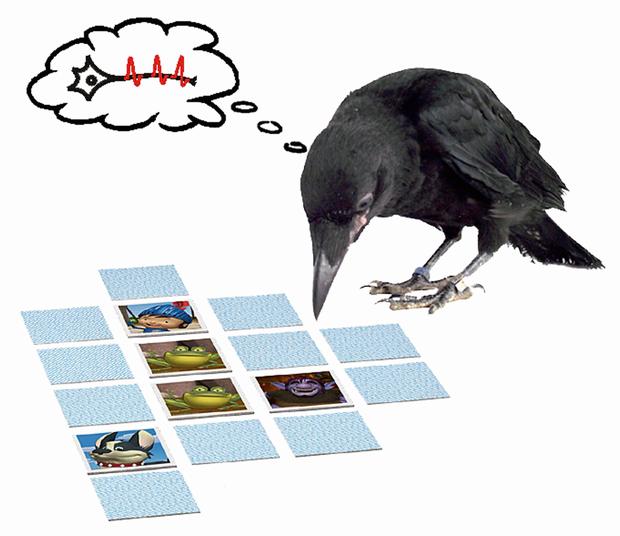
An important prerequisite for intelligence is a good short-term memory which can store and process the information needed for ongoing processes. This 'working memory' is a kind of mental notepad – without it, we could not follow a conversation, do mental arithmetic or play any simple game.

A new study has discovered neurons allowing crows to remember short-term. In the animal kingdom, the group of birds including crows and ravens, the corvids, are known for their intelligence because they have just such a working memory, but their endbrain – which is highly-developed but has a fundamentally different structure from that of mammals – has no cerebral cortex; and that is the part of the brain which in mammals produces the working memory.