Banner
Pilot Study: Fibromyalgia Fatigue Improved By TENS Therapy

Fibromyalgia is the term for a poorly-understood condition where people experience pain and fatigue...

High Meat Consumption Linked To Lower Dementia Risk

Older people who eat large amounts of meat have a lower risk of dementia and cognitive decline...

Long Before The Inca Colonized Peru, Natives Had A Thriving Trade Network

A new DNA analysis reveals that long before the Incan Empire took over Peru, animals were...

Mesolithic People Had Meals With More Tradition Than You Thought

The common imagery of prehistoric people is either rooting through dirt for grubs and picking berries...

User picture.
News StaffRSS Feed of this column.

News Releases From All Over The World, Right To You... Read More »

Blogroll

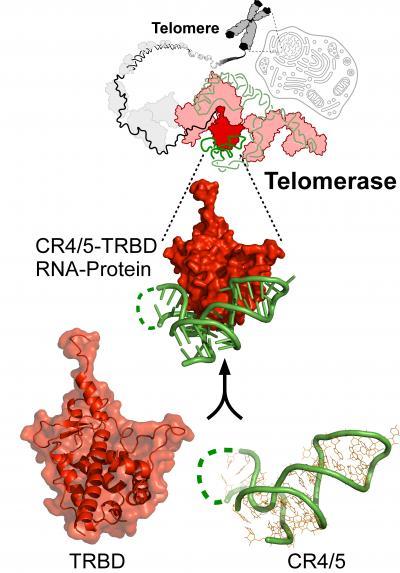
Researchers have taken an atomic level look at the enzyme telomerase - and what they have found may unlock the secrets to the fountain of youth.

Telomeres and the enzyme telomerase have been in the medical news a lot recently due to their connection with aging and cancer. Telomeres are found at the ends of our chromosomes and are stretches of DNA which protect our genetic data, make it possible for cells to divide, and hold some secrets as to how we age –and also how we get cancer.


Telomeres on a chromosome and shows the different components required for telomerase activity. Credit: Joshua Podlevsky

Brittle bone disease is a congenital disorder that results in fragile bones that break easily.  

A new study in Nature Medicine showed that excessive activity of an important signaling protein in the matrix of the bone called transforming growth factor beta is associated with the cause of the disease. It suggests that there may be common mechanisms that cause the decreased quality and quantity of bone in these different forms. 

"There are many genetic causes of brittle bone disease in children and adults," said Dr. Brendan Lee, professor of molecular and human genetics at Baylor and a Howard Hughes Medical Institute investigator. "We have discovered many of them but clinicians still cannot easily distinguish the different forms. 

A new discovery in the study of how lava dome volcanoes erupt may help predict how a volcanic eruption will behave.

Volcanologists say a process called frictional melting plays a role in determining how a volcano will erupt, by dictating how fast magma can ascend to the surface, and how much resistance it faces en-route.

The process occurs in lava dome volcanoes when magma and rocks melt as they rub against each other due to intense heat. This creates a stop start movement in the magma as it makes its way towards the earth's surface. The magma sticks to the rock and stops moving until enough pressure builds up, prompting it to shift forward again, a process called stick-slip. 

A new study has created the first detailed look at global land surface warming trends over the last 100 years, illustrating precisely when and where different areas of the world started to warm up or cool down.

Result: the world is indeed getting warmer but not everywhere and not at the same rate.

This probably took a few scientists by surprise and many journalists, but outside the IPCC this is exactly what was known to be happening..

"Global warming was not as understood as we thought," said Zhaohua Wu, an assistant professor of meteorology at Florida State University, who led a team of climate researchers that used an analysis method newly developed to examine land surface temperature trends from 1900 onward for the entire globe, minus Antarctica.

Skilled motor movements of the sort tennis players employ while serving a tennis ball or pianists use in playing a concerto, require precise interactions between the motor cortex and the rest of the brain. Neuroscientists had long assumed that the motor cortex functioned something like a piano keyboard.

"Every time you wanted to hear a specific note, there was a specific key to press," says Andrew Peters, a neurobiologist at UC San Diego's Center for Neural Circuits and Behavior. "In other words, every specific movement of a muscle required the activation of specific cells in the motor cortex because the main job of the motor cortex was thought to be to listen to the rest of the cortex and press the keys it's directed to press."

A protein that can make the failing hearts in aging mice appear more like those of young health mice similarly improves brain and skeletal muscle function in aging mice, according to two papers in Science.
Professors Amy Wagers and Lee Rubin, of Harvard's Department of Stem Cell and Regenerative Biology (HSCRB), report that injections of a protein known as GDF11, which is found in humans as well as mice, improved the exercise capability of mice equivalent in age to that of about a 70-year-old human, and also improved the function of the olfactory region of the brains of the older mice – they could detect smell as younger mice do.