Banner
Pilot Study: Fibromyalgia Fatigue Improved By TENS Therapy

Fibromyalgia is the term for a poorly-understood condition where people experience pain and fatigue...

High Meat Consumption Linked To Lower Dementia Risk

Older people who eat large amounts of meat have a lower risk of dementia and cognitive decline...

Long Before The Inca Colonized Peru, Natives Had A Thriving Trade Network

A new DNA analysis reveals that long before the Incan Empire took over Peru, animals were...

Mesolithic People Had Meals With More Tradition Than You Thought

The common imagery of prehistoric people is either rooting through dirt for grubs and picking berries...

User picture.
News StaffRSS Feed of this column.

News Releases From All Over The World, Right To You... Read More »

Blogroll

Depending on how a topic is framed, people quickly change their minds when the discussion is about medical liability. If the scenario is presented as 'Doctor X was incompetent and did Y' the perception is that incompetent people should have to pay but when the scenario is presented as unlimited lawsuits crippling health care, people feel like we need tort reform.

Most people believe that malpractice insurance is the biggest problem after infrastructure costs and employees, but that isn't so; the biggest cost that gets passed on to consumers and health insurance carriers is defensive medicine - running every possible test and covering unnecessary bases so if anything ever goes wrong, a lawyer will not win a lawsuit claiming they are careless.

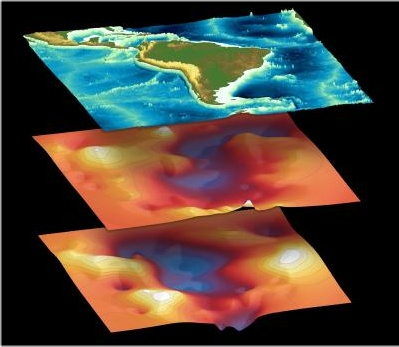
The Tibetan Plateau — the world's largest, highest, and flattest plateau — had a larger initial extent than previously documented.  

Known as the "Roof of the World," the Tibetan Plateau covers more than 970,000 square miles in Asia and India and reaches heights of over 15,000 feet. The plateau also contains a host of natural resources, including large mineral deposits and tens of thousands of glaciers, and is the headwaters of many major drainage basins.

The existence of exotic hadrons — a type of matter that cannot be classified within the traditional quark model - has been confirmed in a forthcoming article prepared by the Large Hadron Collider beauty (LHCb) Collaboration at CERN in Geneva, Switzerland.

Quarks are hard, point-like objects found within the nucleus of an atom. When quarks combine in threes, they form compound particles known as baryons. Protons are probably the best-known baryons. Sometimes, quarks interact with corresponding anti-particles (i.e., anti-quarks), which have the same mass but opposite charges. When this happens, they form mesons. These compounds often turn up in the decay of heavy man-made particles, such as those in particle accelerators, nuclear reactors, and cosmic rays.

If religiously-motivated terrorists attack, they may claim it is an Act of God. You had better hope your insurance company does not. To insurance companies, an act of God is any event not influenced by man and minimum coverage often does not include it.

Because of the fuzzy nature of those definitions, there is specific terrorism insurance. But after Muslim fundamentalists hijacked and crashed planes on Sept. 11, 2001, terrorism risk insurance quickly became very expensive or unavailable. Congress reacted by passing the Terrorism Risk Insurance Act, which provides an assurance of government support after a catastrophic attack. This kept terrorism risk insurance cheaper for businesses without crippling insurers.

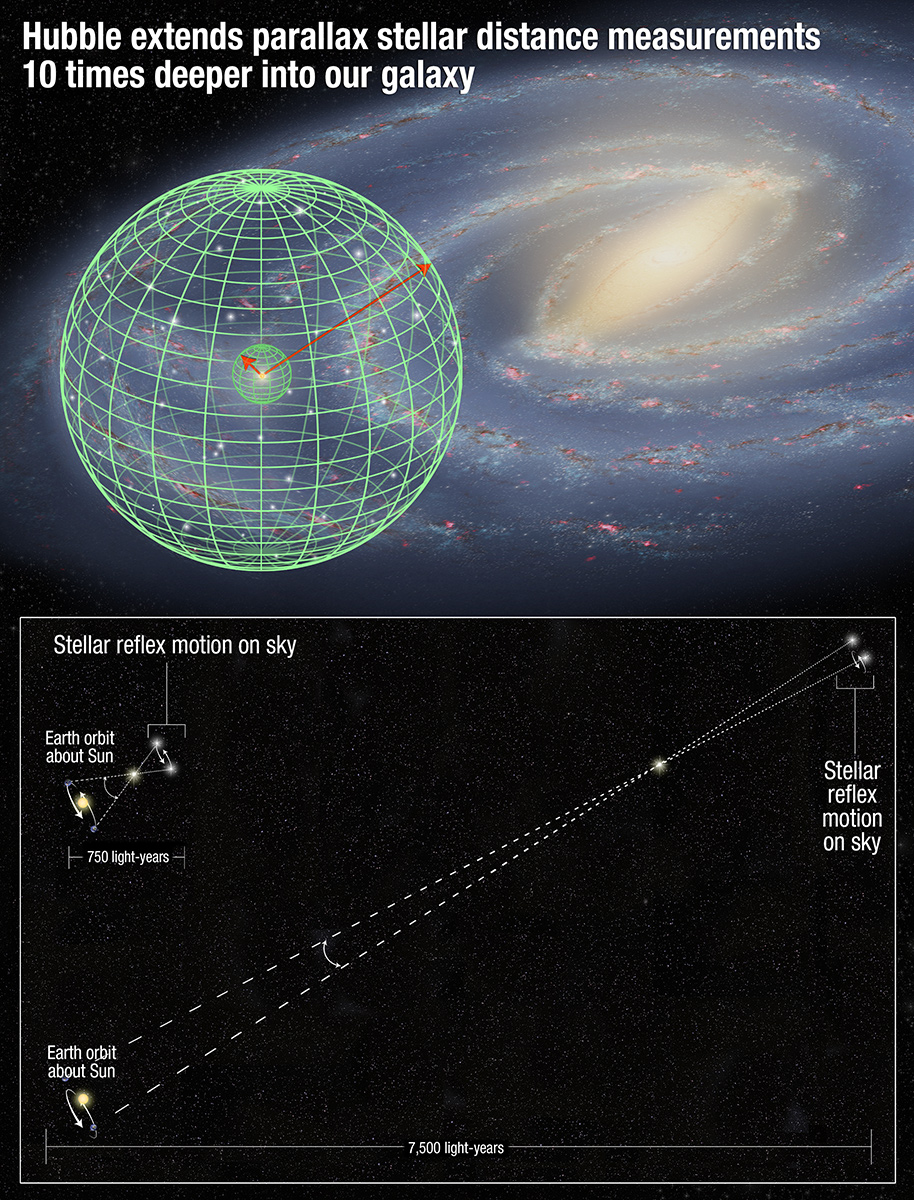
The universe is big, as you can imagine. Even our galaxy is almost beyond comprehension. But measure it we do, at least as best we can. The most reliable method for making astronomical distance measurements is to use geometry - the 186-million-mile diameter of Earth's orbit is used to construct a baseline of a triangle, much as a land surveyor would use.

It's been a decades-long experiment to throw darts at a dartboard and see if it outperforms the picks of experts. Darts win and lose at the same rate as the average of experts.

Some people clearly make money in financial markets but the old saying among brokers = 'we make money selling stocks, not buying them' - still applies.

Yet someone must know what they are doing. And backtesting is a good way to seem empirical. Example: Your financial advisor calls you up to suggest a new
investment scheme. Drawing on 20 years of data, he has set his
computer to work on this question: If you had invested according to
this scheme in the past, which portfolio would have been the best?
His model assembles thousands of such simulated portfolios and