Banner
Pilot Study: Fibromyalgia Fatigue Improved By TENS Therapy

Fibromyalgia is the term for a poorly-understood condition where people experience pain and fatigue...

High Meat Consumption Linked To Lower Dementia Risk

Older people who eat large amounts of meat have a lower risk of dementia and cognitive decline...

Long Before The Inca Colonized Peru, Natives Had A Thriving Trade Network

A new DNA analysis reveals that long before the Incan Empire took over Peru, animals were...

Mesolithic People Had Meals With More Tradition Than You Thought

The common imagery of prehistoric people is either rooting through dirt for grubs and picking berries...

User picture.
News StaffRSS Feed of this column.

News Releases From All Over The World, Right To You... Read More »

Blogroll

PROVIDENCE, R.I. [Brown University] — Out of an effort to account for what seemed in airborne images to be unusually large tree growth in a Hawaiian forest, scientists at Brown University and the Carnegie Institution for Science have developed a new mathematical model that predicts how trees compete for space in the canopy.

What their model revealed for this particular forest of hardy native Metrosideros polymorpha trees on the windward slope of Manua Kea, is that an incumbent tree limb greening up a given square meter would still dominate its position two years later a forbidding 97.9 percent of the time. The model described online in the journal Ecology Letters could help generate similar predictions for other forests, too.

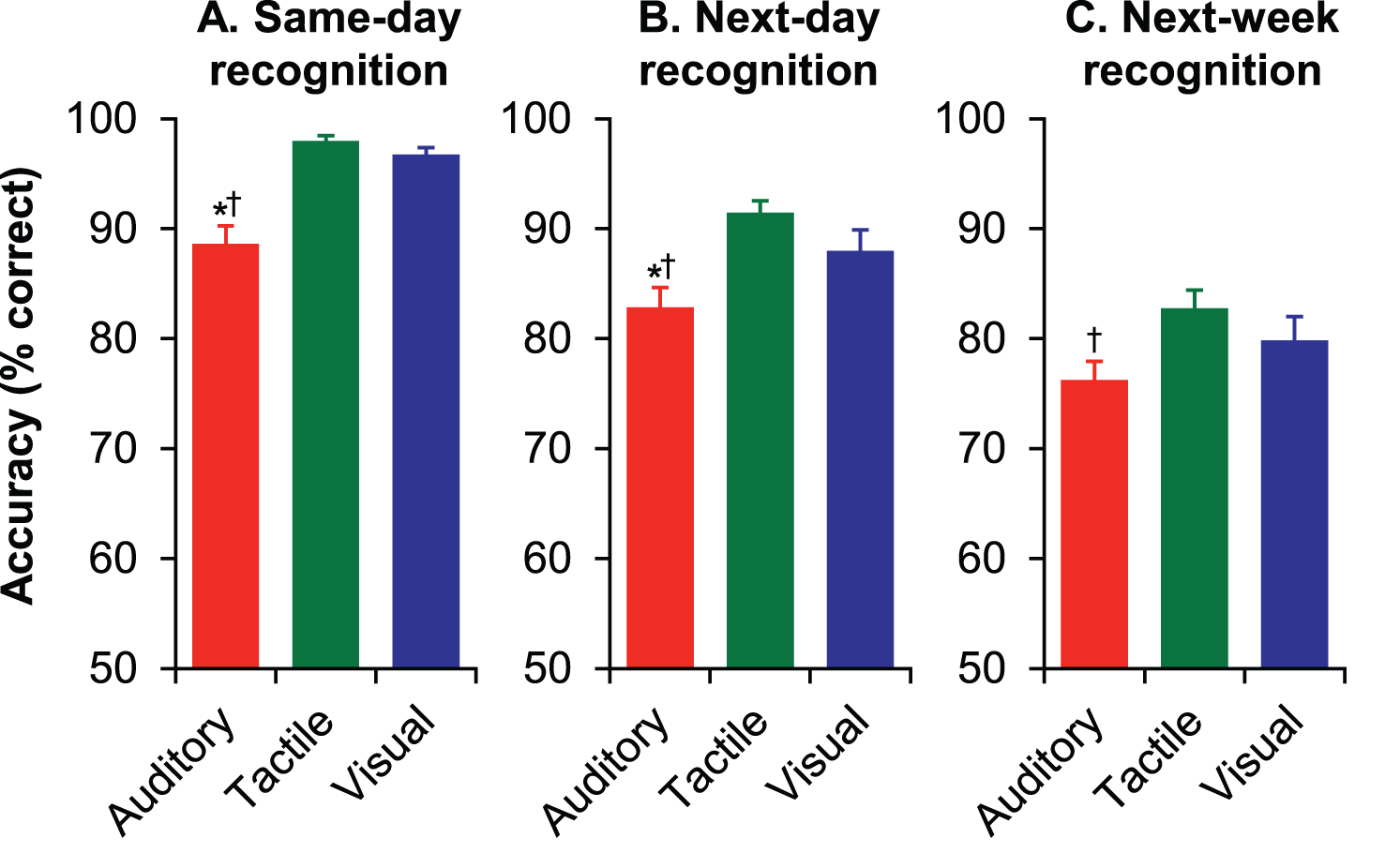
Our brains may not be optimized for recalling things we hear, the way we are good at remembering things we see or touch.

Psychologists doing a study of over 100 University of Iowa college students found that they were less able to recall a variety of sounds the way they could visuals and things they felt.

In an experiment testing short term-memory, participants were asked to listen to pure tones they heard through headphones, look at various shades of red squares, and feel low-intensity vibrations by gripping an aluminum bar.

Each set of tones, squares and vibrations was separated by time delays ranging from one to 32 seconds.

By growing “mini-livers” from adult mouse stem cells, the road may be paved to replacing, reducing or refining the use of animals in science.

Dr. Meritxell Huch from the Gurdon Institute at Cambridge received the National Centre for the Replacement, Refinement and Reduction of Animals in Research (NC3Rs) 3Rs Prize for developing a method that enables adult mouse stem cells to grow and expand into fully functioning three-dimensional liver tissue. 

If climate change sends us all back to the Stone Age, we wouldn't be the first culture. Or at least to the Bronze Age.

It used to be that changes in climate were simply history, now they are an indictment of everything we might hold dear, like electricity.

4,100 years ago, write scholars in Geology, an abrupt weakening of the summer monsoon affected northwest India and the resulting drought coincided with the beginning of the decline of the metropolis-building Indus civilization that spanned present-day Pakistan and India.

Canada has gotten a bizarre sort of entrepreneurial in the last decade. With Toronto mayor Rob Ford making headlines and a booming ecstasy industry, they have become a party destination. 

And that success has led to even newer designer highs which are flooding the drug market.

"The chemists who are making these drugs are coming up with about 10 new drugs per year; the legislation cannot keep up with the market," said University of Alberta pharmacologist Alan Hudson, who studies how ecstasy and other drugs affect brain neurochemistry. "The best way forward is to educate people that they're playing Russian roulette—the health risks from taking these drugs are high, and potentially lethal."

Numerous studies have concluded that children who were breastfed score higher on IQ tests and perform better in school.

Why would that be? Is it the mother-baby bonding time, something in breast milk or other attributes of families that have mothers who breastfeed their babies?

Sociologists from Brigham Young University think they have the answer and pinpoint two sources of this cognitive boost: Responding to children's emotional cues and reading to children starting at 9 months of age. Breastfeeding mothers tend to do both of those things, said lead author Ben Gibbs.