Banner
Pilot Study: Fibromyalgia Fatigue Improved By TENS Therapy

Fibromyalgia is the term for a poorly-understood condition where people experience pain and fatigue...

High Meat Consumption Linked To Lower Dementia Risk

Older people who eat large amounts of meat have a lower risk of dementia and cognitive decline...

Long Before The Inca Colonized Peru, Natives Had A Thriving Trade Network

A new DNA analysis reveals that long before the Incan Empire took over Peru, animals were...

Mesolithic People Had Meals With More Tradition Than You Thought

The common imagery of prehistoric people is either rooting through dirt for grubs and picking berries...

User picture.
News StaffRSS Feed of this column.

News Releases From All Over The World, Right To You... Read More »

Blogroll

People who live in cities love the infrastructure, the nightlife, the hobos, the fact that you can find a Starbucks on every corner. People who live in the country love the cleaner air, the openness, the fact that you can go for a walk without being accosted by hobos.

Is it just personal choice? If so, birds face many of the same dilemmas about how best to live life. Larger groups bring risks of disease and aggression by neighbors.

What other factors may be involved? 

A study led by Manchester scientists has shown promising results for a new treatment approach in follicular lymphoma.

Follicular lymphoma is a type of non-Hodgkin's lymphoma, a blood cancer, that usually develops slowly but the majority of patients are diagnosed when their disease is already at an advanced stage.

Recent improvements in treatment have included the use of antibodies to specifically target the tumour cells and to stimulate the patient's own immune system to attack their tumor. The use of such antibodies has improved treatment response, but unfortunately most patients still relapse. Radioimmunotherapy – where a radioactive substance is attached to the antibody – has been shown to be successful in treating patients who had previously relapsed. 

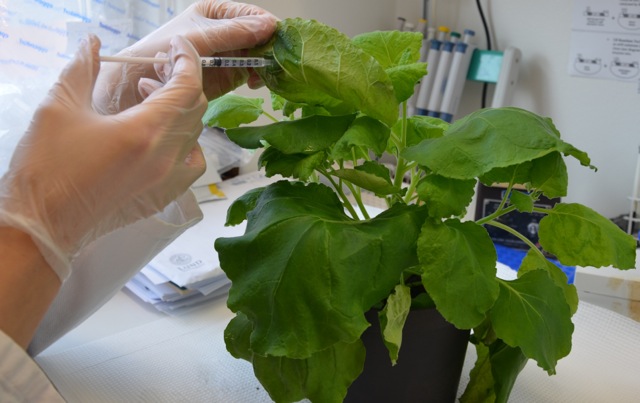
Genetic engineering of tobacco plants so that they produce moth pheromones demonstrates the potential of genetically modified plants to act as factories for the synthesis of insect pheromones, write the authors of a Nature Communications paper.

Pheromones are widely used as an environmentally friendly alternative to traditional pesticides for trapping insects and the new work presents an opportunity for the cost-effective production of an environmentally safe alternative to insecticides. The demographic most likely to ban GMOs and tobacco aren't going to be happy, but they aren't happy with most science. Maybe if the work were done with marijuana it would be more acceptable.

If you ask aging environmental activists, the worst thing that can happen to nature is to have people step onto it.

This is the completely wrong approach, but one adopted by their corporate leaders in the last two generations when they found their donor base becoming increasingly urban. While it was once recognized that hunters, hikers and other sportsmen were obviously the most in love with nature, gradually they became treated like the enemy of environmentalists.

Is depression as dangerous as smoking?

A 12-person panel has published a paper in the journal Circulation saying that their review of literature indicates that depression should be listed with smoking, obesity, diabetes and high blood pressure as risk factors for heart disease.

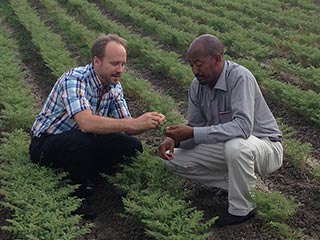
A new research effort in Ethiopia seeks to improve the productivity of chickpea varieties by harnessing the genetic diversity of wild species.

The federal Feed the Future Initiative is the latest rebranding of the U.S. government’s global hunger and food security initiative.

Chickpea is the third most widely grown legume crop in the world, following soybean and bean, and it has the ability to capture and use atmospheric nitrogen, thus contributing to soil fertility.  This five-year, $4 million research program could be important in the developing world, where the chickpea provides a crucial source of income, food security and nutrition to poor farmers.