Banner
Pilot Study: Fibromyalgia Fatigue Improved By TENS Therapy

Fibromyalgia is the term for a poorly-understood condition where people experience pain and fatigue...

High Meat Consumption Linked To Lower Dementia Risk

Older people who eat large amounts of meat have a lower risk of dementia and cognitive decline...

Long Before The Inca Colonized Peru, Natives Had A Thriving Trade Network

A new DNA analysis reveals that long before the Incan Empire took over Peru, animals were...

Mesolithic People Had Meals With More Tradition Than You Thought

The common imagery of prehistoric people is either rooting through dirt for grubs and picking berries...

User picture.
News StaffRSS Feed of this column.

News Releases From All Over The World, Right To You... Read More »

Blogroll
Hemp plants with scientifically enhanced increase in oleic acid could lead to an attractive cooking oil that is similar to olive oil in terms of fatty acid content - but has a much longer shelf life as well as greater heat tolerance and hopefully a lot less fraud associated with it than olive oil has.

Using fast-track molecular plant breeding, the scientists selected hemp plants lacking the active form of an enzyme involved in making polyunsaturated fatty acids. These plants made less poly-unsaturated fatty acids and instead accumulated higher levels of the mono-unsaturated oleic acid. The research team used conventional plant breeding techniques to develop the plants into a “High Oleic Hemp” line and higher oleic acid content was demonstrated in a Yorkshire field trial.
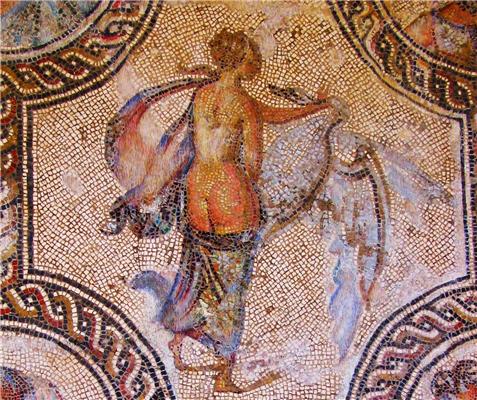
To ancient Romans, the depiction of female nudes in mosaics were meant to invoke beauty, carnality and eroticism while male bodies reflected determination, strength and power, according to work from the Universidad Carlos III in Madrid (UC3M) that analyzed the cultural construction and ideological implications of artistic representations in which females predominate compared to those males.

Sometimes art isn't just art. Prior interpretations of Roman mosaics analyzed clothing as an iconographic element that was fundamental in identifying the characters and determining their status, but a new book centers on the opposite theme: the absence of any type of clothing.
To ancient Romans, the depiction of female nudes in mosaics were meant to invoke beauty, carnality and eroticism while male bodies reflected determination, strength and power, according to work from the Universidad Carlos III in Madrid (UC3M) that analyzed the cultural construction and ideological implications of artistic representations in which females predominate compared to those males.

Sometimes art isn't just art. Prior interpretations of Roman mosaics analyzed clothing as an iconographic element that was fundamental in identifying the characters and determining their status, but a new book centers on the opposite theme: the absence of any type of clothing.
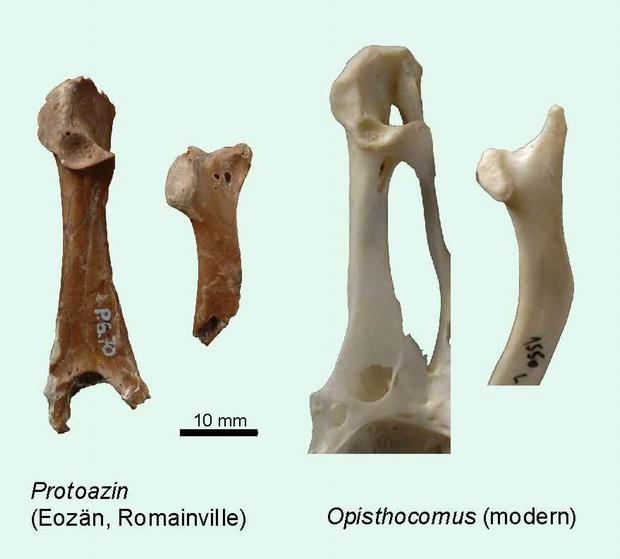
Only one species of hoatzins exists in South America today - or anywhere else. 

Opisthocomus hoazin, also known as the Stinkbird or Canje Pheasant, has an unclear evolutionary history but was assumed to have originated in South America.

Not so, it seems. The oldest known fossils of Hoatzin ancestors reveal that these birds existed around 34 million years ago in Europe, according to paleornithologists at the Senckenberg Gesellschaft für Naturforschung and Flinders University in Adelaide.

You don't need to show kids a frying egg in a pan to get the message across about drugs; just show them this statistic. 

Heroin and cocaine addicts in Spain have a fatality rate that is 14.3 times higher than for the general population, and that is among people seeking treatment. For those who never seek treatment, it is probably far worse. Even users of cocaine alone have a 5.1 times higher fatality rate.

50,000 years ago, the Arctic tundra was not as drab as you might think, being an Ice Age - it was filled with colorful wildflowers and these wildflowers helped sustain woolly mammoths and other giant grazing animals, according to a new paper. The study challenges the view that the arctic landscape in the ice age was largely grasslands. 

The study looked at 50,000 years of arctic vegetation history to understand how fauna had changed with animals and humans. Historically, the belief has been that the ice age's landscape was covered by largely grass-dominated systems -- called steppe. These grasses were replaced by mosses and other boggy vegetation when the ice age ended nearly 10,000 years ago, Craine said.