Children who talk on cell phones while crossing streets are at a higher risk for injuries or death in a pedestrian accident, said psychologists at the University of Alabama at Birmingham (UAB) in a new Pediatrics journal study.
Cell phones are quickly becoming ubiquitous among American schoolchildren, according to the UAB psychologists; "Commercial interests actively market cell phones for children, and marketing research firms estimate that 54 percent of children 8-12 will have cell phones by the end of [this year,] double the 2006 rate."
Just as drivers should limit cell phone use while driving, pedestrians, and especially child pedestrians, should avoid using cell phone while crossing streets, they state.
A new study finds swimming, having a private well or septic system, and other factors not involving food consumption were major risk factors for bacterial intestinal infections not occurring in outbreaks.
Outbreaks linked to food, such as the current Salmonella outbreak involving peanut butter that has sickened more than 500 people in 43 states, account for only about 10 percent of intestinal infections, which are medically termed as enteric infections, according to a new study in The Journal of Infectious Diseases. The study suggests that methods for controlling bacterial enteric outbreaks may not be completely relevant to controlling the other 90 percent or so that occur sporadically.
It wasn't always the case that people believed in continental drift, German geologist and meteorologist Alfred Wegener's(1) theory that parts of the Earth's crust slowly drift atop a liquid core. He believed 200 million years ago there was once a gigantic supercontinent which he called Pangaea ("All-earth") which slowly moved apart.
Genes that contain instructions for making proteins make up less than 2% of the human genome. Yet, for unknown reasons, most of our genome is transcribed into RNA.
Investigating all transcripts produced in a yeast cell, researchers in the groups of Lars Steinmetz at the European Molecular Biology Laboratory (EMBL) in Heidelberg, Germany, and Wolfgang Huber at the European Bioinformatics Institute (EMBL-EBI) in Hinxton, UK found that most regions of the yeast genome produce several transcripts starting at the same promoter. These transcripts are interleaved and overlapping on the DNA. In contrast to what was previously thought, the vast majority of promoters seem to initiate transcription in both directions.
Dead zones are low-oxygen areas in the ocean where higher life forms such as fish, crabs and clams are not able to live. In shallow coastal regions, for examples, dead zones can be caused by runoff of excess fertilizers from farming.
A team of Danish researchers is projecting that unchecked global warming would lead to a dramatic expansion of low-oxygen areas zones in the global ocean by a factor of 10 or more.
Whereas some coastal dead zones could be recovered by simply controlling fertilizer usage, expanded low-oxygen areas caused by global warming might remain for many years. The findings are reported in a paper 'Long-term ocean oxygen depletion in response to carbon dioxide emissions from fossil fuels' in Nature Geoscience.
Psoriasis affects some 7.5 million people in the United States, causing sore, itchy patches of red, scaly skin. In many cases psoriasis is not only disfiguring; between 10 and 30 percent of patients develop psoriatic arthritis, a painful inflammation of the joints. Current treatments, including different types of immunosuppressive agents, aren't always effective, and they can cause serious side effects.
Psoriasis has a strong genetic component; a child with two affected parents has a 50 percent chance of developing it; siblings have a three- to six-fold risk. But the genes responsible for psoriasis haven't yet been completely understood.


 Convergent Evolution Cheat Sheet Now 120 Million Years Old
 Synchrotron Could Shed Light On Exotic Dark Photons
 The Pain Scale Is Broken But This May Fix It
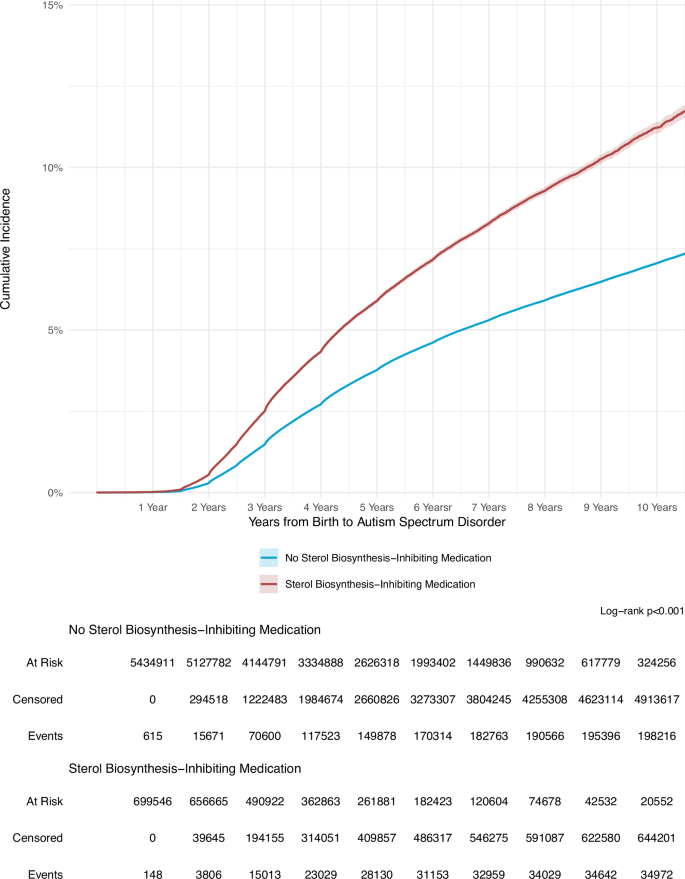 Study Links Antidepressants, Beta-blockers and Statins To Increased Autism Risk









