Banner
Ousiometrics Analysis Says All Human Language Is Biased

A new tool drawing on billions of uses of more than 20,000 words and diverse real-world texts claims...

Wavelengths Of Light Are Why CO2 Cools The Upper Atmosphere But Warms Earth

There are concerns about projected warming on the Earth’s surface and in the lower atmosphere...

Here's Where Your Backyard Was 300 Million Years Ago

We may use terms like "grounded" and terra firma to mean stability and consistency but geology...

Convergent Evolution Cheat Sheet Now 120 Million Years Old

One tenet of natural selection is a random walk of genes but nature may be more predictable than...

User picture.
News StaffRSS Feed of this column.

News Releases From All Over The World, Right To You... Read More »

Blogroll

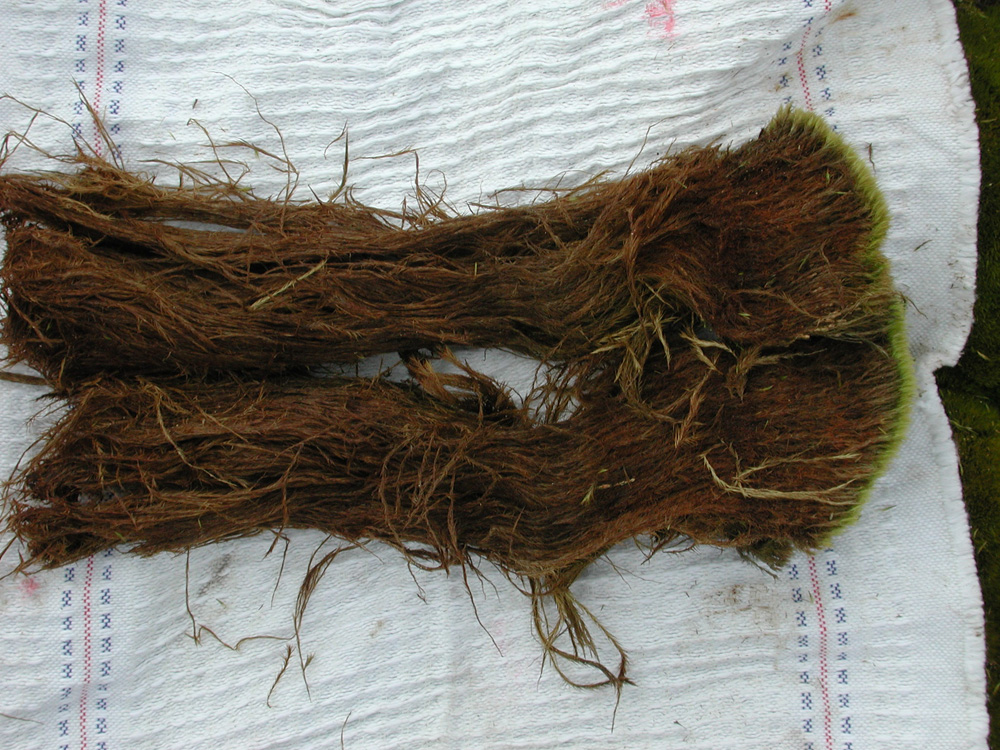
Even after over 1,500 years frozen in Antarctic ice, moss can come back to life and continue to grow.

Writing in Current Biology, the team report that they observed moss regeneration after at least 1,530 years frozen in permafrost.  For the first time, this vital part of the ecosystem in both polar regions has been shown to have the ability to survive century to millennial scale ice ages and it is the first study to show such long-term survival in any plant; similar timescales have only been seen before in bacteria. Mosses are known to survive environmental extremes in the short-term with previous evidence confirming up to a 20 year timescale for survival. 

The antibiotic-resistant bacterium Klebsiella pneumoniae sequence type 258 (ST258) is the predominant cause of human infections among bacteria classified as carbapenem-resistant Enterobacteriaceae (CRE), which kill approximately 600 people annually in the United States and sicken thousands more.

Most CRE infections occur in hospitals and long-term care facilities among patients who are already weakened by unrelated disease or have undergone certain medical procedures.  

Almost 14 billion years ago, the universe we inhabit burst into existence in an extraordinary event that initiated the Big Bang. In the first fleeting fraction of a second, the universe expanded exponentially, stretching far beyond the view of our best telescopes. All this, of course, was just theory.

Researchers from the BICEP2 collaboration today announced the first direct evidence for this cosmic inflation. Their data also represent the first images of gravitational waves, or ripples in space-time. These waves have been described as the "first tremors of the Big Bang." Finally, the data confirm a deep connection between quantum mechanics and general relativity.

New evidence gathered by NASA's MESSENGER spacecraft at Mercury solves an apparent enigma about Mercury's evolution. 

The data indicate the tiny planet closest to the sun, only slightly larger than earth's moon, has shrunk up to 7 kilometers in radius over the past 4 billion years, much more than earlier estimates. Older images of surface features indicated that, despite cooling over its lifetime, the rocky planet had barely shrunk at all. But modeling of the planet's formation and aging could not explain that finding.

The agave's claim to fame is as the plant from which the distilled adult beverage Tequila, named after the nearby town that made it famous, is produced.

But that may change. A sweetener created from the agave plant could lower blood glucose levels for the 26 million Americans and others worldwide who have type 2 diabetes and even help the obese lose weight, according to a paper presented at the   National Meeting of the American Chemical Society (ACS).

Colon cancer incidence rates have dropped sharply - 30 percent in the U.S. in the last 10 years, among adults 50 and older.

The drop has been attributed to the widespread uptake of colonoscopy, with the largest decrease in people over age 65. Colonoscopy use has almost tripled among adults ages 50 to 75, from 19 percent in 2000 to 55 percent in 2010.

The findings come from Colorectal Cancer Statistics, 2014, and are published in CA: A Cancer Journal for Clinicians. The article and its companion report, Colorectal Cancer Facts&Figures, were released today by American Cancer Society researchers as part of a new initiative by the National Colorectal Cancer Roundtable to increase screening rates to 80 percent by 2018.