Banner
Ousiometrics Analysis Says All Human Language Is Biased

A new tool drawing on billions of uses of more than 20,000 words and diverse real-world texts claims...

Wavelengths Of Light Are Why CO2 Cools The Upper Atmosphere But Warms Earth

There are concerns about projected warming on the Earth’s surface and in the lower atmosphere...

Here's Where Your Backyard Was 300 Million Years Ago

We may use terms like "grounded" and terra firma to mean stability and consistency but geology...

Convergent Evolution Cheat Sheet Now 120 Million Years Old

One tenet of natural selection is a random walk of genes but nature may be more predictable than...

User picture.
News StaffRSS Feed of this column.

News Releases From All Over The World, Right To You... Read More »

Blogroll

The people of Youngstown, Ohio say they never felt an earthquake before two-and-a-half years ago. But between January of 2011 and February of 2012, 109 tremors were recorded and the author of a new article points the finger at hydraulic fracturing - fracking. 

In December 2010, Northstar 1, a deep injection well built to pump wastewater produced by fracking in the neighboring state of Pennsylvania, came online. In the 14 months that followed seismometers in and around Youngstown recorded 109 earthquakes; the strongest was a magnitude 3.9 earthquake on December 31, 2011. Six of them could be 'felt'.

Researchers studying how oxidative stress in cells impacts sarcopenia, a loss of muscle mass and strength that occurs in all humans as they age, found that mice lacking a protective antioxidant protein did not have reduced size or number of muscles cells but they were weaker than normal ones.

The antioxidant protein is called SOD1 and the researchers developed mice that did not have SOD1 in their muscles, though it was still present in other types of cells. They found that the lack of SOD1 at the muscle was not enough to cause atrophy, the total muscle mass in this mouse was larger, but they were still weak.

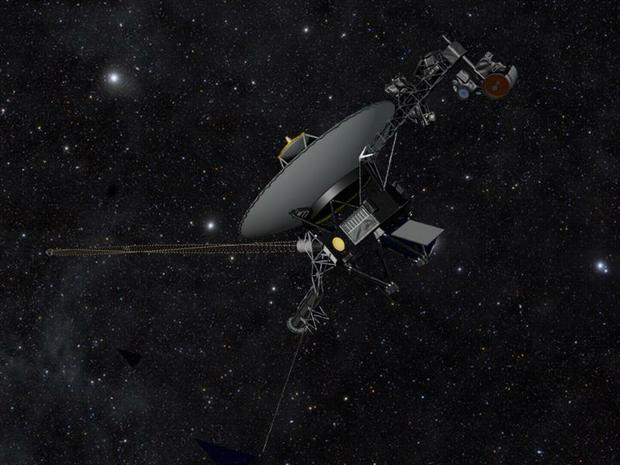
There is no 'you are now exiting the solar system' sign at the entrance to interstellar space, so when, and perhaps if, Voyager 1 left the solar system remains a mystery - but a team says it has definitely happened by now.

Voyager 1, carrying with it Earthly greetings on a gold plated phonograph record, still-operational scientific instruments and the future plot of "Star Trek: The Motion Picture", has traveled farther from Earth than any other human-made object. 

Two laboratory studies found that the flavonoids apigenin and luteolin, found in celery, artichokes and herbs like Mexican oregano, kills human pancreatic cancer cells in vitro by inhibiting an important enzyme.

Heavy use of magnetic resonance imaging (MRI) may be leading to unnecessary breast removal in older women with breast cancer, according to a new study. The research team tracked the use of breast MRI and surgical care of 72,461 female Medicare beneficiaries age 67-94 who were diagnosed with breast cancer during 2000 to 2009.

The team found a considerable increase in the use of preoperative breast MRI over the study period from 1% in 2000-2001 to 25% in 2008-2009. The researchers also found that women who received an MRI were more likely to subsequently undergo more aggressive surgical treatment. In women who received mastectomy, 12.5% of those who had MRI received bilateral mastectomy, while only 4.1% of those who did not have MRI had bilateral mastectomy.
More people are seeking natural alternatives to medicine and products containing probiotics have flooded the marketplace. Probiotics are safe and tolerable but their value remains unknown. Studies are being done with specific illnesses to see if probiotics work and how.

A randomized, double-blind, placebo-controlled trial found that the probiotic Saccharomuces boulardii (S. boulardii) does not appear to have any significant beneficial effects for patients with Crohn's disease who are already in remission.