Banner
Synchrotron Could Shed Light On Exotic Dark Photons

There are many hypothetical particles proposed to explain dark matter and one idea to explore how...

The Pain Scale Is Broken But This May Fix It

Chronic pain is reported by over 20 percent of the global population but there is no scientific...

Study Links Antidepressants, Beta-blockers and Statins To Increased Autism Risk

An analysis of 6.14 million maternal-child health records  has linked prescription medications...

Pilot Study: Fibromyalgia Fatigue Improved By TENS Therapy

Fibromyalgia is the term for a poorly-understood condition where people experience pain and fatigue...

User picture.
News StaffRSS Feed of this column.

News Releases From All Over The World, Right To You... Read More »

Blogroll
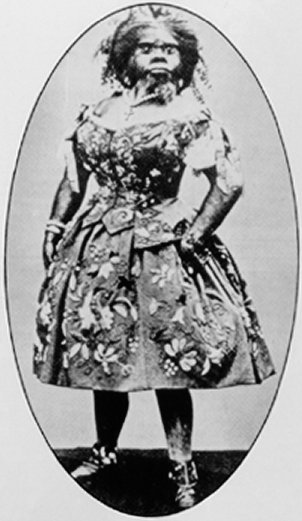
New research provides exciting genetic insight into a rare syndrome that first appeared in the medical literature in the mid 1800s with the case of Julia Pastrana, the world's most notorious bearded lady. The study, published by Cell Press in the May 21st issue of the American Journal of Human Genetics, reveals intriguing molecular clues about the pathogenesis of this mysterious condition that has captured the attention of the public since the Middle Ages.
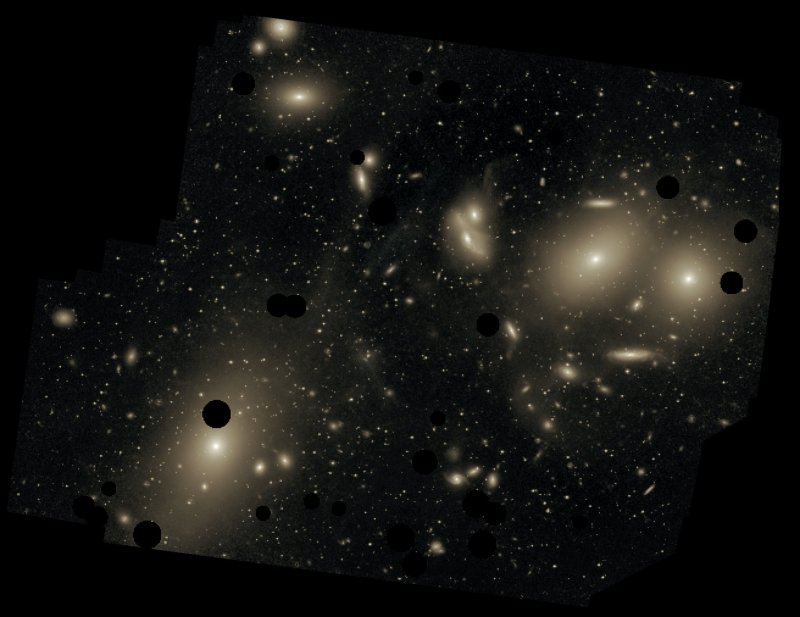
Using ESO's Very Large Telescope, astronomers have succeeded in measuring the size of giant galaxy Messier 87 - or what they thought there should be.    It turns out that its outer parts have been stripped away - and no one is yet sure how.   To add to its woes, the galaxy also appears to be on a collision course with another giant galaxy in this dynamic cluster.
Scientists sometimes regret when the terms they use in a scientific way get a colloquial meaning.   In physics, Peter Higgs has to like his name recognition but might edit out references to a 'God particle' if he had it to do over again, and in biology a week doesn't go by that biologists won't complain that people misunderstand the term 'junk DNA.'

Well, 'junk' had a meaning before biology and everyone knew it - junk DNA in biology isn't garbage yet it dominates the genome and seems to lack specific functions. Why nature would force the genome to carry so much excess baggage is a puzzle still unsolved.
Cambridge University researchers have discovered that whether someone is a 'people-person' may depend on the structure of their brain: the greater the concentration of brain tissue in certain parts of the brain, the more likely they are to be a warm, sentimental person.   Interestingly, the orbitofrontal cortex and ventral striatum have previously been shown to be important for the brain's processing of much simpler rewards like sweet tastes or sexual stimuli. 
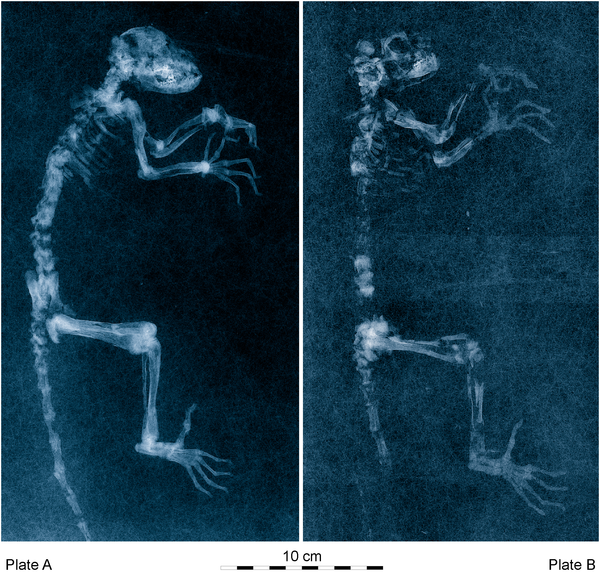
It's always best not to go overboard but the discovery of Darwinius masillae is pretty darn exciting, because it represents the most complete fossil primate ever found;  the skeleton, soft body outline and even the stomach contents.   It is phylogenetically terrific. Or not.  In any new claim like this, there will be doubts.
Empa and the Paul Scherrer Institute (PSI) have, together with Bucher Schoerling, Proton Motor, BRUSA Elektronik AG und Messer Schweiz, developed a hydrogen powered municipal street cleaning vehicle which was presented to the public last week in Basel. The vehicle is named the "Bucher CityCat H2"  and is the first municipal utility vehicle in the world powered by fuel cell technology.   For the next 18 months it will be tested in everyday usage.