Banner
Synchrotron Could Shed Light On Exotic Dark Photons

There are many hypothetical particles proposed to explain dark matter and one idea to explore how...

The Pain Scale Is Broken But This May Fix It

Chronic pain is reported by over 20 percent of the global population but there is no scientific...
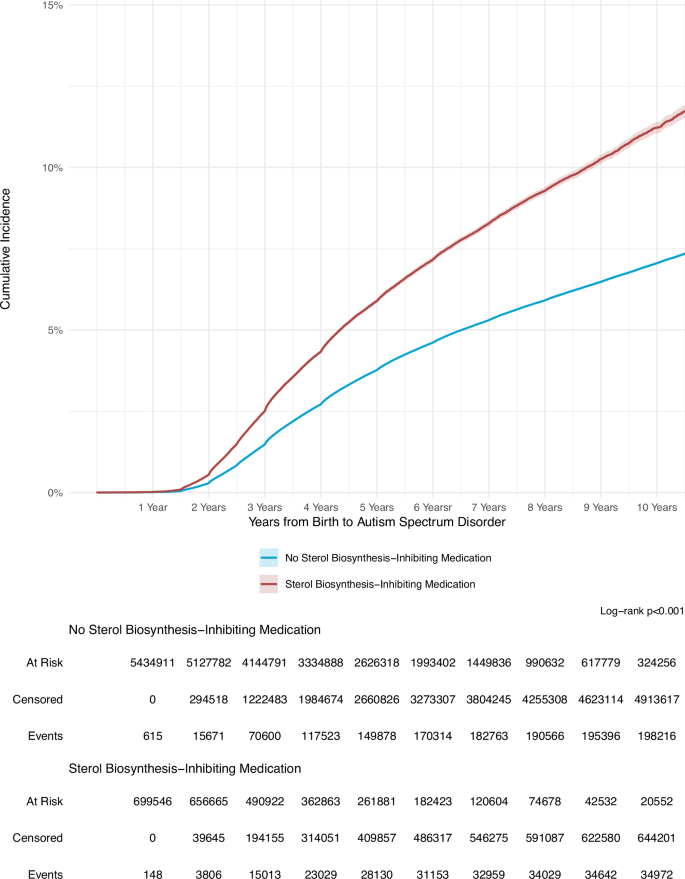
Study Links Antidepressants, Beta-blockers and Statins To Increased Autism Risk

An analysis of 6.14 million maternal-child health records  has linked prescription medications...

Pilot Study: Fibromyalgia Fatigue Improved By TENS Therapy

Fibromyalgia is the term for a poorly-understood condition where people experience pain and fatigue...

User picture.
News StaffRSS Feed of this column.

News Releases From All Over The World, Right To You... Read More »

Blogroll
The secret to any good recipe is knowing how things happen in a system and the recipe for diseases is no different.  Many diseases have crucial proteins which change the dynamics of cells from benign to deadly. New findings from an international collaboration involving McGill University, the Research Institute of the McGill University Health Centre (MUHC) and the Human Proteome Organisation (HUPO) just made identifying these changes one step easier. Their findings published in Nature Methods, show how to improve protein analysis to tease out relevant potential disease-causing molecules.
Since April 15 and 17, 2009, when the first two cases of novel influenza A (H1N1) infection were identified from two southern California counties, novel influenza A (H1N1) cases have been documented throughout the world, with most cases occurring in the United States and Mexico.

In the United States, early reports of illnesses associated with novel influenza A (H1N1) infection indicated the disease might be similar in severity to seasonal influenza, with the majority of patients not requiring hospitalization and only rare deaths reported, generally in persons with underlying medical conditions.
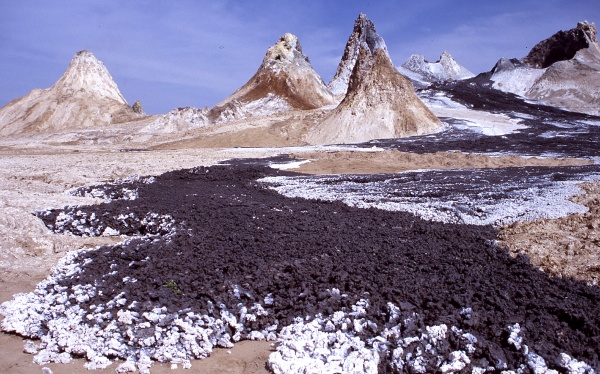
If you didn't know better, you might think the Oldoinyo Lengai volcano in Tanzania was proof of alchemy.

There, in the ancient East African Rift at a place known to local Maasai people as the Mountain of God, Oldoinyo Lengai spews forth carbon dioxide-laden lavas called carbonatites. The carbonatites line the volcano's flanks like snowballs.  Oldoinyo Lengai is the only place on Earth where carbonatites currently erupt -- and where carbon dioxide from a volcano doesn't vanish into thin air as a gas.

In a paper published this week in the journal Nature, scientists report the results of a study of Oldoinyo Lengai's volcanic gas emissions, sampled by the team during a carbonatite lava eruption.

Is "Multiplicity" your favorite movie?   Have you ever wished you could be in two places at once or create an evil twin (and name him Skippy)?   A research project called LifeLike is trying to bring that a little closer to reality.

Project LifeLike is a collaboration between the Electronic Visualization Laboratory (EVL) at the University of Illinois at Chicago, and the Intelligent Systems Laboratory (ISL) at the University of Central Florida and aims to create visualizations of people, or avatars, that are as realistic as possible. While their current results are far from perfect replications of a specific person, their work has advanced the field forward and opens up a host of possible applications in the not-too-distant future.

British parents call for a radical overhaul of the education system, saying that secondary school is not working for over a quarter (28 per cent) of children.

According to independent education foundation Edge, it is a situation that worsens with age as 40 per cent of 15-16 year olds are failing to thrive at school.

And this appears to be impacting on happiness levels as a quarter (26 per cent) of secondary school mums and dads admit they often worry their child is not happy - 23 per cent saying their offspring has not been happy since starting secondary school.

Questioning the one-size fits all approach, two fifths of parents (42 per cent) claim that only academically minded children do well at school.

In Finland, leaders in various fields have taken up the challenge presented by the increasing use of natural resources. Jointly, they have set out to find an answer to the question of how to use natural resources to enhance both national competitiveness and global responsibility. One result of this cooperation is the Natural Resource Strategy for Finland, a unique effort on a global scale.