A new longitudinal study of children's personality traits and interests tells us that sex-typed characteristics develop differently in girls and boys. The study, by researchers at The Pennsylvania State University, the University of Hawaii at Manoa, and Purdue University, appears in Child Development.
The researchers looked at first- and second-born siblings from nearly 200 mostly White, middle-class American families. They collected information through home interviews conducted over seven years, activity diaries provided by the children, and saliva samples that measured the children's testosterone levels.
The record numbers of young people who took part in last year's presidential election, along with high schools' raised expectations that students participate in community service, have led to growing research on teens' civic beliefs and behavior.
A new study finds that most young people consider civic activity to be obligatory, but their judgments and justifications about different types of civic involvement vary by gender and a variety of other factors.
A limestone countertop, a practiced eye and Google Earth all played roles in the discovery of a trove of fossils that may shed light on the origins of African wildlife.
The story concerns University of Michigan paleontologists Philip Gingerich, Gregg Gunnell and Bill Sanders and is the subject of a segment on the award-winning television series "Wild Chronicles," currently airing on public television stations (Episode 412---Looking Back; check listings for local air dates). "Wild Chronicles" is produced by National Geographic Television and presented by WLIW21 in association with WNET.ORG.
During a seminar several years ago, University of Chicago paleontologist David Jablonski fielded a hostile question: Why bother classifying organisms according to their physical appearance, let alone analyze their evolutionary dynamics, when molecular techniques had already invalidated that approach?
With more than a few heads in the audience nodding their agreement, Jablonski, the William Kenan Jr. Professor in Geophysical Sciences, saw more work to be done. The question launched him on a rigorous study that has culminated in a new approach to reconciling the conflict between fossil and molecular data in evolutionary studies.
Autism is a complex brain disorder that strikes in early childhood. The condition disrupts a child's ability to communicate and develop social relationships and is often accompanied by acute behavioral challenges. The Centers for Disease Control and Prevention report that one in 150 American children is diagnosed with an autism spectrum disorder; the disorder affects four times as many boys as girls. The diagnosis of autism has expanded tenfold in the last decade.
The farthest we have 'seen' in space just got a little farther away, thanks to ESO's Very Large Telescope and GRB (Gamma Ray Burst) 090423.
VLT has shown that a faint gamma-ray burst detected last Thursday is the signature of the explosion of the earliest, most distant known object in the Universe (a redshift of 8.2). The explosion apparently took place more than 13 billion years ago, only about 600 million years after the Big Bang.


 Synchrotron Could Shed Light On Exotic Dark Photons
 The Pain Scale Is Broken But This May Fix It
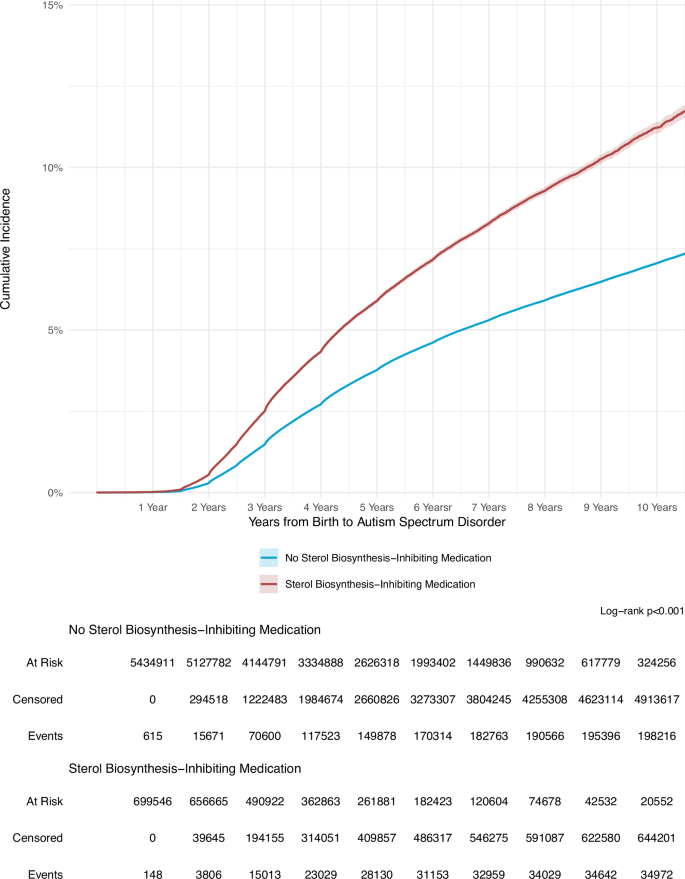 Study Links Antidepressants, Beta-blockers and Statins To Increased Autism Risk
 Pilot Study: Fibromyalgia Fatigue Improved By TENS Therapy