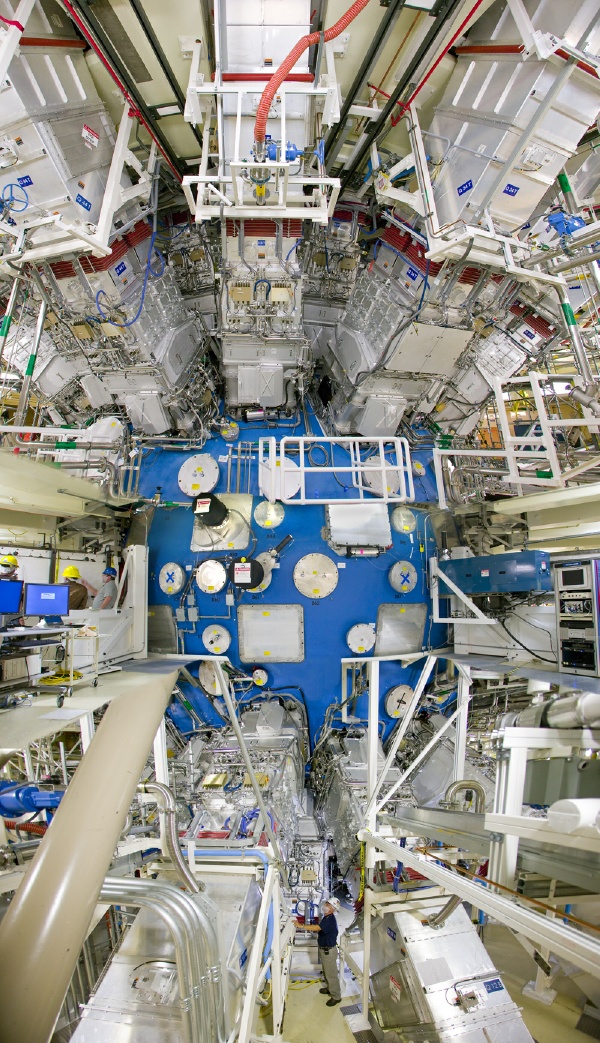
If we tell you the next laser in the works by the National Nuclear Security Administration (NNSA) will be the size of a football stadium and will have 192 individual beams, each about 40 centimeters square, beaming into a spot about one-half millimeter in diameter at the center of its 10 meter diameter target chamber, delivering huge amounts of energy with extreme precision in billionths of a second, what will you think?
You'll think
the residents of Alderaan had better start packing suitcases, right?
Just before dawn on Oct. 7, 2008, an SUV-sized asteroid entered Earth's atmosphere and exploded harmlessly over the Nubian Desert of northern Sudan. Scientists expected the asteroid, called 2008 TC3, had blown to dust in the resulting high-altitude fireball.
What happened next excited the scientific community.
Peter Jenniskens, a meteor astronomer with the SETI Institute in Mountain View, Calif., who works at NASA's Ames Research Center in Moffett Field, Calif., joined Muawia Shaddad of the University of Khartoum in Sudan to search for possible extraterrestrial remnants from the asteroid.
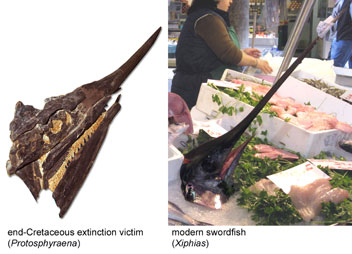
It wouldn't seem logical today that big predators are at the greatest risk for extinction, but they are, and a group of researchers sees a number of similarities between extinctions of 65 million years ago and today.
Studies of modern fishes demonstrate that large body size is linked to large prey size and low rates of population growth, while fast-closing jaws appear to be adaptations for capturing agile, evasive prey—in other words, other fishes. The fossil record provides some remarkable evidence supporting these estimates of function: fossil fishes with preserved stomach contents that record their last meals.
Autism is a complex developmental disability that affects a person's ability to communicate and interact with others. It usually appears during the first three years of life. Autism is called a "spectrum disorder" since it affects individuals differently and to varying degrees. It is estimated that one in every 150 American children has some degree of autism.
Scientists at Albert Einstein College of Medicine of Yeshiva University have proposed a new hypothesis about autism, suggesting that the brains of people with autism are structurally normal but dysregulated - meaning symptoms of the disorder might be reversible.
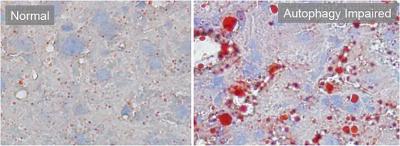
Researchers at Albert Einstein College of Medicine of Yeshiva University say they have discovered a process that controls the amount of fat that cells store for use as a back-up energy source. Disruption of this process allows cellular fat to accumulate — a key factor in age-related metabolic diseases such as obesity and type 2 diabetes.
Butterflies seem able to both attract mates and ward off predators using different sides of their wings, according to new research in the journal Proceedings of the Royal Society B: Biological Sciences.
Trying to find the balance between these two crucial behaviors is one of nature’s oldest dilemmas, according to Jeffrey Oliver, a postdoctoral associate in Yale’s Department of Ecology and Evolutionary Biology and lead author on the study.


 Synchrotron Could Shed Light On Exotic Dark Photons
 The Pain Scale Is Broken But This May Fix It
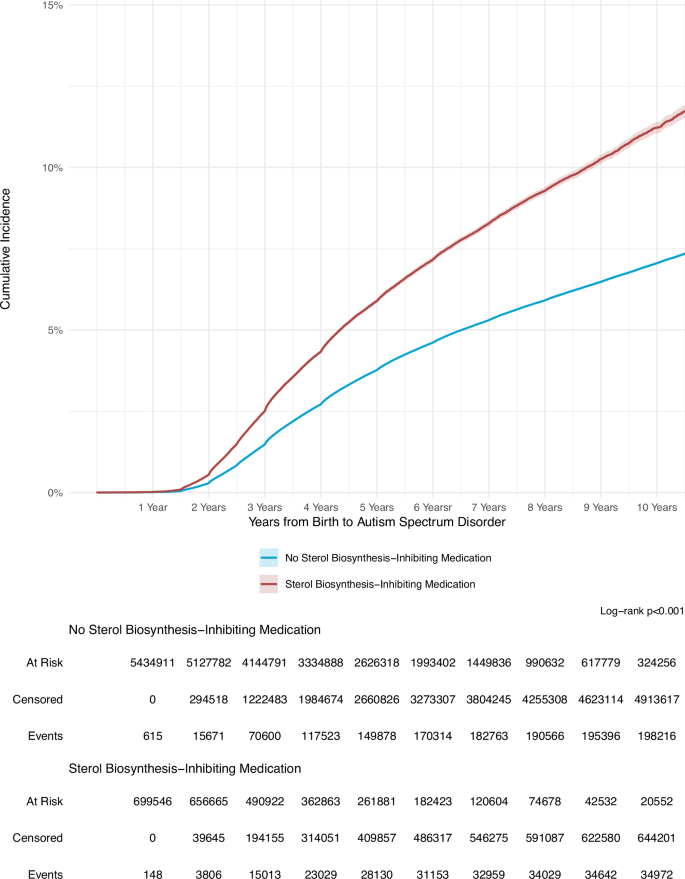 Study Links Antidepressants, Beta-blockers and Statins To Increased Autism Risk
 Pilot Study: Fibromyalgia Fatigue Improved By TENS Therapy