Sometimes known as "nature's origami", the way that proteins fold is vital to ensuring they function correctly. But researchers at the University of Leeds have discovered this is a 'hit and miss' process, with proteins potentially folding wrongly many times before they form the correct structure for their intended purpose.
The body's proteins carry out numerous functions and play a crucial role in the growth, repair and workings of cells. Sheena Radford, Professor of Structural Molecular Biology at the University of Leeds, says: "There's a fine balance between a protein folding into the correct shape so that it can carry out its job efficiently and it folding incorrectly, which can lead to disease. Just one wrong step can tip that balance."
Women can take pride that they are more efficient than men in many ways, including one that is not so great; storing fat.
It's a paradox women have discussed for generations – their apparent ability to store fat more efficiently than men, despite eating proportionally fewer calories. While it has long been suspected that female sex hormones are responsible, a University of New South Wales (UNSW) research review has for the first time drawn a link between one hormone – estrogen – and its impact on fat storage for childbearing.
Did you ever get called impulsive by a teacher? You're lucky you don't live in Montreal.
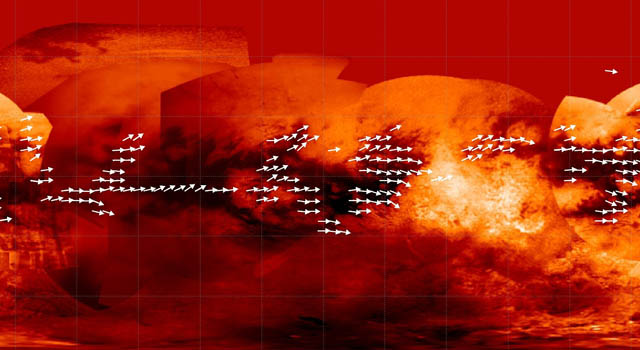
Titan's vast dune fields, which may act like weather vanes to determine general wind direction on Saturn's biggest moon, have been mapped by scientists who compiled four years of radar data collected by the Cassini spacecraft.
Titan's rippled dunes are generally oriented east-west. Surprisingly, their orientation and characteristics indicate that near the surface, Titan's winds blow toward the east instead of toward the west. This means that Titan's surface winds blow opposite the direction suggested by previous global circulation models of Titan.
A study in the March 1 issue of SLEEP suggests the presence of an intrinsic sleep problem specific to attention-deficit/hyperactivity disorder (ADHD) and supports the idea that children with ADHD may be chronically sleep deprived and have abnormal REM sleep.
Results show that children with ADHD have a total sleep time that is significantly shorter than that of controls. Children in the ADHD group had an average total sleep time of eight hours, 19 minutes; this was 33 minutes less than the average sleep time of eight hours, 52 minutes, in controls. Children with ADHD also had an average rapid eye movement (REM) sleep time that was significantly reduced by 16 minutes.
Puny Crayfish may have big claws for show but they can't really use them - their muscles are actually weaker than females with smaller claws.
So why does it work? A group of scientists writing in The Journal of Experimental Biology set out to discover the answer.
Slender crayfish are aggressive territorial creatures, explains ecologist Robbie Wilson of the University of Queensland, Australia. When two crayfish catch sight of one another, they size each other up in a ritualistic display, which can quickly escalate from careful tapping of their opponent's chelae (enlarged front claws) to a full-blown fight.


 Synchrotron Could Shed Light On Exotic Dark Photons
 The Pain Scale Is Broken But This May Fix It
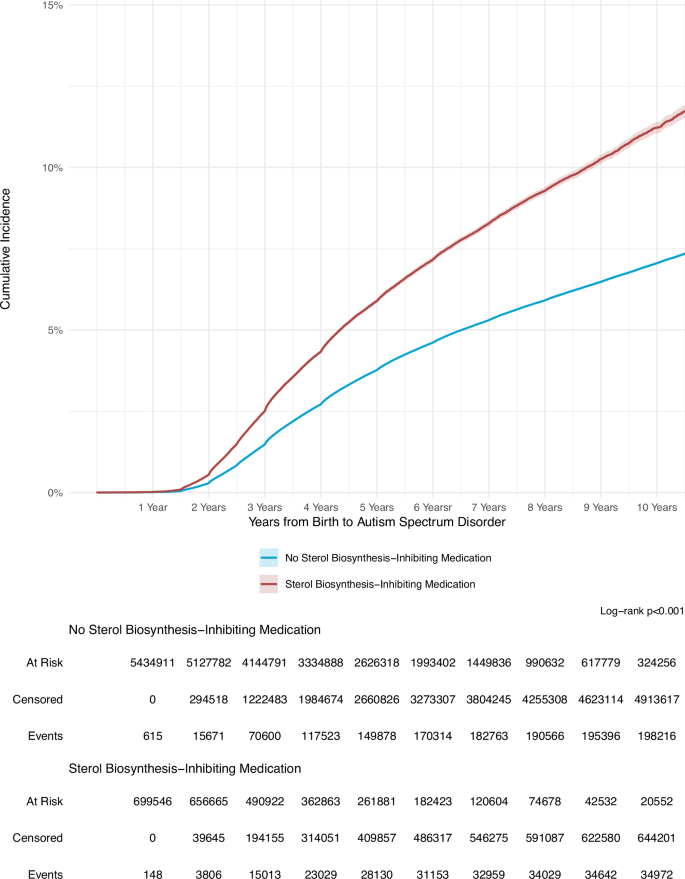 Study Links Antidepressants, Beta-blockers and Statins To Increased Autism Risk
 Pilot Study: Fibromyalgia Fatigue Improved By TENS Therapy