A team of scientists has used game theory to explain the bizarre behavior of a group of ravens. Juvenile birds from a roost in North Wales have been observed adopting the unusual strategy of foraging for food in 'gangs.' New research published in PLoS One explains how this curious behavior can be predicted by adapting models more commonly used by economists to analyse financial trends.
This is the first time
game theory has been used to successfully predict novel animal behavior in the real world. The researchers believe this analysis could also shed light on the variation in feeding strategies in different populations in other species.
Women undertaking a ten week program of 75 minute Restorative Yoga (RY) classes gained positive differences in aspects of mental health such as depression, positive emotions, and spirituality (feeling calm/peaceful) compared to the control group. The study, published today in a special issue of Psycho-Oncology focusing on physical activity, shows the women had a 50% reduction in depression and a 12% increase in feelings of peace and meaning after the yoga sessions.
Richard Hawkins, Canada Research Chair in Science, Technology and Innovation Policy, says there is no evidence that information technologies necessarily reduce our environmental footprint. His research will provide input into the OECD (Organization for Economic Cooperation and Development) initiative on IT and sustainability at the United Nations' Climate Change Conference in Copenhagen, Denmark later this year.
"It was once assumed that there was little or no material dimension to information technology, thus, it should be clean with minimal environmental impact," says Hawkins who is also a professor in the U of C's Faculty of Communication and Culture. "However, we are finding that reality is much more complicated."
Do sexy images sell products? Like anything in marketing, it depends on if it works, says a new study in Journal of Consumer Research, but the common belief is that it doesn't work all that great for women. The researchers say there may be ways to do it that can attract customers of both sexes.
In today's cluttered advertising space, marketers use increasingly radical images that include nudity and sexual language.
Authors Darren W. Dahl (University of British Columbia, Vancouver), Jaideep Sengupta (Hong Kong University of Science and Technology), and Kathleen D. Vohs (University of Minnesota) followed up on earlier research that has demonstrated that women exhibit negative reactions to explicit sexual content in advertising.
Experts in intellectual property and patents write in a forthcoming issue of the International Journal of Technology Transfer and Commercialisation that tools such as online social networking could be used to eradicate the enormous backlog of patent applications in the US.
Social networking sites such as Facebook, ScientificBlogging and MySpace allow visitors to create networks of friends and contacts, upload images, music, videos, and news stories. Members can discuss, blog, and rate different media on such sites and provide useful feedback to the content creators. Analyzing social networks can uncover patterns of interaction between people and reveal what is important and well-ranked in a given group, or community.
In tales, legend and role-playing games, sprites are tiny creatures that cause lots of rascally hijinks - sometimes they even dance in the sky. Scientists at Tel Aviv University say that some "sprites" are very real and they are zipping across the atmosphere, providing a possible explanation for those more modern legendary denizens of the skies; UFOs.
Thunderstorms, says Prof. Colin Price, head of the Geophysics and Planetary Sciences Department at Tel Aviv University, are the catalyst for a newly discovered natural phenomenon he calls "sprites." He and his colleagues are one of the leading teams in the world studying the phenomenon, and Prof. Price leads the study of "winter sprites" ― those that appear only in the northern hemisphere's winter months.


 Synchrotron Could Shed Light On Exotic Dark Photons
 The Pain Scale Is Broken But This May Fix It
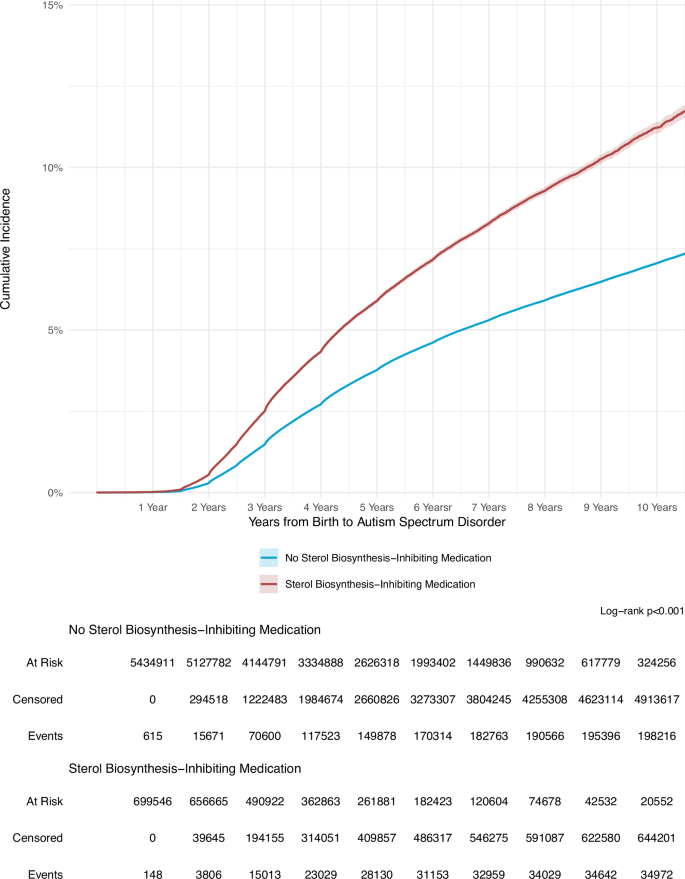 Study Links Antidepressants, Beta-blockers and Statins To Increased Autism Risk
 Pilot Study: Fibromyalgia Fatigue Improved By TENS Therapy