

Banner
Synchrotron Could Shed Light On Exotic Dark Photons

There are many hypothetical particles proposed to explain dark matter and one idea to explore how...

The Pain Scale Is Broken But This May Fix It

Chronic pain is reported by over 20 percent of the global population but there is no scientific...
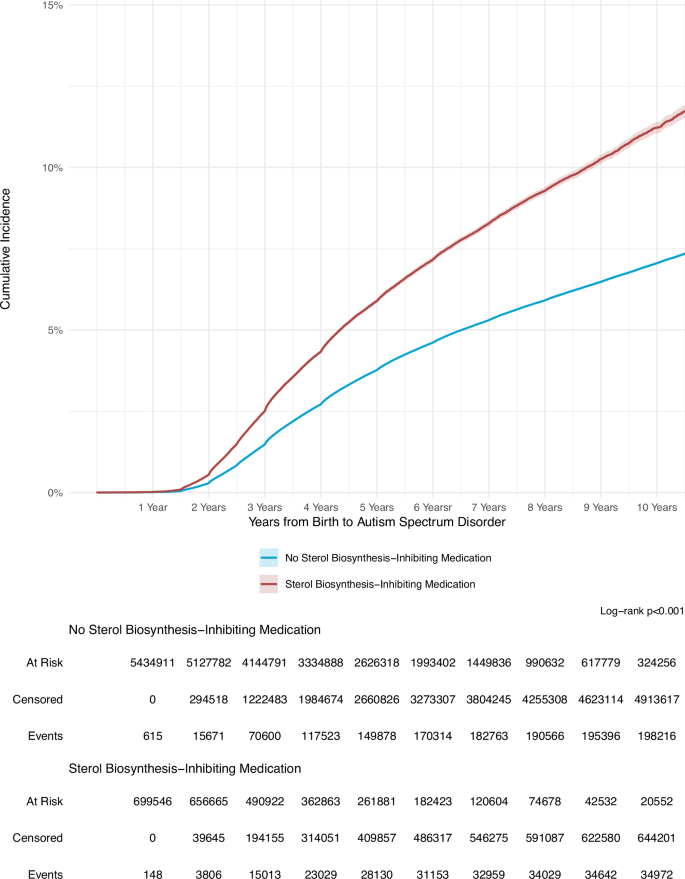
Study Links Antidepressants, Beta-blockers and Statins To Increased Autism Risk

An analysis of 6.14 million maternal-child health records  has linked prescription medications...

Pilot Study: Fibromyalgia Fatigue Improved By TENS Therapy

Fibromyalgia is the term for a poorly-understood condition where people experience pain and fatigue...

User picture.
News StaffRSS Feed of this column.

News Releases From All Over The World, Right To You... Read More »

Blogroll
A multi-institutional team of researchers has reported the sequences for all of the 99 known strains of cold virus, nature's most ubiquitous human pathogen. The feat exposes, in precise detail, all of the molecular features of the many variations of the virus responsible for the common cold, the inescapable ailment that makes us all sneeze, cough and sniffle with regularity. 

Conducted by teams at the University of Maryland School of Medicine, the University of Wisconsin-Madison and the J. Craig Venter Institute, the work to sequence and analyze the cold virus genomes lays a foundation for understanding the virus, its evolution and three-dimensional structure and, most importantly, for exposing vulnerabilities that could lead to the first effective cold remedies. 
Scientists at the University of North Carolina at Chapel Hill say they have helped develop a new genomic test that can help clinicians predict which breast cancer patients are most likely to survive the disease and which treatments may be most effective in increasing those chances of survival.

By specifically measuring the activity level of a small subset of the 20,000 plus genes that may be “turned on” or “turned off” within each tumor, this genomic test can give patients a more accurate picture of how their disease might progress.
Not sure who to date? Garth Sundem answers it in The Valentine's Day Man-O-Meter. Be sure to take it as gospel because he never just makes stuff up.

If you're still unsure who to pursue, you may be looking in the wrong places. This study says We Want To Date People Slightly More Attractive Than We Are. How, then, does anyone get a date? It's another mystery of love.
One of the weaknesses of using a surname as a guide in understanding genetic characteristcs has been the belief that 1 in 10 births were the result of infidelity - so the name is not only an incorrect characteristic but could even be deceptive.

Not, so, says a study funded by the Wellcome Trust published this week in the journal Molecular Biology and Evolution, which may help genealogists create more accurate family trees even when records are missing. It suggests that the often quoted "one in ten" figure for children born through infidelity is unlikely to be true.
Sky diving and base jumping are not for everyone. However, for certain people, the more risk and adrenaline involved in an activity, the better! What draws some people to daredevil behavior while others shy away from it? Psychologists Jane E. Joseph, Xun Liu, Yang Jiang and Thomas H. Kelly from the University of Kentucky, along with Donald Lyman of Purdue University were interested in testing how the brains of sensation-seekers differ from those of us who avoid risky behavior.
Scientists have sequenced over seventy strains of yeast, the greatest number of genomes for any species.  The basic machinery of yeast is surprisingly similar to that of humans, and the project is already helping experts to develop the tools necessary for studying human genetic variation. Yeast can also be used to develop and test new drugs, such as for cancer. 

It also gave us a clever way to finagle the title and remind you about Darwin Day tomorrow - the 200th anniversary of his birth.   And, if you are  an American Republican, it's also the 200th birthday of the first Republican President, Abraham Lincoln.    But we're a science site so we'll focus on the yeast.








