Banner
Pilot Study: Fibromyalgia Fatigue Improved By TENS Therapy

Fibromyalgia is the term for a poorly-understood condition where people experience pain and fatigue...

High Meat Consumption Linked To Lower Dementia Risk

Older people who eat large amounts of meat have a lower risk of dementia and cognitive decline...

Long Before The Inca Colonized Peru, Natives Had A Thriving Trade Network

A new DNA analysis reveals that long before the Incan Empire took over Peru, animals were...

Mesolithic People Had Meals With More Tradition Than You Thought

The common imagery of prehistoric people is either rooting through dirt for grubs and picking berries...

User picture.
News StaffRSS Feed of this column.

News Releases From All Over The World, Right To You... Read More »

Blogroll

Each day we risk exposure to around 70,000 chemicals. In food packaging or even the air we breathe, contact with potentially-toxic substances could be affecting our health, including fertility.

The Reproductive Effects of Environmental Chemicals in Females Consortium (REEF) is one of the first studies tackling the effect of environmental chemicals on female mammals. REEF will receive a total of £2.4m in funding from the EU.

Dr Richard Lea and Dr Kevin Sinclair at The University of Nottingham will receive a £500,000 grant for their work researching how these chemicals impact on mammalian fertility. Dr Lea and Dr Sinclair will study the impact of low levels of environmental chemicals on sheep foetuses in the womb. The specific chemicals to be studied are found in human sewage sludge which is frequently spread on fields where sheep graze prior to entering the human food chain.

Titanium is the lightweight metal of choice for many applications and a non-melt consolidation process being developed by Oak Ridge National Laboratory may make it cheap enough to bulletproof your Prius. Or a military vehicle, if you want to be predictable.

The new processing technique could reduce the amount of energy required and the cost to make titanium parts from powders by up to 50 percent, making it feasible to use titanium alloys for brake rotors, artificial joint replacements and armor for vehicles.

The lightweight titanium alloy also improves the operation of the door and increases mobility of the vehicle, making it even more useful to the military.

Researchers at the University of Illinois report this week that a plant compound found in abundance in celery and green peppers can disrupt a key component of the inflammatory response in the brain. The findings have implications for research on aging and diseases such as Alzheimer’s and multiple sclerosis.

Inflammation can be a blessing or a blight. It is a critical part of the body’s immune response that in normal circumstances reduces injury and promotes healing. When it goes awry, however, the inflammatory response can lead to serious physical and mental problems.

Inflammation plays a key role in many neurodegenerative diseases and also is implicated in the cognitive and behavioral impairments seen in aging.

Lawrence Krauss, a theoretical physicist and cosmologist whose research is so broad that it covers science from the beginning of the universe to the end of the universe, will join Arizona State University in August to assume a leadership role in an emerging research and educational initiative on “origins.”

“Lawrence Krauss has been at the forefront of trying to unify particle physics and cosmology; of trying to use the universe itself as a laboratory to understand fundamental interactions, fundamental science and fundamental physics,” says ASU President Michael Crow. “His ability to address fundamental questions of life, of origins – Where did we come from? Why are we here? – and to seek an understanding of the long-term sustainability of life on Earth, will facilitate this new research and educational initiative at Arizona State University.”

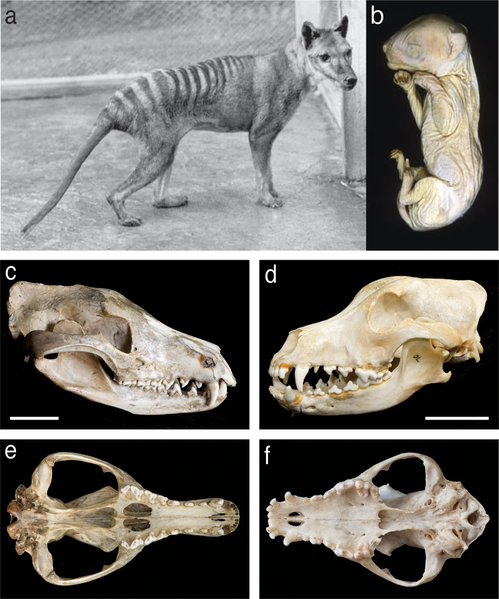
Researchers from the University of Melbourne, Australia, and the University of Texas, USA, have extracted genes from the extinct Tasmanian tiger (thylacine), inserted it into a mouse and observed a biological function – this is a world first for the use of the DNA of an extinct species to induce a functional response in another living organism.

The results, published in the international scientific journal PLoS ONE this week, showed that the thylacine Col2a1 gene has a similar function in developing cartilage and bone development as the Col2a1 gene does in the mouse.

“This is the first time that DNA from an extinct species has been used to induce a functional response in another living organism,” said Dr Andrew Pask, RD Wright Fellow at the University of Melbourne’s Department of Zoology who led the research.

Greenhouse gases are not all bad. With 90,000 out of every 100,000 years in the planet's history being ice ages, greenhouse gases are absolutely necessary for maintaining the climate we enjoy.

In the absence of greenhouse gases like water vapor, carbon dioxide, methane, etc, the average temperature on earth would be -18°C - pretty darn cold and basically unable to sustain life. However, there can be too much of a good thing.

The concentration and composition of greenhouse gases in the atmosphere has fluctuated throughout history but has been climbing more recently due to human activity - namely, there are three times as many of us as 100 years ago and that results in more methane from us, more fossil fuel combustion, more methane from livestock and various gases due to development of agriculture to feed an increased population.