Banner
Pilot Study: Fibromyalgia Fatigue Improved By TENS Therapy

Fibromyalgia is the term for a poorly-understood condition where people experience pain and fatigue...

High Meat Consumption Linked To Lower Dementia Risk

Older people who eat large amounts of meat have a lower risk of dementia and cognitive decline...

Long Before The Inca Colonized Peru, Natives Had A Thriving Trade Network

A new DNA analysis reveals that long before the Incan Empire took over Peru, animals were...

Mesolithic People Had Meals With More Tradition Than You Thought

The common imagery of prehistoric people is either rooting through dirt for grubs and picking berries...

User picture.
News StaffRSS Feed of this column.

News Releases From All Over The World, Right To You... Read More »

Blogroll

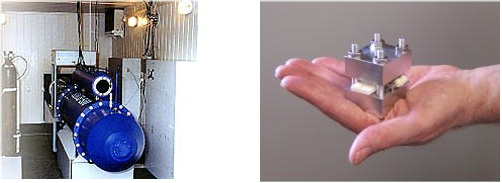
A golden coil smaller in diameter than a human hair and a diamond pin embossed with gold may represent the future of high frequency electronics.

Carol L. Kory, who specializes in complex electromagnetic computer simulations, will present two papers describing the design and predicted performance of new backward wave oscillators at the Ninth International Vacuum Electronics Conference (IVEC) in Monterey, California.

James A. Dayton, Jr., chief technology officer of Teraphysics and inventor of the devices, will follow with two presentations describing the innovative fabrication technology that has been developed to create these two oscillators. Both structures are the essential components of novel 0.65-terahertz electronic oscillators under development at Teraphysics, located in Highland Heights, Ohio.

Ethylene (C2H4) is a gaseous hormone produced naturally in plants and by man in combustion (1). When plants encounter ethylene they soften and ripen (fruit) or wilt and fade (flowers.)

We all like fruit that is ripe but lasts longer and flowers that stay colorful are a good thing so some growers spray plants with products like EthylBloc for flowers or SmartFresh for fruits and vegetables which contain a compound, 1-methylcyclopropane or 1-MCP, that blocks ethylene’s action on plants.

But how this compound works at the molecular level remains uncertain despite several chemical pathways chemists have proposed.

A review of scientific data in CMAJ (Canadian Medical Association Journal) finds that, in some cases, stun guns may stimulate the heart in experimental models. This evidence is contrary to current views that stun guns only affect skeletal muscles.

Dr. K. Nanthakumar and colleagues point out that most theoretical and some experimental studies reveal that cardiac stimulation does not occur with stun gun discharges. However, experimental studies on pigs by 3 independent groups of investigators found that “a stun gun discharge can stimulate the heart” depending on the location of the stun gun barbs. Barbs that are located such that they form a vector across the heart have greater effect than those focused on the abdomen.

The researchers caution against applying data from pigs to humans, although “most of the basic mechanistic concepts in cardiac fibrillation and defibrillation are derived from animal studies, not humans.”

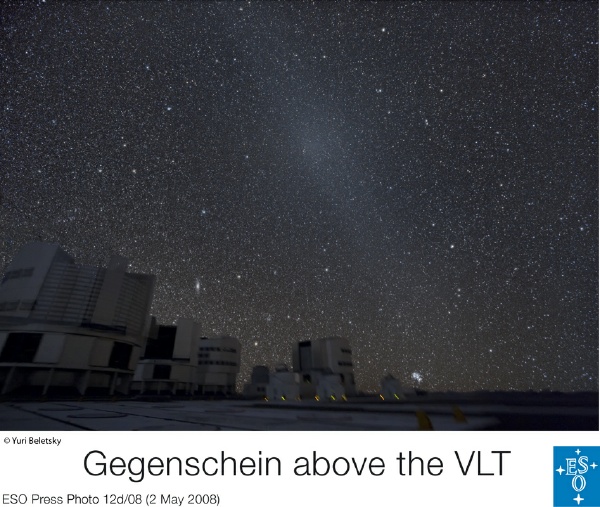
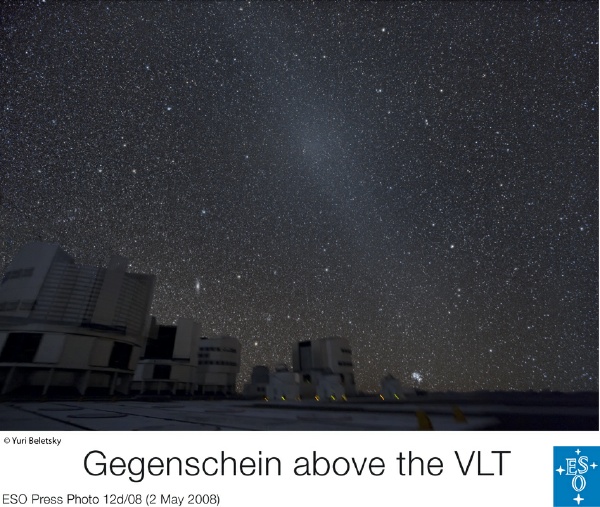
The Earth's atmosphere is a gigantic prism that disperses sunlight. In the most ideal atmospheric conditions, such as those found regularly above Cerro Paranal, this will lead to the appearance of so-called green and blue flashes at sunset. The phenomenon is so popular on the site that it is now the tradition for the Paranal staff to gather daily on the telescope platform to observe the sunset and its possible green flash before starting their long night of observations.

The green and blue flashes are fleeting events that require an unobstructed view of the setting Sun, and a very stable atmosphere. These conditions are very often met at Paranal, a 2635m high mountain in the Chilean Atacama Desert, where the sky is cloudless more than 300 days a year. Paranal is home of ESO's Very Large Telescope, an ensemble of four 8.2-m telescopes and four 1.8-m Auxiliary Telescopes that together form the world's most advanced optical telescope.

If you've ever used an internet translation tool, you know how immature the translation technology is compared to other sorts of computer programs. Punctuation errors, misplaced words and grammatical mistakes can make them almost unintelligible.

Verbal language translation is ever worse. Mo one has been able to develop an automatic translation system that comes anywhere close to the capabilities of a human translator or interpreter. ‘Constrained speech’ utilities that can only translate certain predefined words and phrases are adequate for a tourist booking a hotel but useless if you want to understand a news bulletin.

Europeans have a keen desire for a true universal translator. With 23 official languages, European institutions spend more than a billion euros a year translating documents and interpreting speeches. Companies trading across the EU’s internal borders spend millions more just to understand their business partners. It's a situation unparalleled anywhere else in the world.

Throughout the history of Earth there have been numerous mass extinctions and there are just as many theories as to why they occurred.

The largest we know of occurred some 250 million years ago, give or take, but the mass extinction of the dinosaurs more recently has long been a favorite topic of scientists and philosophers.

Scientists at the Cardiff University Centre for Astrobiology have a new twist on an old idea and built a computer model to try and support it. Their model mapped our solar system’s movement and found that it continually “bounces” up and down through the plane of the galaxy. As we pass through the densest part of the plane, gravitational forces from the surrounding giant gas and dust clouds dislodge comets from their paths. The comets plunge into the solar system, some of them colliding with the earth.