Banner
Pilot Study: Fibromyalgia Fatigue Improved By TENS Therapy

Fibromyalgia is the term for a poorly-understood condition where people experience pain and fatigue...

High Meat Consumption Linked To Lower Dementia Risk

Older people who eat large amounts of meat have a lower risk of dementia and cognitive decline...

Long Before The Inca Colonized Peru, Natives Had A Thriving Trade Network

A new DNA analysis reveals that long before the Incan Empire took over Peru, animals were...

Mesolithic People Had Meals With More Tradition Than You Thought

The common imagery of prehistoric people is either rooting through dirt for grubs and picking berries...

User picture.
News StaffRSS Feed of this column.

News Releases From All Over The World, Right To You... Read More »

Blogroll

'Clone' is an odd term culturally. Thanks to science fiction on one side and ethical hysteria on the other, people tend to overstate the meaning of it.

Back before genomes, to 'clone a gene' was to basically discover it - it meant you found the stretch of DNA encoding that gene - but now we know where almost all of the genes are. So 'cloning' in this context does not mean 'discovery' and it certainly doesn't mean Sith Lords spitting out an army of warriors to take over the universe - it means taking known genes (in tiny pieces in the genome) and isolating the spliced versions into a format that can be used in the lab.

While a few human genomes have been sequenced, the real work of understanding cancer (and curing it) is still a long way off because most human genes have not been isolated.

It makes sense that massive black holes lurking in galactic nuclei and weighing millions of Suns can disrupt stars that come too close. Astrophysicists say that the black hole’s gravity pulls harder on the nearest part of the star, an imbalance that pulls the star apart over a period of hours, once it gets inside the so-called "tidal radius."

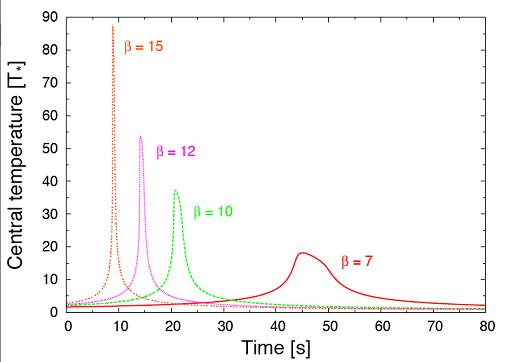
Two astrophysicists from Paris Observatory say the fate of stars that venture too close to massive black holes could be even more violent than previously believed. Not only are they crushed by the black hole’s huge gravity, but the process can also trigger a nuclear explosion that tears the star apart from within. In addition, shock waves in the pancake star carry a brief and very high peak of temperature outwards, that could give rise to a new type of X-ray or gamma-ray bursts.

Yes, it's galactic flambé.

Yes, witness that we are promoting an old media company (Wiley-Blackwell) but only because they aren't charging anyone ridiculous subscription fees and convincing you your career is over if they're not in your citation list when your review comes up.

They have added yet another name to their 1400-title long publication list. But this one is free. We couldn't agree more with free.

A new journal called Evolutionary Applications publishes articles that use evolution to address pressing issues such as climate change, endangered species, food safety, infectious diseases, and invasive species. In other words, someone besides us finally figured out that showing the practical uses of evolution, and how evolutionary biology is absolutely necessary to understanding the biological world, would be a good thing.

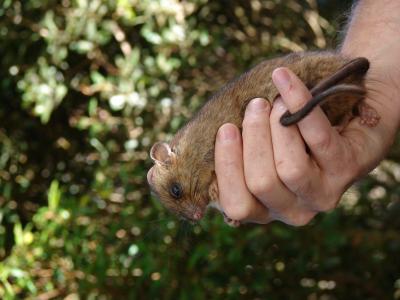
It seems rumors of the greater dwarf cloud rat's demise have been greatly exaggerated. Sure, he stayed low key for the last 112 years but he really never left his natural habitat.

Seeing the little guy once and then declaring him extinct was likely premature.

Carpomys melanurus, the greater dwarf cloud rat, has dense, soft reddish-brown fur, a black mask around large dark eyes, small rounded ears, a broad and blunt snout, and a long tail covered with dark hair. An adult weighs about 185 grams.

"This beautiful little animal was seen by biologists only once previously - by a British researcher in 1896 who was given several specimens by local people, so he knew almost nothing about the ecology of the species," said Lawrence Heaney, Curator of Mammals at the Field Museum and Project Leader. "Since then, the species has been a mystery, in part because there is virtually no forest left on Mt. Data, where it was first found."

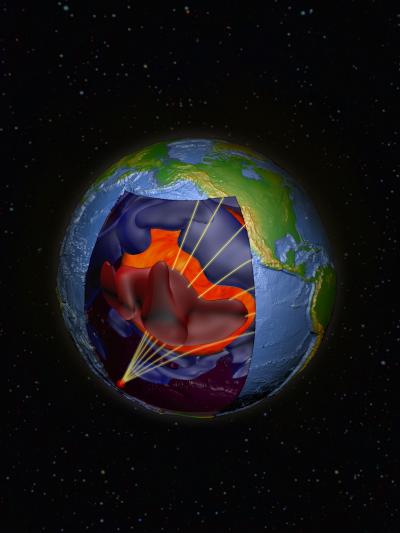
A new model of inner Earth constructed by Arizona State University researchers pulls past information and hypotheses into a coherent story to clarify mantle motion.

“The past maybe two or three years there have been a lot of papers in Science and Nature about the deep mantle from seismologists and mineral physicists and it’s getting really confusing because there are contradictions amongst the different papers,” says Ed Garnero, seismologist and an associate professor in Arizona State University’s School of Earth and Space Exploration.

“But we’ve discovered that there is a single framework that is compatible with all these different findings,” he adds.

Garnero partnered with geodynamicist and assistant professor Allen McNamara, also in the School of Earth and Space Exploration in ASU’s College of Liberal Arts and Sciences, to synthesize the information for their paper to be published in the May 2 issue of Science.

Researchers at McGill University and the McGill University Health Centre (MUHC) have performed the world’s first totally automated administration of an anesthetic.

Nicknamed “McSleepy,” the new system developed by the researchers administers drugs for general anesthesia and monitors their separate effects completely automatically, with no manual intervention.

The anesthetic technique was used on a patient who underwent a partial nephrectomy, a procedure that removes a kidney tumor while leaving the non-cancerous part of the kidney intact, over a period of 3 hours and 30 minutes. To manipulate the various components of general anesthesia, the automated system measures three separate parameters displayed on a new Integrated monitor of anesthesia (IMATM): depth of hypnosis via EEG analysis, pain via a new pain score, called AnalgoscoreTM, and muscle relaxation via phonomyographyTM, all developed by ITAG. The system then administers the appropriate drugs using conventional infusion pumps, controlled by a laptop computer on which “McSleepy” is installed.