Banner
Pilot Study: Fibromyalgia Fatigue Improved By TENS Therapy

Fibromyalgia is the term for a poorly-understood condition where people experience pain and fatigue...

High Meat Consumption Linked To Lower Dementia Risk

Older people who eat large amounts of meat have a lower risk of dementia and cognitive decline...

Long Before The Inca Colonized Peru, Natives Had A Thriving Trade Network

A new DNA analysis reveals that long before the Incan Empire took over Peru, animals were...

Mesolithic People Had Meals With More Tradition Than You Thought

The common imagery of prehistoric people is either rooting through dirt for grubs and picking berries...

User picture.
News StaffRSS Feed of this column.

News Releases From All Over The World, Right To You... Read More »

Blogroll

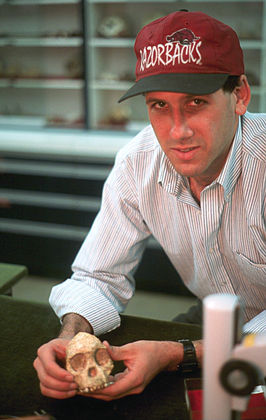
New findings suggest that the ancient human “cousin” known as the “Nutcracker Man” wasn’t regularly eating anything like nuts after all.

A University of Arkansas professor and his colleagues used a combination of microscopy and fractal analysis to examine marks on the teeth of members of an ancient human ancestor species and found that what it actually ate does not correspond with the size and shape of its teeth. This finding suggests that structure alone is not enough to predict dietary preferences and that evolutionary adaptation for eating may have been based on scarcity rather than on an animal’s regular diet.

The ability to regenerate lost body parts is unevenly distributed among higher organisms. Among vertebrates, some amphibians are able to replace lost limbs completely, while mammals are unable to regenerate complex appendages.

The only exception to this rule is the annual replacement of deer antlers.

The annual regrowth of these structures is the only example of regeneration of a complete, anatomically complex appendage in a mammal, and antlers are therefore of high interest to regeneration biologists.

The epimorphic regeneration of appendages may involve progenitor cells created through reprogramming of differentiated cells or through the activation of resident stem cells. Hans J.

Degas, van Gogh and Picasso swore it enhanced their creativity but thujone, the compound widely believed responsible for absinthe’s mind-altering effects, is not really a factor, according to a new study.

In the most comprehensive analysis of old bottles of original absinthe, a team of scientists from Europe and the United States have concluded the culprit was plain and simple: Alcohol.

Although consumed diluted with water, absinthe contained about 70 percent alcohol, giving it a 140-proof wallop. Most gin, vodka, and whiskey are 80 – 100-proof and contain 40-50 percent alcohol or ethanol.

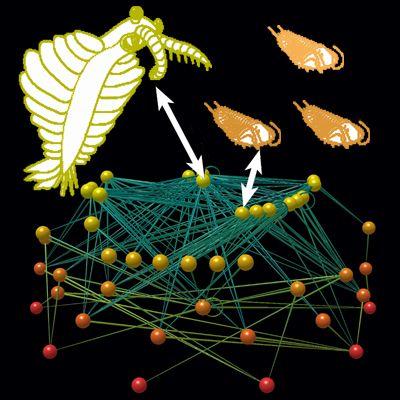
Because dogs didn't exist back then, more relevant analogies had to be used in that title. Why? Because analyses of Chengjiang and Burgess Shale food-web data suggest that most, but not all, aspects of the trophic structure of modern ecosystems were in place over a half-billion years ago.

The ecology of Cambrian communities was remarkably modern, say researchers behind the first study to reconstruct detailed food webs for ancient ecosystems. Their paper suggests that networks of feeding relationships among marine species that lived hundreds of millions of years ago are remarkably similar to those of today.

Food webs depict the feeding interactions among species within habitats--like food chains, only more complex and realistic. The discovery of strong and enduring regularities in how such webs are organized will help us understand the history and evolution of life, and could provide insights for modern ecology--such as how ecosystems will respond to biological extinctions and invasions.

In the rapid and fast-growing world of nanotechnology, researchers are continually on the lookout for new building blocks to push innovation and discovery to scales much smaller than the tiniest speck of dust.

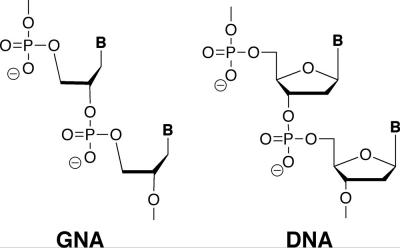
In the Biodesign Institute at Arizona State University, researchers are using DNA to make intricate nano-sized objects. Working at this scale holds great potential for advancing medical and electronic applications. DNA, often thought of as the molecule of life, is an ideal building block for nanotechnology because they self-assemble, snapping together into shapes based on natural chemical rules of attraction. This is a major advantage for Biodesign researchers like Hao Yan, who rely on the unique chemical and physical properties of DNA to make their complex nanostructures.

A breakthrough barrier technology from Singapore A*STAR’s Institute of Materials Research and Engineering (IMRE) protects sensitive devices like organic light emitting diodes (OLEDs) and solar cells from moisture 1000 times more effectively than any other technology available in the market, opening up new opportunities for the up-and-coming plastic electronics sector.

A team of scientists from Singapore’s Institute of Materials Research and Engineering (IMRE) has developed a new patented film that has the highest reported water vapour barrier performance to date, as tested by the UK Centre for Process Innovation.

The tests have shown that the new film is 1,000 times more impervious to moisture than existing technologies. This means a longer lifetime for plastic electronic devices such as solar cells and flexible displays that use these high-end films but whose sensitive organic materials are easily degraded by water vapour and oxygen.