Banner
Pilot Study: Fibromyalgia Fatigue Improved By TENS Therapy

Fibromyalgia is the term for a poorly-understood condition where people experience pain and fatigue...

High Meat Consumption Linked To Lower Dementia Risk

Older people who eat large amounts of meat have a lower risk of dementia and cognitive decline...

Long Before The Inca Colonized Peru, Natives Had A Thriving Trade Network

A new DNA analysis reveals that long before the Incan Empire took over Peru, animals were...

Mesolithic People Had Meals With More Tradition Than You Thought

The common imagery of prehistoric people is either rooting through dirt for grubs and picking berries...

User picture.
News StaffRSS Feed of this column.

News Releases From All Over The World, Right To You... Read More »

Blogroll

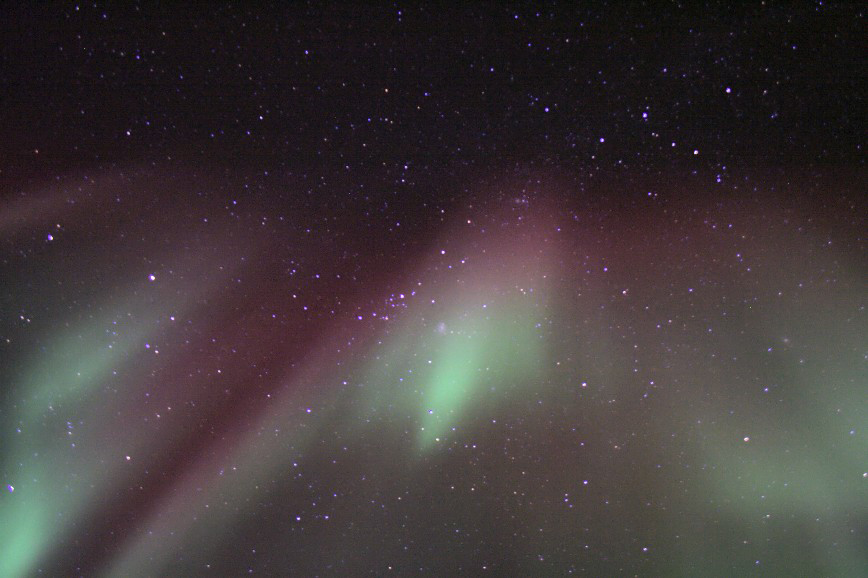
An international team of scientists has detected that some of the glow of Earth’s aurora is polarized, an unexpected state for such emissions. Measurements of this newfound polarization in the Northern Lights may provide scientists with fresh insights into the composition of Earth’s upper atmosphere, the configuration of its magnetic field, and the energies of particles from the Sun, the researchers say.

If observed on other planets, the phenomenon might also give clues to the shape of the Sun’s magnetic field as it curls around other bodies in the solar system.

When a beam of light is polarized, its electromagnetic waves share a common orientation, say, aligned vertically, or at some other angle. Until now, scientists thought that light from energized atoms and molecules in planetary upper atmospheres could not be polarized. The reason is simple: in spite of the low number of particles at the altitudes concerned (above 100 kilometers (60 miles)), there are still numerous collisions between molecules and gas atoms. Those collisions depolarize the emitted light.

MILAN, April 26 /PRNewswire/ --

At today's sessions of the 43rd Annual Meeting of the European Association for the Study of the Liver (EASL), experts reported advances in basic research that have important implications for the eventual treatment of people with chronic liver diseases.

Advance directives, or living wills, may not effectively honor end-of-life wishes because life-sustaining treatment preferences often change without people being aware of the changes, according to a new study co-authored by UC Irvine researchers Peter Ditto and Elizabeth Loftus.

False memories can play a significant role in the discrepancy between an individual's true preferences for end-of-life treatment and what is instructed in their living will. Life-sustaining treatment preferences often change as people age or experience new health problems, and advance directive forms typically remind people of their right to update their directives if their wishes change.

Researchers have mapped out a region on human chromosome 1 that contributes to genetically elevated blood triglyceride levels, a major risk factor for heart disease.

Triglycerides (TG), the main form of dietary fat, continuously circulate in the blood, but if their concentration elevates the risk of atherosclerosis and subsequently heart disease increases. Circulating TG levels depend on many factors including diet, exercise, and smoking, but around 40% of the variation in the population is due to genetics.

To locate the genes contributing to increased TG levels, Qing Wang and colleagues scanned 714 Caucasians from 388 families with premature heart disease. They identified a novel region on chromosome 1, 1p31-32.

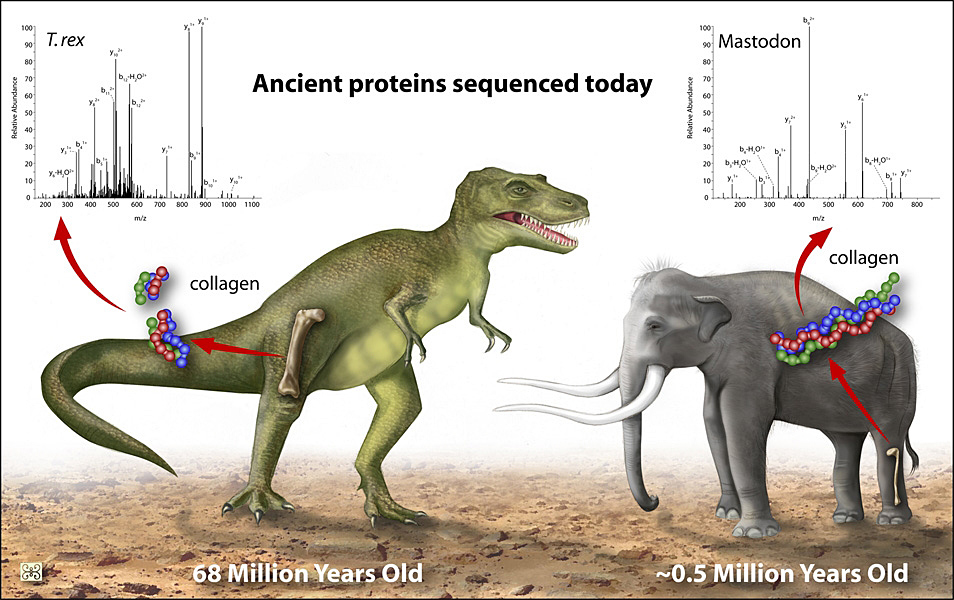
Tests of the peptide sequences in T. rex bone fossils have put more meat on the theory that dinosaurs' closest living relatives are modern-day birds.

Molecular analysis, or genetic sequencing, of a 68-million-year-old Tyrannosaurus rex protein from the dinosaur's femur discovered in 2003 by paleontologist John Horner of the Museum of the Rockies confirms that T. rex shares a common ancestry with chickens, ostriches, and to a lesser extent, alligators.

The new research results represent the first use of molecular data to place a non-avian dinosaur in a phylogenetic tree, a "tree of life," that traces the evolution of species.

The earthquake on April 18, 2008, about 120 miles east of St. Louis, registered 5.2 on the Richter scale and hit at 4:40 a.m. with a strong aftershock occurring at approximately 10:15 a.m. that morning, followed by lesser ones in subsequent days. The initial earthquake was felt in parts of 16 states.

To the surprise of many, originated in the Wabash Valley Fault, not the better-known and more-dreaded New Madrid Fault in Missouri’s boot heel.

The concern of Douglas Wiens, Ph.D., and Michael Wysession, Ph.D., seismologists at Washington University in St. Louis, is that the New Madrid Fault may have seen its day and the Wabash Fault is the new kid on the block.