Banner
Pilot Study: Fibromyalgia Fatigue Improved By TENS Therapy

Fibromyalgia is the term for a poorly-understood condition where people experience pain and fatigue...

High Meat Consumption Linked To Lower Dementia Risk

Older people who eat large amounts of meat have a lower risk of dementia and cognitive decline...

Long Before The Inca Colonized Peru, Natives Had A Thriving Trade Network

A new DNA analysis reveals that long before the Incan Empire took over Peru, animals were...

Mesolithic People Had Meals With More Tradition Than You Thought

The common imagery of prehistoric people is either rooting through dirt for grubs and picking berries...

User picture.
News StaffRSS Feed of this column.

News Releases From All Over The World, Right To You... Read More »

Blogroll

Researchers from the UAB Research Park have created the first nanomotor that is propelled by changes in temperature. A carbon nanotube is capable of transporting cargo and rotating like a conventional motor, but is a million times smaller than the head of a needle. This research opens the door to the creation of new nanometric devices designed to carry out mechanical tasks and which could be applied to the fields of biomedicine or new materials.

The "nanotransporter" consists of a carbon nanotube - a cylindrical molecule formed by carbon atoms - covered with a shorter concentric nanotube which can move back and forth or act as a rotor. A metal cargo can be added to the shorter mobile tube, which could then transport this cargo from one end to the other of the longer nanotube or rotate around its axis.

If clumps of your hair start to fall out from a common form of baldness, a new review of existing research unfortunately offers little comfort.

Patients who are afflicted by the condition known as alopecia areata — patchy hair loss — should understand that there is “no reliable, safe, effective, long-term treatment,” said review co-author Dr. Mike Sladden, a dermatologist and senior lecturer at the University of Tasmania in Australia.

Alopecia areata accounts for an estimated one in every 50 dermatologist visits in the United States and the United Kingdom, and one study suggests that 1.7 percent of people will be afflicted by it during their lives.

The condition often causes patchy hair loss; meaning hair in some parts of the body falls out while remaining in others.

A new method that uses nanotechnology to rapidly measure minute amounts of insulin is a major step toward developing the ability to assess the health of the body’s insulin-producing cells in real time.

Among other potential applications, this method could be used to improve the efficacy of a new procedure for treating Type 1 (juvenile) diabetes that has demonstrated the ability to free diabetics from insulin injections for several years. It works by transplanting insulin-producing cells into the livers of diabetics to replace the cells that the disease has disabled or destroyed.

Researchers at the Duke School of Medicine apparently have solved the riddle of why cancer cells like sugar so much, and it may be a mechanism that could lead to better cancer treatments.

Jonathan Coloff, a graduate student in Assistant Professor Jeffrey Rathmell’s laboratory in the Duke Department of Pharmacology and Cancer Biology, has found that the tumor cells use glucose sugar as a way to avoid programmed cell death.

They make use of a protein called Akt, which promotes glucose metabolism, which in turn regulates a family of proteins critical for cell survival, the researchers shared during an April 15 presentation at the American Association of Cancer Research Annual Meeting in San Diego.

A frequency-agile metamaterial that for the first time can be tuned over a range of frequencies in the so-called “terahertz gap” has been engineered by a team of researchers from Boston College, Los Alamos National Laboratory and Boston University.

The team incorporated semiconducting materials in critical regions of tiny elements – in this case metallic split-ring resonators – that interact with light in order to tune metamaterials beyond their fixed point on the electromagnetic spectrum, an advance that opens these novel devices to a broader array of uses, according to findings published in the online version of the journal Nature Photonics.

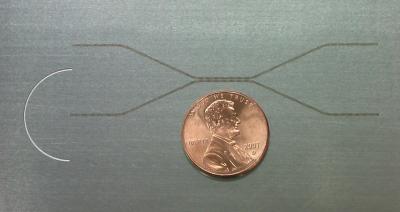
University of Utah engineers took an early step toward building superfast computers that run on far-infrared light instead of electricity: They made waveguides -- the equivalent of wires -- that carried and bent this form of light, also known as terahertz radiation, which is the last unexploited portion of the electromagnetic spectrum.

Electricity is carried through metal wires. Light used for communication is transmitted through fiberoptic cables and split into different colors or “channels” of information using devices called waveguides. In a study published in Optics Express, Ajay Nahata, study leader and associate professor of electrical and computer engineering at the University of Utah, and colleagues report they designed stainless steel foil sheets with patterns of perforations that successfully served as wire-like waveguides to transmit, bend, split or combine terahertz radiation.