Banner
Pilot Study: Fibromyalgia Fatigue Improved By TENS Therapy

Fibromyalgia is the term for a poorly-understood condition where people experience pain and fatigue...

High Meat Consumption Linked To Lower Dementia Risk

Older people who eat large amounts of meat have a lower risk of dementia and cognitive decline...

Long Before The Inca Colonized Peru, Natives Had A Thriving Trade Network

A new DNA analysis reveals that long before the Incan Empire took over Peru, animals were...

Mesolithic People Had Meals With More Tradition Than You Thought

The common imagery of prehistoric people is either rooting through dirt for grubs and picking berries...

User picture.
News StaffRSS Feed of this column.

News Releases From All Over The World, Right To You... Read More »

Blogroll

Countless hours spent designing, hand-building and testing model rockets has paid off for 100 teams that will be vying for the sixth annual Team American Rocketry Challenge national title next month.

The Aerospace Industries Association announced the finalists for the world's largest rocket contest Friday. The teams will meet at Great Meadow in The Plains, Va., on May 17 for a final fly-off and a chance to win more than $60,000 in scholarships and other prizes.

About 7,000 students on 643 teams from 43 states and the District of Columbia took part in the qualifying rounds of competition.

Cycling is great fun and and modern bicycles give riders a lot of options. Perhaps too many. For example, novice riders getting onto a cycle with 27 gears change gears too infrequently and too late, get out of breath and don’t enjoy themselves.

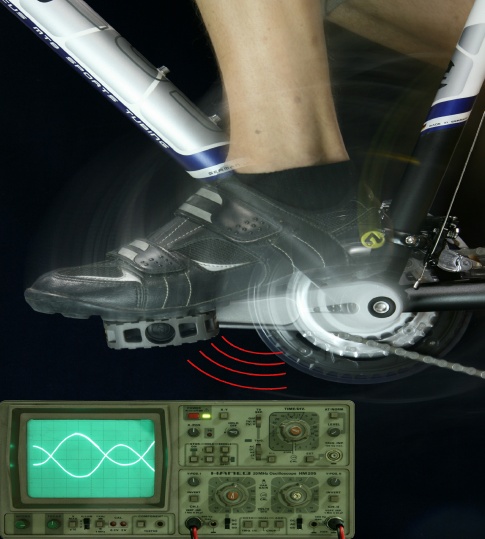
Some new research may soon help; recently on display was a bicycle with adaptronic components which report inappropriate biomechanical stress and an intelligent pedal crank that helps the biker to direct his strength.

Fraunhofer researchers recently displayed a concept. There are two piezo-sensors integrated in one of the pedal cranks of the bicycle. One function of the sensors is to measure the forces that propel the rider forward and show him how ‘evenly’ he is pedaling.

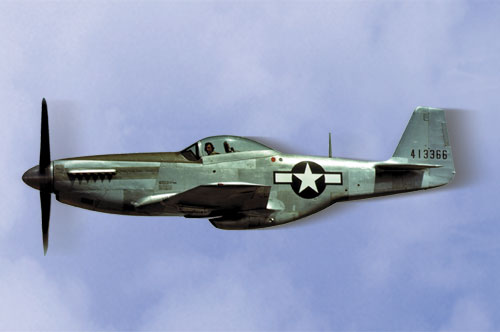
There's no question that air superiority made a huge difference in the Allied victories of World War II but because flight was still very much in its infancy, and high speed aerial combat was previously unknown, a lot of physiological issues had to be addressed in order to keep pilots as safe as possible before going into even more dangerous combat.

Physiology is the study of how molecules, cells, tissues and organs function to create health or disease. World War II-era research came up with a number of advancements that made that possible, according to Jay B. Dean, of the University of South Florida College of Medicine.

Thanks to physiologists then, Ways were developed to safely provide pressurized oxygen to air crews, helping them avoid hypoxia and decompression sickness.

Complex issues demand complex decision-making and not forced simplification, asserts Lasse Gerrits in his dissertation 'The Gentle Art of Coevolution', and the temptation to make important decisions understandable by simplifying them will eventually turn against the decision maker.

And it is also a myth that complex social issues can be readily resolved as long as there is someone who creates order, he says.

How did he reach his conclusions? He investigated the decision-making concerning the expansion of the Hamburg and Antwerp ports and simplification tends to exacerbate rather reduce problems.

A new technique that helps forecasters continuously monitor landfalling hurricanes, giving them frequent and detailed images of a storm's location, will be implemented this summer.

The new system, developed by researchers at the National Center for Atmospheric Research (NCAR) in Boulder, Colo., and the Naval Research Laboratory (NRL) in Washington, D.C., will be implemented at the National Hurricane Center (NHC).

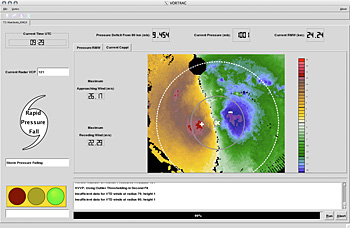
The technique, known as VORTRAC (Vortex Objective Radar Tracking and Circulation), was successfully tested by the hurricane center last year. The system, which relies on existing Doppler radars along the U.S. coast, provides details on hurricane winds and central pressure every six minutes, indicating whether the storm is gathering strength in the final hours before reaching shore.

Humans communicate with machines every day and work is always being done to make interfaces more intuitive, but purely in regard to mechanical aspects.

There's no question that the machines are in control - you do it in a way they understand or you are stuck. Moore's Law has been in effect for processors and raw horsepower but interface advancements and understanding are still trapped in the 1960s.

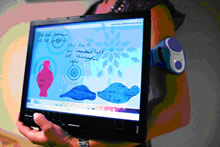
The Humaine project wants to change that by bringing together specialists and scholars from very different disciplines to create the building blocks and tools needed to give machines so-called ‘soft’ skills, like understanding emotions.