Banner
Pilot Study: Fibromyalgia Fatigue Improved By TENS Therapy

Fibromyalgia is the term for a poorly-understood condition where people experience pain and fatigue...

High Meat Consumption Linked To Lower Dementia Risk

Older people who eat large amounts of meat have a lower risk of dementia and cognitive decline...

Long Before The Inca Colonized Peru, Natives Had A Thriving Trade Network

A new DNA analysis reveals that long before the Incan Empire took over Peru, animals were...

Mesolithic People Had Meals With More Tradition Than You Thought

The common imagery of prehistoric people is either rooting through dirt for grubs and picking berries...

User picture.
News StaffRSS Feed of this column.

News Releases From All Over The World, Right To You... Read More »

Blogroll

The p53 regulatory network, the 'guardian of the genome' has, during the course of human evolution, created additional safeguards in human genes to further guard against DNA damage that could a variety of genetic diseases, according to an international team of scientists writing in the Proceedings of the National Academy of Sciences.

Ethology is the study of animal behavior, with a focus on behavioral patterns in natural environments. A new paper shows that researchers are now taking a machine-learning approach.

The work by Csaba Molnár from Eötvös Loránd University in Hungary and his research team shows that a new piece of software is able to classify dog barks according to different situations and even identify barks from individual dogs, a task humans find challenging.

The aim of Molnár and colleagues’ experiments was to test a computer algorithm’s ability to identify and differentiate the acoustic features of dog barks, and classify them according to different contexts and individual dogs.

All multicellular animals have an innate immune system. When bacteria, parasites or fungi invade the organism, small protein molecules are released that eliminate the attackers. Scientists of the German Cancer Research Center (Deutsches Krebsforschungszentrum, DKFZ) have now discovered a new molecule that plays an important role in triggering the innate immune response of the fruit fly Drosophila, mice and even humans.

The cells of the innate immune system recognize hostile invaders with the aid of receptors on their surface: The moment these receptors recognize a foreign structure, they send a message, via a complicated signaling pathway, into the cell¡¦s interior. The cell then releases immunologically active proteins.

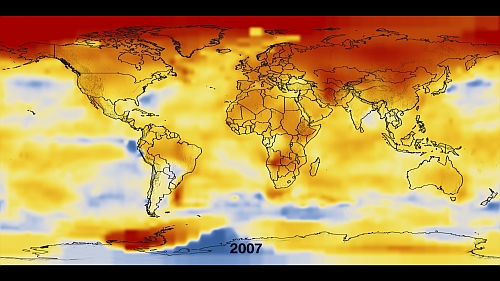
Climatologists at the NASA Goddard Institute for Space Studies (GISS) in New York City released an analysis showing that 2007 tied with 1998 for Earth’s second warmest year in a century. 2006 was fifth in that period.

There will be some issue with accuracy. The researchers used temperature data from weather stations on land, satellite measurements of sea ice temperature since 1982 and data from ships for earlier years.

The greatest warming in 2007 occurred in the Arctic, and neighboring high latitude regions. Global warming has a larger affect in polar areas, as the loss of snow and ice leads to more open water, which absorbs more sunlight and warmth. Snow and ice reflect sunlight; when they disappear, so too does their ability to deflect warming rays.

Bisexuality in women appears to be a distinctive sexual orientation and not a transitional stage that some women adopt "on their way" to lesbianism or as a temporary phase in otherwise heterosexual behavior, according to new research in Developmental Psychology.

The study of 79 non-heterosexual women over 10 years found that bisexual women maintained a stable pattern of attraction to both sexes.

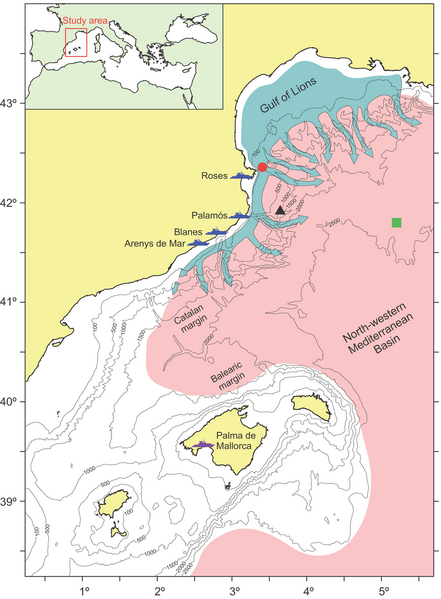
In an PLoS ONE article, Joan B. Company and colleagues at the Institut de Ciències del Mar (CSIC) in Spain describe a mechanism of interaction across ecosystems showing how a climate-driven phenomenon originated in shelf environments controls the biological processes of a deep-sea living resource.

The progressive depletion of world fisheries is one of the key socio-economical issues of the forthcoming century. However, amid this worrying scenario, Company’s study demonstrates how a climate-induced phenomenon occurring at a decadal time-scale, such as the formation of dense shelf waters and its subsequent downslope cascading can repeatedly reverse the general trend of overexploitation of a deep-sea living resource.