Banner
Pilot Study: Fibromyalgia Fatigue Improved By TENS Therapy

Fibromyalgia is the term for a poorly-understood condition where people experience pain and fatigue...

High Meat Consumption Linked To Lower Dementia Risk

Older people who eat large amounts of meat have a lower risk of dementia and cognitive decline...

Long Before The Inca Colonized Peru, Natives Had A Thriving Trade Network

A new DNA analysis reveals that long before the Incan Empire took over Peru, animals were...

Mesolithic People Had Meals With More Tradition Than You Thought

The common imagery of prehistoric people is either rooting through dirt for grubs and picking berries...

User picture.
News StaffRSS Feed of this column.

News Releases From All Over The World, Right To You... Read More »

Blogroll

Discovery of an exceptional fossil specimen in southeastern Morocco that preserves evidence of the animal’s soft tissues has solved a paleontological puzzle about the origins of an extinct group of bizarre slug-like animals with rows of mineralized armor plates on their backs, according to a paper in Nature.

While evolution has produced great diversity in the body designs of animals, over the course of history several highly distinct groups, such as trilobites and ammonites, have become extinct. The new fossil is of an unusual creature known as a machaeridian, an invertebrate, or animal without a backbone, that existed for about 180 million years from 485 to 305 million years ago.

Methadone is a possible cause of sudden cardiac death even when it isn’t overdosed but is taken at therapeutic levels primarily for relief of chronic pain or drug addiction withdrawal, a new study by Oregon Health & Science University researchers suggests.

The study’s findings, described in the January 2008 issue of The American Journal of Medicine, are based on an evaluation of all sudden cardiac deaths in the greater Portland, Ore., metropolitan area between 2002 and 2006 where detailed autopsies were performed.

The analysis was based on a comparison of two case groups. One group consisted of 22 sudden cardiac deaths in which toxicology screens turned up 1 milligram or less of methadone — defined as a therapeutic level.

As Americans increasingly seek a “quick fix” to physical and mental ailments, psychoanalysts can be caught in the crossfire of a debate about the potential benefits and drawbacks of including medication in their treatment plans.

A panel discussion entitled “The Uses of Medications in Psychoanalysis: What We Know; What is Uncertain,” will be led by internationally renowned psychoanalyst Glen O. Gabbard, M.D., at the American Psychoanalytic Association’s 2008 Winter Meeting on Friday, January 18, 2008, from 2-5 p.m. at the Waldorf Astoria Hotel in New York.

Taking the position for a cautious approach to the inclusion of medications in analysis will be Stephen D. Purcell, M.D. Adele Tutter, M.D., Ph.D., is more optimistic about the inclusion of medications in treatment.

Even a few days into New Year’s resolutions to exercise more, people are finding reasons to skip workouts even though the benefits of a healthy lifestyle are well-known: In addition to weight loss, exercise has been linked to reducing symptoms of depression and also to lower risk of heart disease.

If the temptation to sit on the couch and watch TV instead of going for a short jog is just too great you’re not alone, but preferring to be sedentary is not an innate human trait. Most children are quite active and people generally stay active all the way through high school but many stop being active when they reach college.

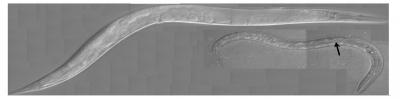
Muscles usually contract when a neurotransmitter molecule is released from nerve cells onto muscle cells. But University of Utah scientists discovered that bare subatomic protons can act like larger, more complex neurotransmitters, making gut muscles contract in tiny round worms so the worms can poop.

“There are relatively few molecules that serve as neurotransmitters to trigger electrical changes in cells. Protons are the only new members of this group in nearly 20 years,” says biology Professor Erik Jorgensen, scientific director of the Brain Institute at the University of Utah and senior author of the study in the Jan.

You've read plenty of articles recently about visual invisibility but acoustic invisibility was considered beyond the reach of science.

Now Duke University engineers say a three-dimensional sound cloak is possible, at least in theory, by making sound waves travel distortion-free around an acousic veil the way microwaves do for a visual one.

"We've devised a recipe for an acoustic material that would essentially open up a hole in space and make something inside that hole disappear from sound waves," said Steven Cummer, Jeffrey N. Vinik Associate Professor of Electrical and Computer Engineering at Duke's Pratt School of Engineering.