Banner
Pilot Study: Fibromyalgia Fatigue Improved By TENS Therapy

Fibromyalgia is the term for a poorly-understood condition where people experience pain and fatigue...

High Meat Consumption Linked To Lower Dementia Risk

Older people who eat large amounts of meat have a lower risk of dementia and cognitive decline...

Long Before The Inca Colonized Peru, Natives Had A Thriving Trade Network

A new DNA analysis reveals that long before the Incan Empire took over Peru, animals were...

Mesolithic People Had Meals With More Tradition Than You Thought

The common imagery of prehistoric people is either rooting through dirt for grubs and picking berries...

User picture.
News StaffRSS Feed of this column.

News Releases From All Over The World, Right To You... Read More »

Blogroll

By any measure, Dr. Alan Grainger, Senior Lecturer in Geography at the University of Leeds, is an internationally-renowned expert on tropical deforestation. He is the author of numerous scientific papers since 1978 and a book, Controlling Tropical Deforestation, published in 1993. He gained his doctorate the University of Oxford in 1987 for producing the world's first global computer simulation model of the tropical forests.

Yet all that will be called into question because he states in a study published in the Proceedings of the US National Academy of Sciences that claims about tropical forests declining are not backed up by evidence.

"Every few years we get a new estimate of the annual rate of tropical deforestation,” said Dr Grainger.

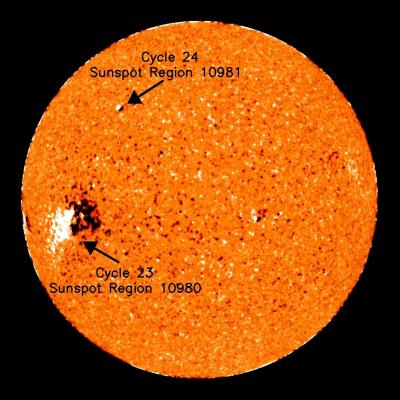
A new 11-year cycle of heightened solar activity, bringing with it increased risks for power grids, critical military, civilian and airline communications, GPS signals and even cell phones and ATM transactions, showed signs it was on its way late Thursday when the cycle’s first sunspot appeared in the sun’s Northern Hemisphere, NOAA scientists said.

“This sunspot is like the first robin of spring,” said solar physicist Douglas Biesecker of NOAA’s Space Weather Prediction Center. “In this case, it’s an early omen of solar storms that will gradually increase over the next few years.”

A sunspot is an area of highly organized magnetic activity on the surface of the sun.

Birthmarks have always been something of a mystery. Scientists know that a hemangioma is a benign tumor of cells that line blood vessels, appearing during the first few weeks of life as a large birthmark or lesion, but not much more. Now a study published in Pediatric Dermatology answers some remaining questions and reveals that a disturbance of oxygen depletion was found in placentas of babies who developed infantile hemangioma (IH).

Researchers reviewed placental samples from 26 pregnancies with babies who weighed less than 3.5 pounds, 13 consisting of newborns who developed IH after birth and 13 healthy preterm infants who did not have IH.

Only one of the infants without IH showed an abnormal placenta.

Most children are able to imagine their future selves as astronauts, politicians or even superheroes; however, many older adults find it difficult to recollect past events, let alone generate new ones. A new Harvard University study reveals that the ability of older adults to form imaginary scenarios is linked to their ability to recall detailed memories.

According to the study, episodic memory, which represents our personal memories of past experiences, “allows individuals to project themselves both backward and forward in subjective time.”

Only nine percent of 199 beverage samples had benzene levels above the U. S. Environmental Protection Agency (EPA) limit of 5 parts per billion (ppb) for benzene in drinking water, according to a study by EPA and U. S. Food and Drug Administration (FDA) scientists.

Products containing benzene above the EPA level were reformulated by the manufacturers to minimize or eliminate benzene and one product was discontinued, researchers said. Benzene levels in the reformulated products were 1.1 ppb or less. About 71 percent of beverage samples in the study contained less than 1 ppb. Based on results from the survey and actions taken by the beverage industry, FDA concluded that the levels of benzene found did not pose a safety concern for consumers.

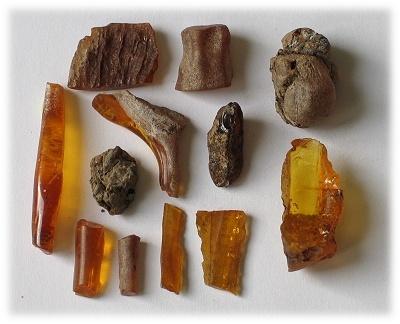
Research on a treasure trove of amber has yielded evidence that France once was covered by a dense tropical rainforest with trees similar to those found in the modern-day Amazon. The report is on 55-million-year-old pieces of amber from the Oise River area in northern France.

In the new study, Akino Jossang and colleagues used laboratory instruments to analyze the fossilized tree sap in an effort to link specific samples of amber to specific kinds of trees. The amber remained intact over the ages, while the trees from which it oozed disappeared. Efforts to make such connections have been difficult because amber from different sites tended to have very similar chemical compositions.