Banner
Pilot Study: Fibromyalgia Fatigue Improved By TENS Therapy

Fibromyalgia is the term for a poorly-understood condition where people experience pain and fatigue...

High Meat Consumption Linked To Lower Dementia Risk

Older people who eat large amounts of meat have a lower risk of dementia and cognitive decline...

Long Before The Inca Colonized Peru, Natives Had A Thriving Trade Network

A new DNA analysis reveals that long before the Incan Empire took over Peru, animals were...

Mesolithic People Had Meals With More Tradition Than You Thought

The common imagery of prehistoric people is either rooting through dirt for grubs and picking berries...

User picture.
News StaffRSS Feed of this column.

News Releases From All Over The World, Right To You... Read More »

Blogroll

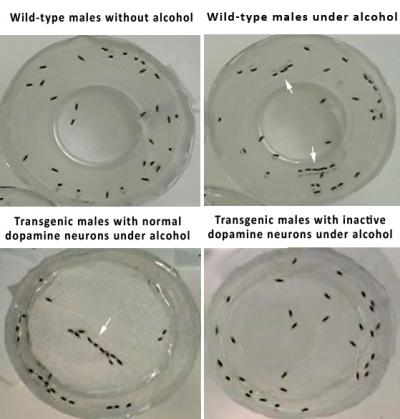
A team of researchers at Penn Sate has used an animal model to reveal, for the first time, a physiological basis for the effect of alcohol on male sexual behavior, including increased sexual arousal and decreased sexual inhibition.

The research in PLoS ONE resulted in four novel findings with broad importance for further addiction research. It is the first study to characterize the effects of chronic alcohol exposure in fruit flies. "Physiological evidence supporting various theories about the effect of alcoholic drinks has been lacking, so our now having a suitable animal model makes it possible to conduct much-needed laboratory research on this issue," explains research-team-leader Kyung-An Han, associate professor of biology and a neuroscientist at Penn State.

A glitch in the mechanism by which cells recycle damaged components may trigger Parkinson’s disease, according to a study by scientists at the Albert Einstein College of Medicine of Yeshiva University. The research appears in The Journal of Clinical Investigation and could lead to new strategies for treating Parkinson’s and other neurodegenerative diseases.

All cells depend on a surveillance system known as autophagy (which literally means “self eating”) to digest and recycle the damaged molecules that arise as cells age. In autophagy, defective proteins and other molecules are transported to membrane-bound sacs called lysosomes. After attaching to the lysosomal membrane, the molecules enter the lysosome, where they are digested by enzymes.

A diagnosis of childhood cancer 50 years ago meant almost certain death. Now, because of scientific advances, the majority of newly diagnosed children can expect to survive.

You may not think of oceanography when it comes to cancer research but an unexpected discovery in marine biomedical laboratories at the Scripps Institution of Oceanography has led to information on how a marine organism creates a natural product currently being tested to treat cancer in humans.

What are the United States presidential candidates’ positions on scientific topics ranging from evolution to global warming? A special news report in the January 4th issue of Science addresses these questions and profiles the nine leading candidates on where they stand on important scientific issues.

The 10-page special report, Science and the Next U.S. President profiles Hillary Clinton, John Edwards, Rudy Giuliani, Mike Huckabee, John McCain, Barack Obama, Bill Richardson, Mitt Romney, and Fred Thompson and offers voters a glimpse at each candidate’s views on science.

Hydrogen peroxide, the same mild acid that many people use to disinfectant their kitchens or treat cuts and abrasions, is also produced by the body to keep cells healthy. Now, researchers at Wake Forest University School of Medicine have solved how part of this complex process works.

Reporting in the January 3 issue of Nature, a team led by W. Todd Lowther, Ph.D., developed a three-dimensional snapshot of how two proteins produced by cells interact to regulate the levels of hydrogen peroxide.

For example, when the immune system is activated in response to bacteria, large amounts of hydrogen peroxide are produced by certain cells to fight the infection. Lowther and colleagues studied how a molecule known as peroxiredoxin (Prx) helps control levels of the agent.